Notes from the concierge
Short pieces on how automation projects actually succeed and fail, from the applications side. No news, no product launches, nothing that expires. These are the arguments we make to customers before they spend money, written down. 108 notes in 9 series.
Long reads, with pictures (10) · Joy, freedom and the number (17) · Walkthroughs (2) · Can I afford it? (8) · It wasn't automatable until (8) · What changed when they automated (16) · Plain talk, with jokes (17) · How we work (3) · Field notes from the applications side (27)
Long reads, with pictures
The big pieces: a day in a plant that said yes, the hundred-year conversation between people and machines, what a drone sees that we never did. Built around sequences of illustrations, with every number still as published.
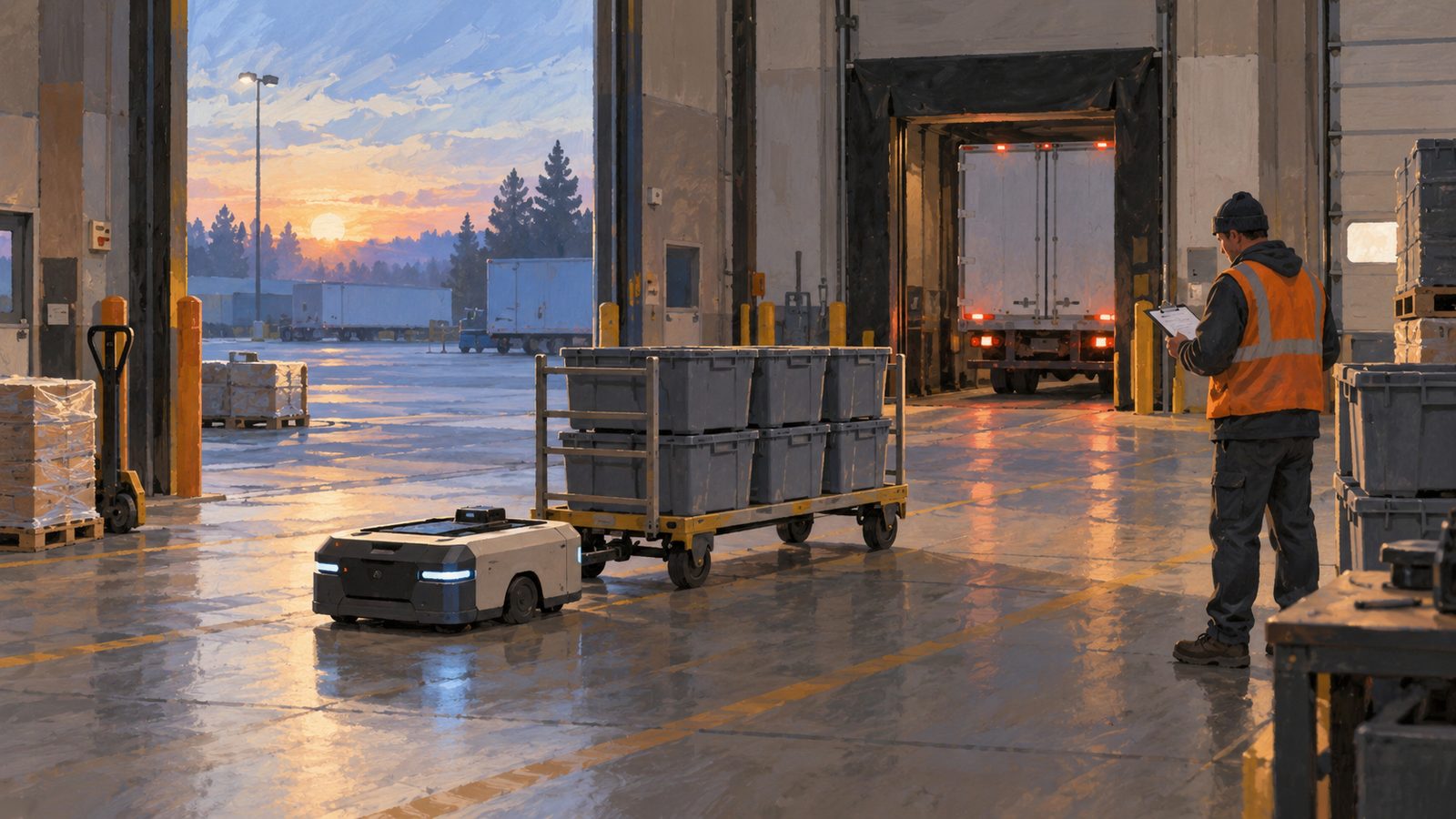
A day in the life of a plant that said yes
Twenty-four hours in a plant that automated the right stations and not the wrong ones. It is a composite, assembled from the published deployments in our casebook and the arithmetic in our guides, so the plant is imagined and every number is somebody's real one. Walk it from the dock at dawn to the scrubber at three in the morning.
The hundred-year conversation between people and machines
The word robot is a hundred and six years old and the first industrial one went to work sixty-five years ago. Every era since has gotten something right that the next one kept, and something wrong that the next one fixed. Here is the whole conversation in six scenes, ending in the one you can have tonight for free.
What a drone sees that we never did
Six places a person used to go, or could not go, and what the camera brought back instead: the inside of a boiler, the underside of a bridge arch, the heat under a roof membrane, a square mile of glass, a sewer collector, a pile of rock. The published numbers are the operators' and makers'. The view is new.
The night shift that nobody works
Between the last person leaving and the first one arriving, a plant that automated well is not empty. It is working, quietly, in the dark, with machines that neither hurry nor tire, and a phone in a nightstand drawer that mostly stays silent. A night, hour by hour, told from the floor. Composite, as always; the numbers are published ones.
Small shops, big machines: ten robots that fit in a corner
The robots that pay back in a sixty person plant are not the ones in the trade show videos. They are the ones that fit where a person used to stand, on a cart, a column, a table or a dock. Ten of them, what each one actually does, what it needs, and the planning range from our guides. With pictures of each, because the scale is the point.
The first robot: a field guide for the shop that has none
Shops that do their first robot well all do the same seven things, in roughly the same order, and most of them cost nothing but attention. Here they are, from the stopwatch at peak to the first unattended night, with what each one looks like and the mistake it prevents. Illustrated, step by step.
Robots at the edge of the map: the sea, the sewer, the silo
Most of this site is about plant floors. This piece goes to the places on the map where a person should not go and a machine now does: under the hull, down the collector, into the silo, below the lake. The published accounts are from a coast guard, a water utility, a sheriff's team and the operators of grain and cement storage. The edges are where the case is clearest.
The same machine, three ways: the airport, the hospital, the plant
A navigating robot that reads a building once and finds its own way through people is the same idea whether it is scrubbing a terminal, towing a case cart or carrying totes between presses. What changes is the building, the hour, the person it works beside and the number that justifies it. Three published deployments of one idea, side by side.
Why the robot is the least interesting character
Every working cell has a cast: an operator who owns it, an integrator who signed it, a dealer who told the truth about fit, and an inspector or a customer who decides whether it worked. The robot is the one that does exactly what it was told. Four portraits of the people around a cell, and why the project belongs to them.
The next ten years, without the hype
Everyone selling robots has a forecast, and most of them are a product launch wearing a trench coat. Here is ours: what a small plant should buy now, what it should watch, and what it should ignore for a while, with the reasoning stated so you can disagree with it. Our read, not a prophecy.
Joy, freedom and the number
What it is like on the other side of the project: the back that stops hurting, the owner who goes home at six, the inspector who eats lunch outside the tank. Written to be felt, with every number still exactly as published.
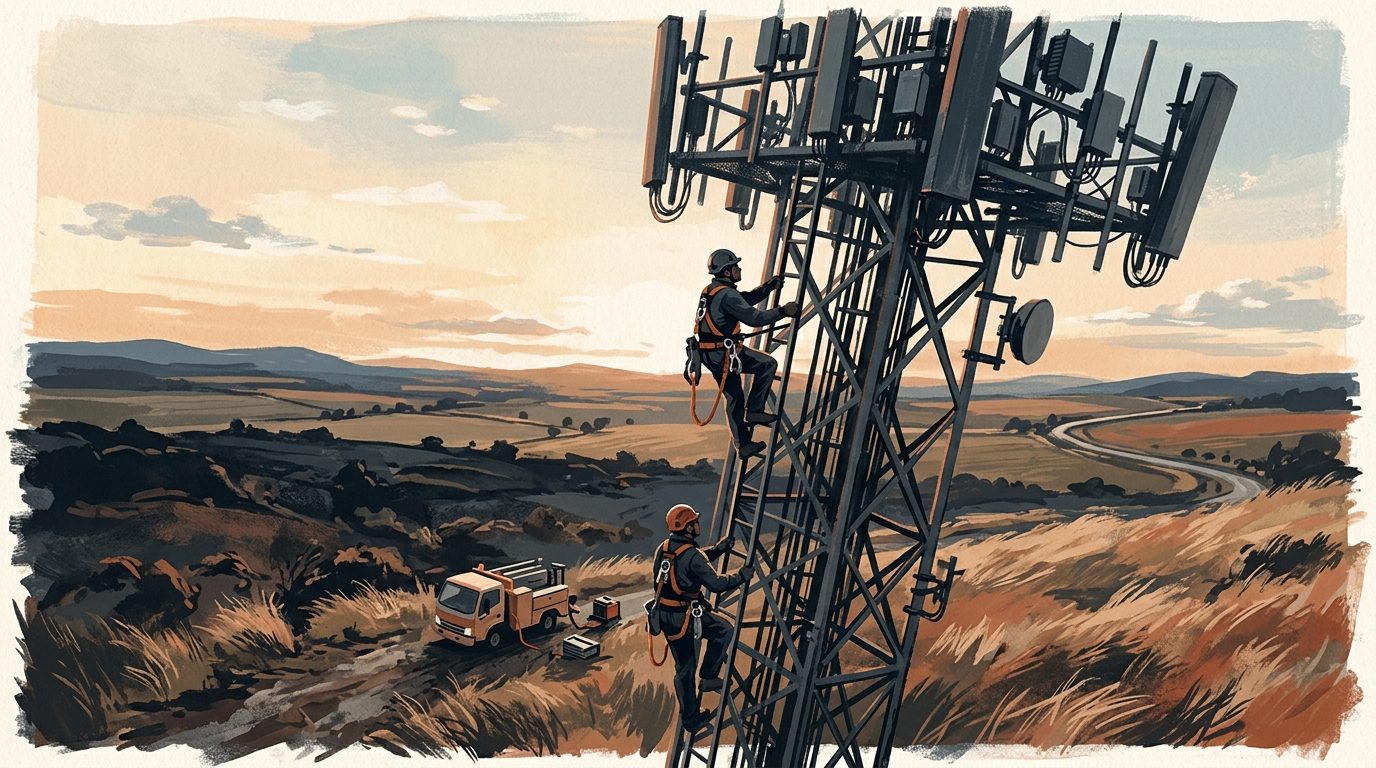
The tower nobody climbs
A cell tower climb is a day's work for two people in harnesses, and a bridge inspection used to mean a snooper truck hanging an engineer over live traffic. The published accounts from a national carrier and an engineering firm describe what changed when a camera went up instead. This is about the climb that did not happen.

The solar field that stopped losing money quietly
A utility-scale solar site can underperform for a year without anyone being able to say where. One operator in Texas put a docked drone on the site and found out. The published result is a 75 percent drop in underperformance and 2 million dollars a year recovered, and the quieter story is an operations team that stopped guessing.
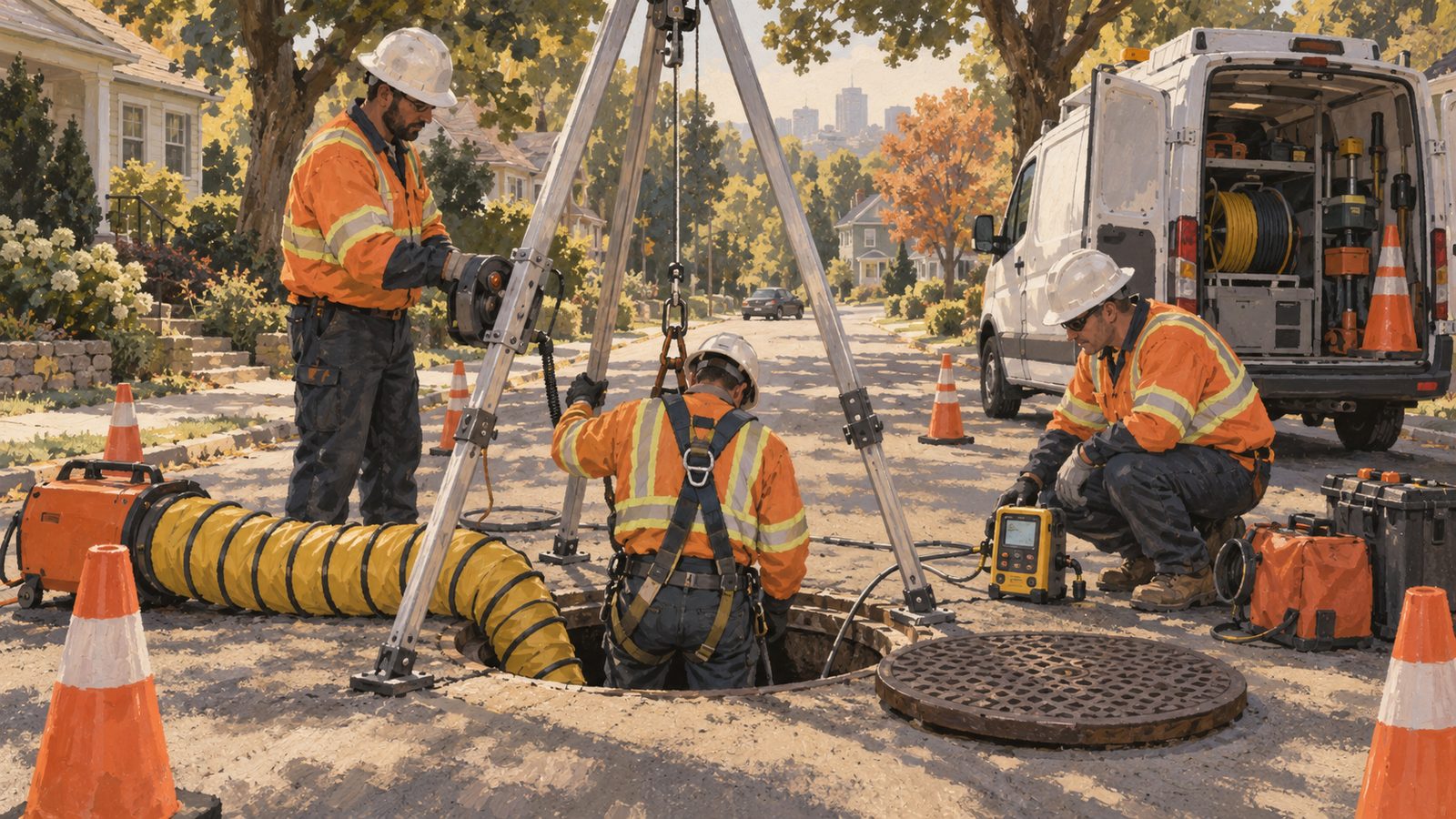
The sewer nobody enters
A sewer inspection used to mean a confined space entry into the worst air in the city, or a tethered camera that needed the line cleaned first. A city in Oregon runs crawler cameras through 800 miles of pipe. A global water company flies drones through its collectors. The point of both is the same, and it is not the pipe.
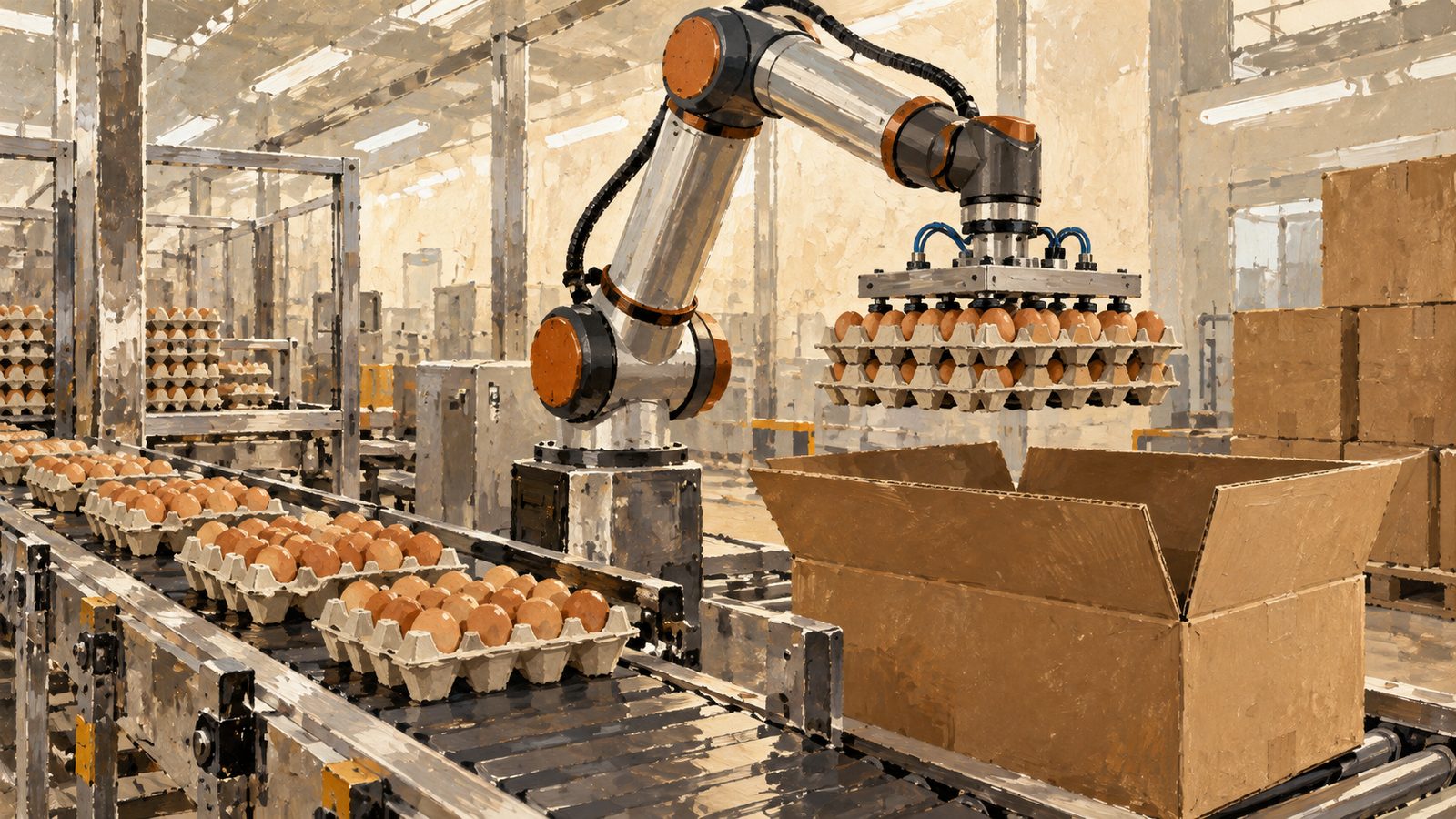
Gentle machines
Eggs and fresh herbs are the last things most people expect a robot to handle, which is why the two published accounts about them are the most instructive in the casebook. One plant case packs 1.5 million eggs a day with a cobot. One greenhouse boxes cut herbs with a soft gripper. The lesson is about where you grab a fragile thing.
The steadiest hand in the building
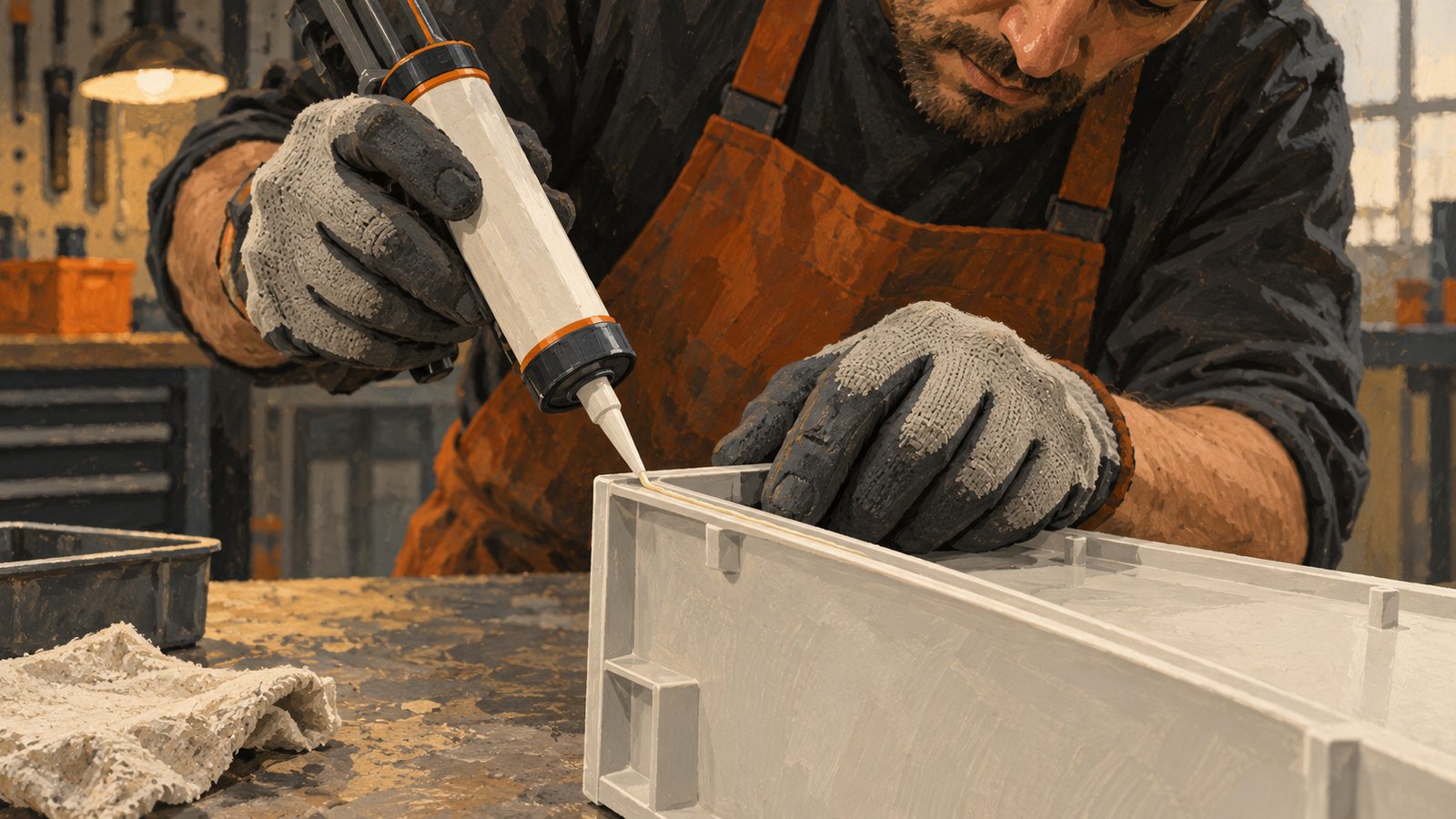
A narrow bead of glue in a channel an eighth of an inch wide is a job that punishes the human hand: tremor, fatigue, and a scrap rate that climbs through the shift. One aerospace shop in Tacoma gave the bead to a cobot. The maker publishes output doubled, scrap from 15 percent to 3, and four operators' work done by one. This is about the hand.
The back that stops hurting
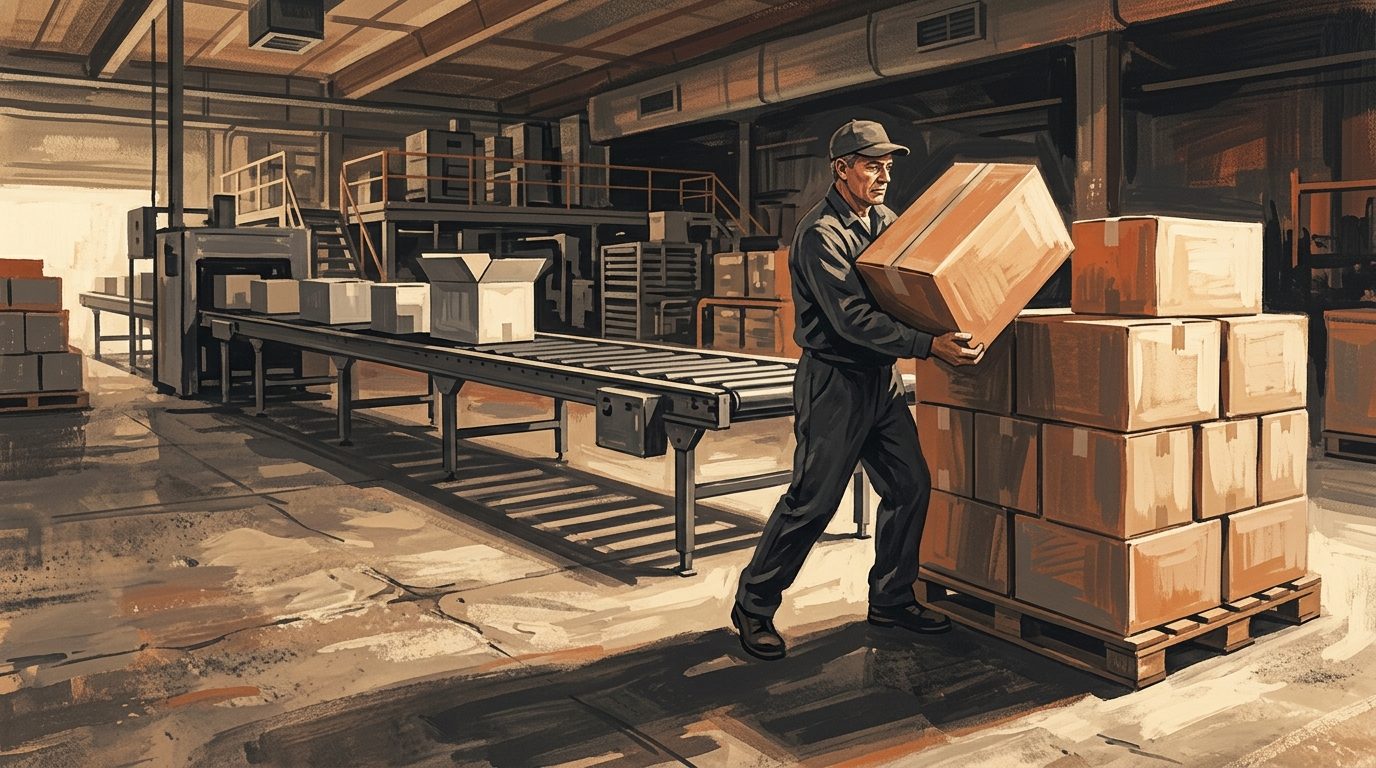
Forty tons of wine in cartons, lifted by hand in a single eight hour shift. That is a published number from a German bottler, and it is also a description of a person's lower back at six in the evening. Here is what palletizing automation actually buys, told from the end of the line, with the arithmetic still attached.
The owner who goes home at six
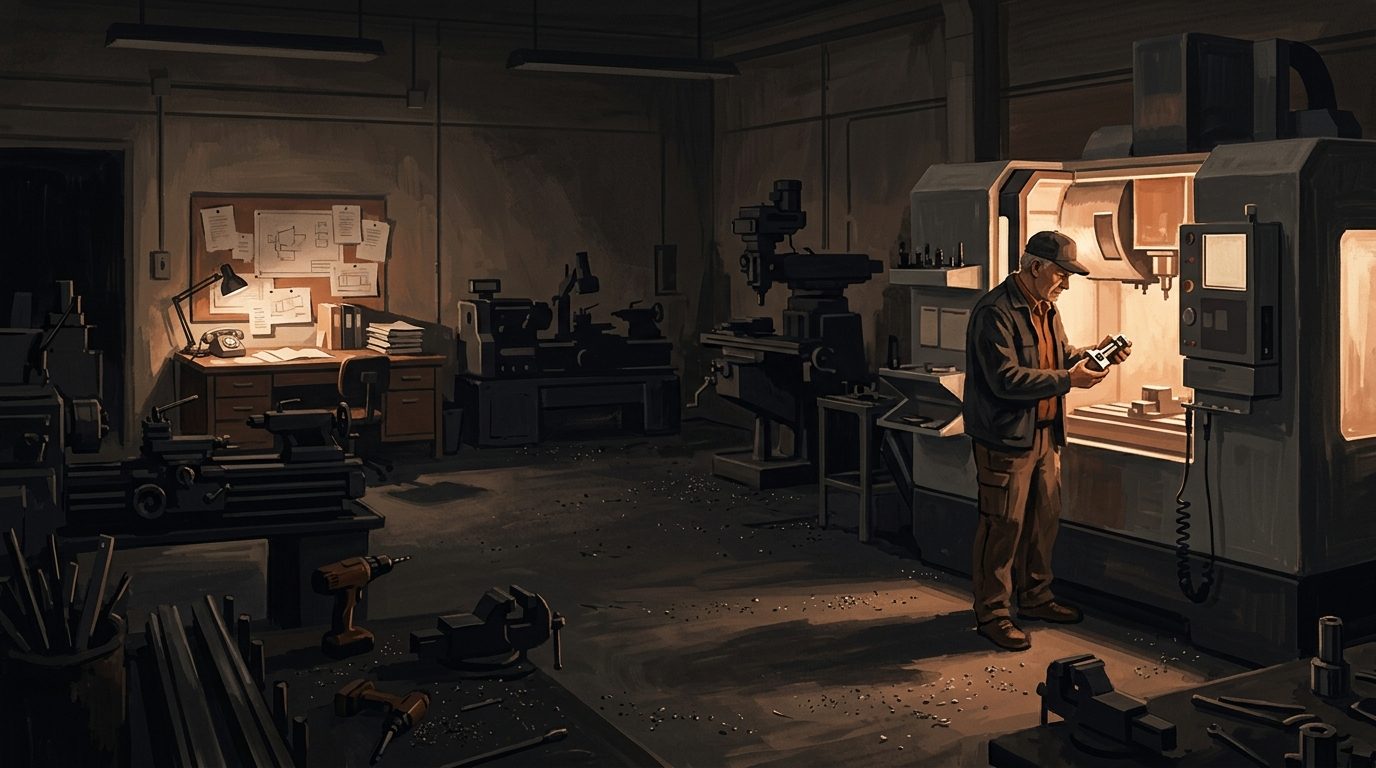
In a small machine shop the owner's evening belongs to the machine with the backlog. A tending cell changes who the evening belongs to. Here is what unattended spindle hours feel like from the owner's chair, with the published numbers from two shops that did it and the honest list of what it takes.

Give the welder back the weld
A good welder spends a surprising share of the day on beads a machine could lay: the long, straight, repeat ones that pay the bills and teach nothing. Collaborative welding cells take those, and what is left is the craft. Here is what that looks like, with the published numbers from an Ohio fabricator and the honest limits.
An hour returned to the night crew
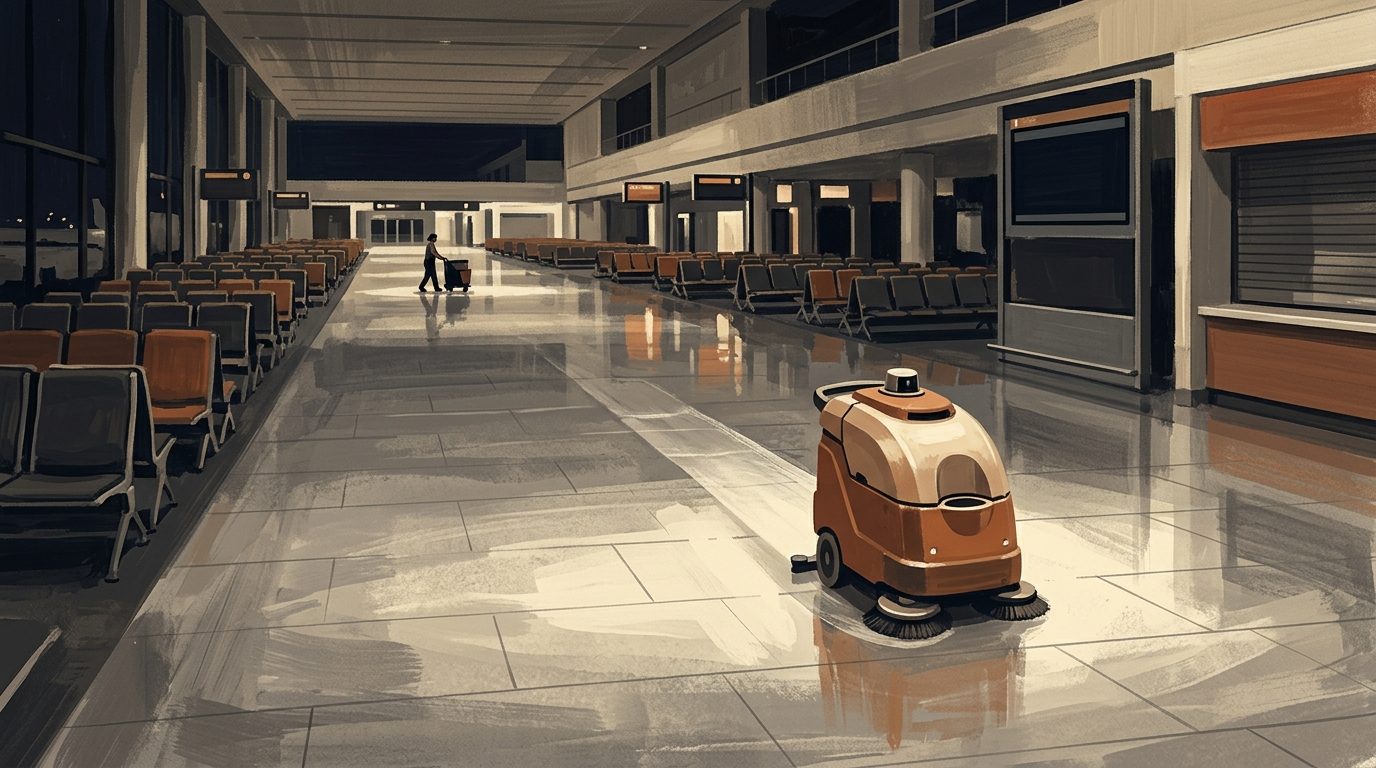
At three in the morning a floor scrubber is driving itself through a terminal, and the person who used to drive it is doing the part of the job that needed a person. The published numbers from an airport and a warehouse say what changed. This piece is about what the hour feels like, and about the one condition that makes the arithmetic work.
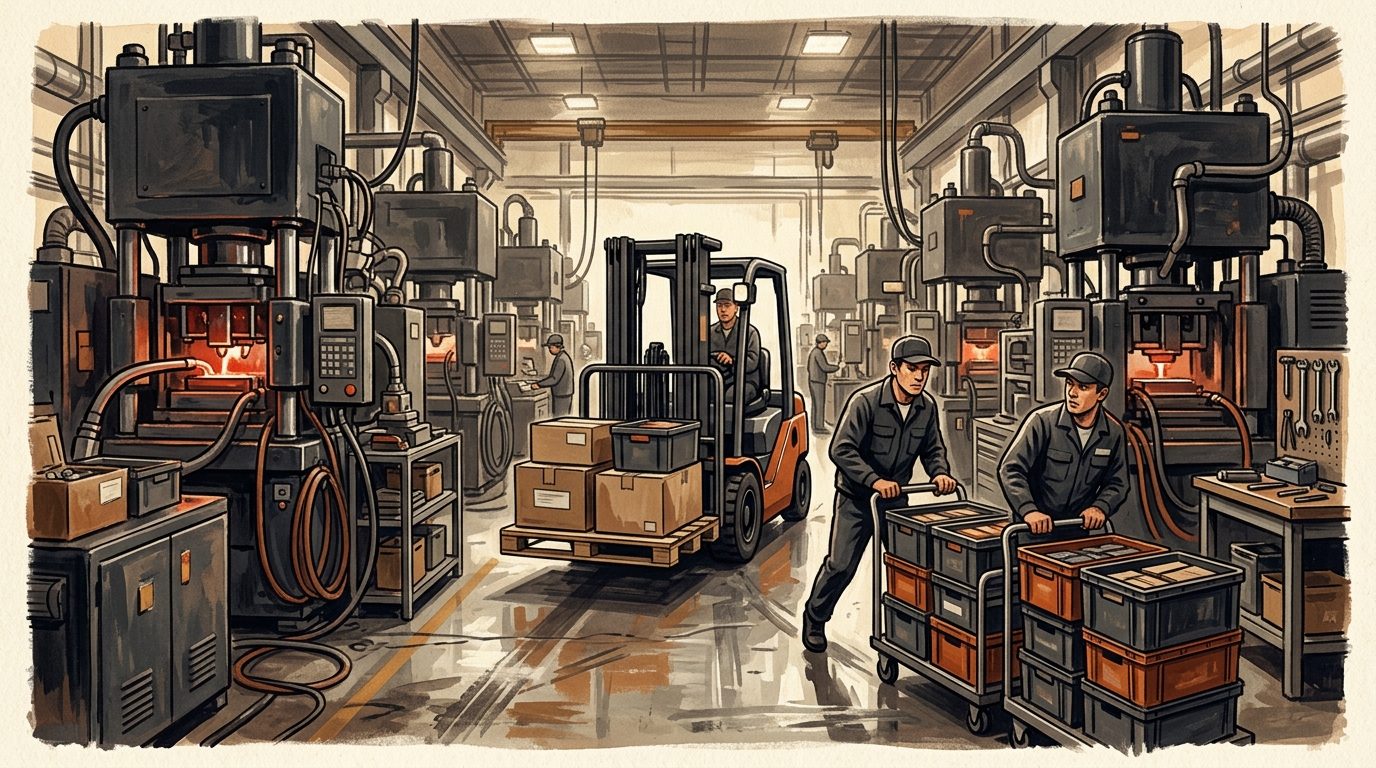
The quiet aisle
The sound of a plant that moves material by hand is a forklift horn, a pallet jack over a threshold, and somebody saying excuse me. A mobile robot does not take the noise away. It takes the people out of the forklift's path and gives them back the hours they spent walking. Here is what that is worth, in the published numbers and in the aisle.

The inspector eats lunch outside the tank
Confined space inspection used to mean a permit, a rescue team, a scaffold and a person in the dark next to the steel. A caged drone changed where the person stands. The published numbers from a nuclear plant and a Norwegian boiler are large. The thing they describe is smaller and better: an inspector who never went in.
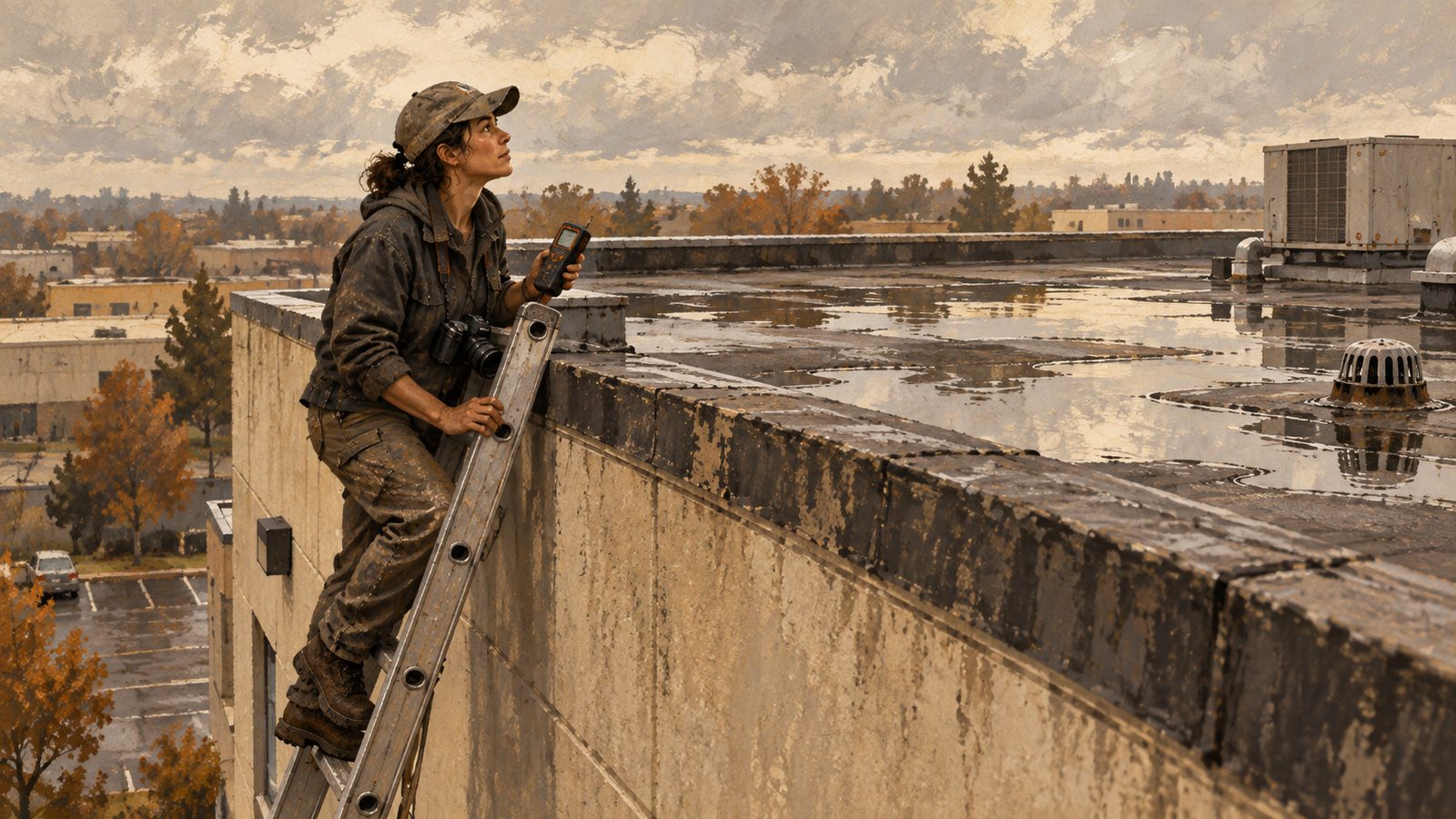
The estimator's ladder
A roofing estimator climbs a ladder several times a week, carrying a camera and a moisture meter, to look at a roof that would rather not be walked on. A drone with a thermal camera changes the ladder into an option. Here is what aerial roof survey gives back to the people who do that work, with a federal program's published scale and the honest line about who may fly.
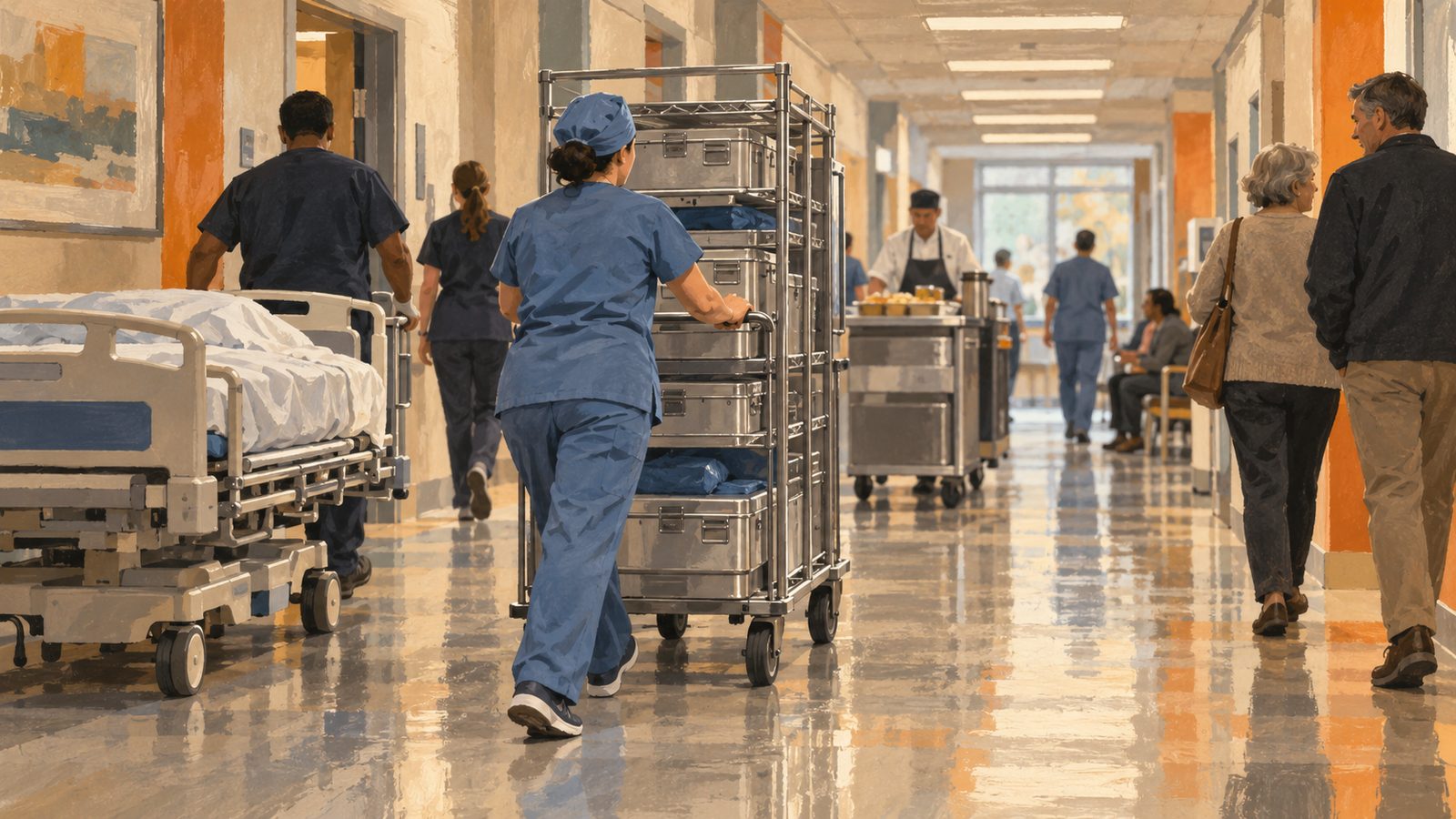
The nurse who stays with the patient
Hospitals move linen, meals, medications, specimens and surgical case carts all day, mostly by people who were hired to do something else. A mobile robot that can navigate a crowded corridor changes who pushes the cart. Here is what clinical hours returned look like, in a hospital's terms, with the honest list of what a building has to allow.
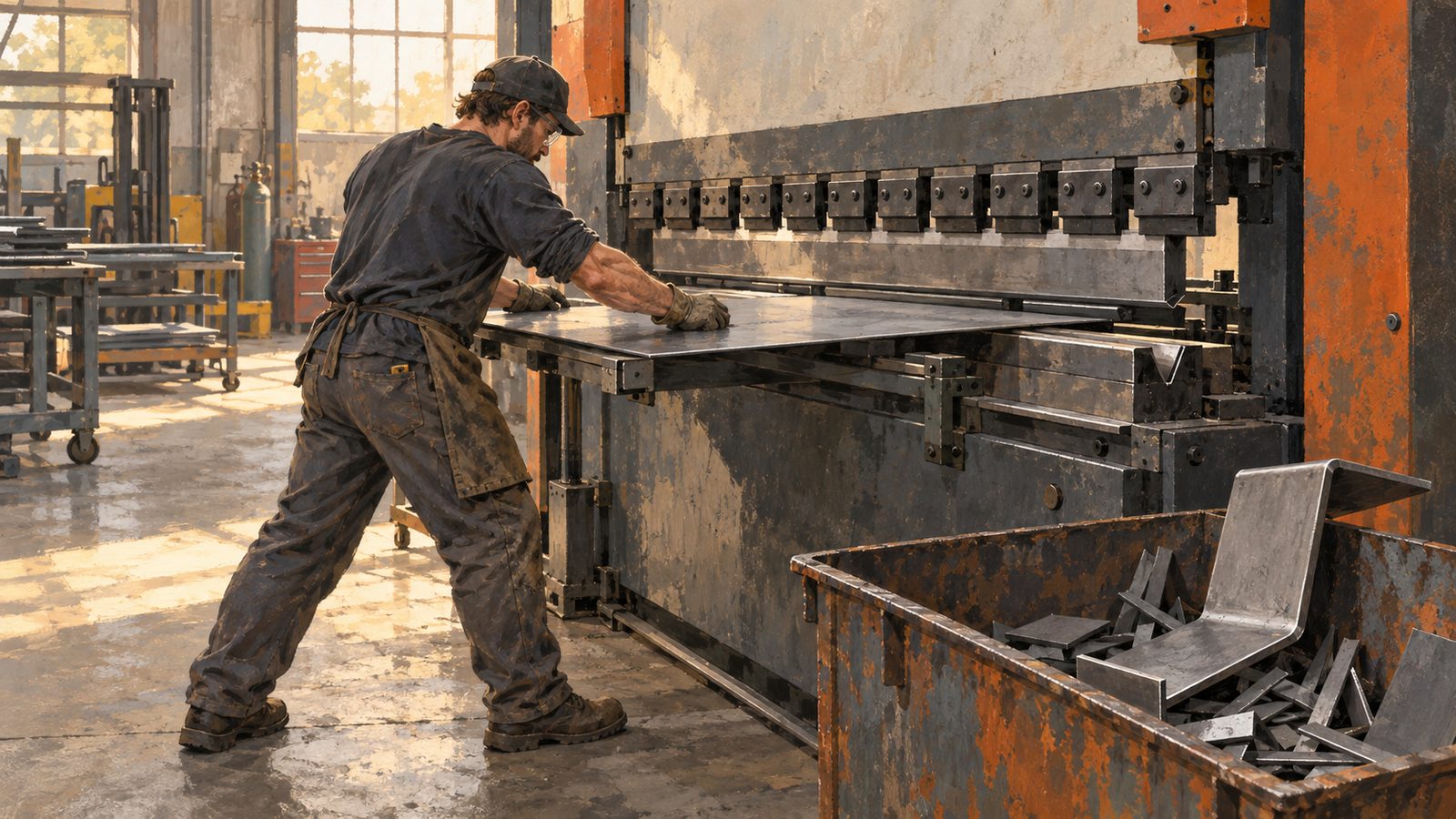
Three o'clock at the brake
A press brake operator holds a heavy sheet at an exact angle, hundreds of times a shift, and the errors arrive at three in the afternoon when the arms are tired. A bending cell holds the sheet instead. Here is what that returns to a fabricator, in the published words of two shops and the honest capital math that comes with heavier iron.
The dust that goes away
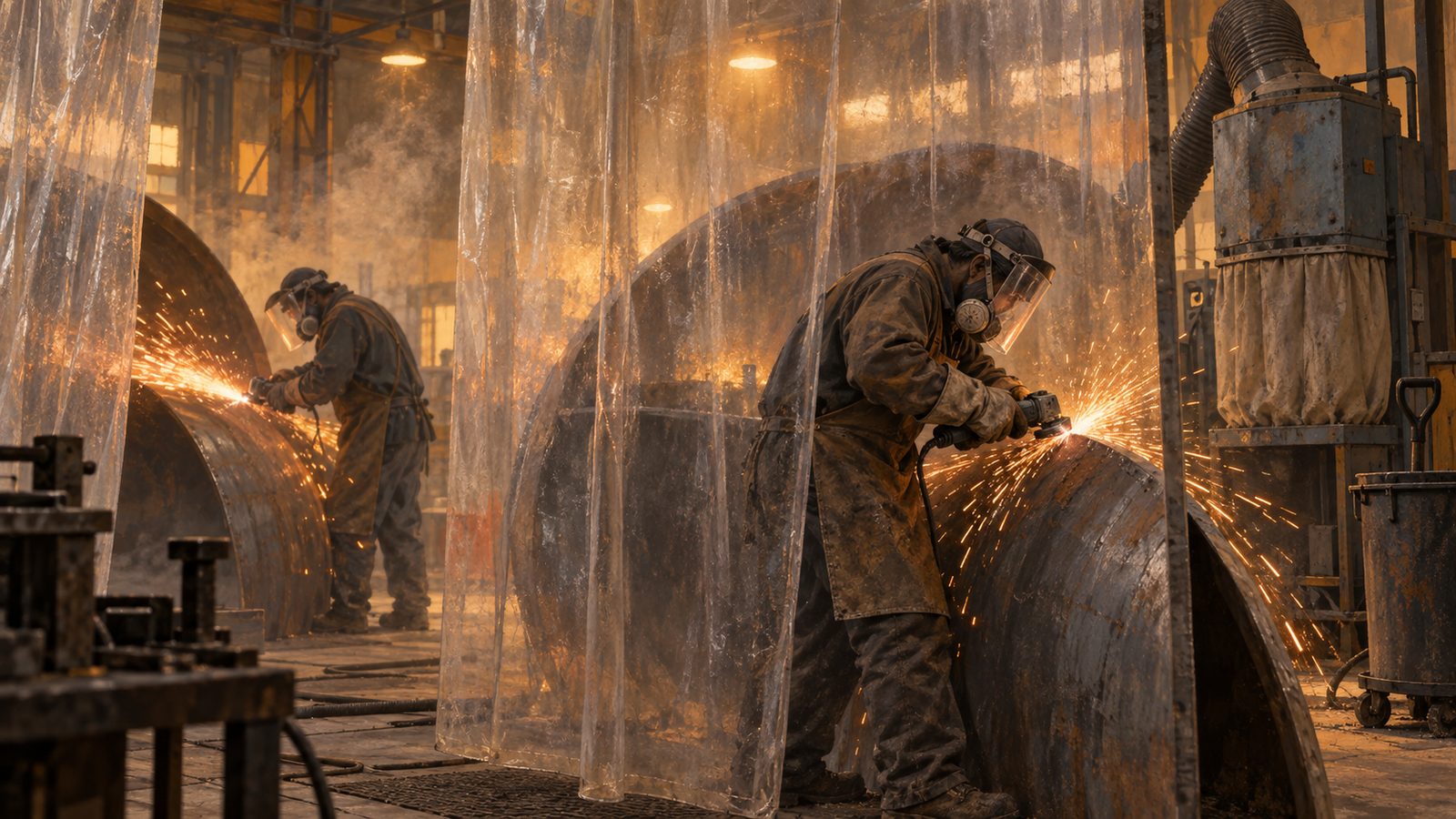
Sanding and grinding are the jobs a plant hides at the back, behind a curtain, under a dust collector older than the people using it. A force controlled robot does the sanding. The dust is still there, but the person breathing it is not. Here is what finishing automation returns, with a Virginia fabricator's published numbers and the consumable the robot will burn faster.

An answer in two hours
Public safety robots are sold with slogans and bought with grants, and the slogans are mostly wrong. The published accounts on this site are quieter and better: a sheriff's team that finds a drowning victim in two hours instead of days, a robot that takes a rifle from a barricaded man without a shot fired. Here is what these machines actually give back, and what a chief should buy and refuse to buy.

The quarry that knows what it has
Twice a year a quarry group learned, months late, how much rock it had, and wrote down the difference. Then its site teams started flying their own surveys and knew within a day. Here is what measurement from the air returns to an operation, with the published numbers and the modest, specific freedom of a manager who no longer has to guess.
Walkthroughs
What actually happens when you describe a station to the concierge: the questions, the turn, the shortlist. Composite examples, labelled as such.
What a walkthrough with Joe looks like: a packaging line nobody thought was automatable
People ask what actually happens when they describe a station to the concierge. Here is a composite walkthrough, built from the questions Joe asks on every packaging conversation, with the turn where the problem stops being the robot and starts being the pouch.
What a walkthrough with Amelia looks like: a roofing contractor who thought drones were for surveyors
The aerial side of the concierge starts somewhere different from the robotics side: with how the job gets done today. Here is a composite walkthrough for a commercial roofing contractor, including the compliance line the concierge speaks aloud every time and the moment it suggests not buying an aircraft at all.
Can I afford it?
Worked examples of the arithmetic, with every input stated and the version where the answer is no. Made-up but realistic numbers; put yours in the same slots.
I never thought we could afford a palletizer. Here is how the analysis plays out
A plant stacking 600 cases a shift on two shifts assumes a robot is for bigger companies. Run the arithmetic with honest inputs, the labor actually freed, the cell priced as a project and the operating cost included, and the answer is usually a payback in months, not years. Here is the math, step by step.
I never thought we could afford a tending robot. The spindle hours said otherwise
A job shop owner looks at a machine tending cell and sees a robot replacing an operator who costs less than the robot. That is the wrong frame. The return is unattended spindle hours sold at the shop rate. Here is a worked example that starts from that number.
I never thought we could afford a welding robot. Then we priced the work we were turning down
Welding automation looks unaffordable when you compare the cell to a welder's wage. It looks different when you compare it to the orders you decline every month because you cannot find a second welder. Here is that analysis, worked through with stated assumptions.
I never thought we could afford a floor scrubbing robot. The honest math said: only if it runs more
Autonomous scrubbers make headlines in airports that run them eight hours a day. A 150,000 square foot warehouse that scrubs once a night is a different arithmetic. Here is the worked example, including the part where the base case does not pencil and what changes it.
I never thought we could afford mobile robots. Then we counted the walking
Nobody has a line item for walking material across a plant. It is spread across a dozen people in ten minute pieces. Add it up and it is often a full position or two, which is the number an autonomous mobile robot has to beat. Here is the worked example, with the honest caveat about hours that disappear rather than convert.
I never thought we could afford press brake automation. The brake hours settled it
Press brake cells carry heavier capital than most first robots, so the instinct that you cannot afford one is reasonable. The analysis turns on one question: how many hours a week is the brake the constraint, and how many unattended hours could a cell add? Here is the worked example, including the version where the answer is no.
I never thought we could afford an inspection drone. The scaffold invoice settled it
Confined space inspection has a cost most plants only see at outage time: scaffolding, permits, a rescue team and days of downtime. Put that invoice next to an indoor inspection aircraft, or next to hiring an operator for the week, and the question flips. Here is the worked example.
I never thought we could afford a sanding robot. The dust and the overtime said otherwise
Sanding and finishing is slow, hard on people and inconsistent at the end of a shift, which makes it a natural robot job and a hard one to justify on wages alone. The analysis works when you include consistency, exposure and the consumables the robot will burn faster. Here is the worked example with all three in it.
It wasn't automatable until
Jobs that resisted robots for decades and the specific thing that changed: force control, hand teaching, 3D vision, natural navigation, caged aircraft.
Deburring wasn't automatable in a small shop until force control grew up
For thirty years a robot could hold a deburring tool but could not feel the part. Casting variation and tool wear made every edge slightly different, and a position-controlled arm either gouged or missed. Force control and compliant tooling changed that, and the job most shops dreaded became one of the more reliable first cells.
High-mix welding wasn't automatable until a welder could teach the robot by hand
Robotic welding was always a volume game: a programmer, a fixture, and a part number that ran for months. Fabricators doing fifty different weldments a week were told to come back when they had volume. Collaborative welding cells, taught by the welder rather than programmed by a specialist, moved the line.
End-of-line palletizing wasn't worth automating at low volume until cobot palletizers shrank the cell
A conventional palletizer needed a fenced footprint the size of a two car garage, a controls engineer and a line that ran fast all day. For a plant stacking a case every forty seconds on two shifts, the robot was always too big. Collaborative palletizers with a lift column and a vacuum gripper made the footprint, the setup and the price fit the job.
Mixed-case depalletizing wasn't automatable until 3D vision could find a box it had never seen
Unloading a pallet of identical cases was solved long ago. Unloading a pallet of mixed cases, different sizes, random order, some shrink-wrapped and some not, was a job only a person could do. Three dimensional vision with learned box detection changed what a robot can pick without being told what is coming.
CNC machine tending in a 20-person shop wasn't automatable until the robot could move between machines
A dedicated tending cell made sense next to a machine that ran one part all year. A job shop with six machines and a hundred part numbers could not justify a fixed robot at any of them. Collaborative arms on wheeled carts, with standardized workholding and automatic doors, made one robot serve several machines and many jobs.
Overnight floor scrubbing wasn't automatable until a machine could map the building and stay out of the way
Ride-on scrubbers have existed for decades. What did not exist was a scrubber that could learn a building, run the same route every night without a driver, stop for a pallet left in the aisle, and report what it cleaned. Autonomous navigation did that, and it changed who does the floor at two in the morning.
Inspecting a tank or boiler without sending a person inside wasn't possible until drones could bump into walls
Confined space inspection meant a permit, a rescue team, scaffolding and days of downtime, because the only way to see the far wall was to put a person next to it. Collision-tolerant indoor drones made it possible to fly a camera and a light into the space instead, and the published results are measured in days saved and scaffolds not built.
Moving carts through a hospital wasn't automatable until a robot could navigate without tape on the floor
Hospitals move linen, meals, pharmacy totes, specimens and surgical case carts all day, mostly by hand, through corridors full of people. Automated guided vehicles needed magnetic tape or reflectors and stopped for anything in the way. Mobile robots that navigate on their own map, around people, made the hospital hallway a route a machine can run.
What changed when they automated
Published deployments, retold with the numbers exactly as the maker or the press published them, and a plain account of what the account does not tell you.
What changed when a Washington machine shop filled its night shift with a cobot
Toolcraft Inc. of Monroe, Washington won a medical device order that needed round the clock production and could not hire a third shift. A cobot now tends a vertical machining center. Weekly output rose from 255 to 370 parts and production cost fell 23 percent, as reported by trade press and the vendor.
What changed when a 25 person optics shop ran its Haas overnight with a vision guided cobot
Walt Machine of Lumberton, Mississippi gets one order a spring for about 6,000 camera housings and ran it on a single Haas with the machine idle all night. A UR10 with a wrist camera now loads blanks from a table. Daily output doubled, and the published account says plainly that cycle time did not improve at all.
What changed when an Ohio fabricator put its welders in charge of four cobot welding cells
Raymath, an Ohio contract fabricator, could not hire enough welders to keep up. It moved repetitive MIG work onto four cobot welding cells and added a cobot TIG system for aluminum. The vendor reports welding productivity up 200 percent, one part falling from 15 minutes to 5 or 6, and payback under a year.
What changed when a California winery stopped hand stacking 15 kilogram wine cases
Martin Ray Winery ran a bottling line where employees stacked wine cases by hand all day. It installed a collaborative palletizer built on a UR20. The vendor publishes 6 to 10 picks a minute, a prior manual labor cost of about 100,000 dollars a year, and an 18 month payback it describes as its own claim.
What changed when an egg plant case packed 1.5 million eggs a day with one cobot per line
Cascina Italia packs egg cartons into large corrugated cases for supermarkets. Workers built the bulky cases by hand at the line output stations. A UR5 with a pneumatic tray gripper now loads cases layer by layer, handling about 1.5 million eggs a day per the vendor, with a one year payback the vendor claims.
What changed when an aerospace shop doubled a glue cell and cut scrap from 15 percent to 3 percent
Tool Gauge in Tacoma ran a glue dispensing assembly with four operators making about 200 units a day and high scrap from hand fatigue. A UR5 now picks each end cap, runs it through the dispenser and places it for one operator to inspect. Output went to 400 a day and scrap fell from 15 percent to 3 percent, per the vendor.
What changed when a 54 person molder put one cobot on wheels and ran a station 24/7
At AIM Processing in Colorado a worker sat at a tray station and moved a tray every 90 seconds for a cartesian robot, working a couple of seconds per cycle, 40 hours a week. A UR5e on a mobile platform now does it around the clock and moves to two other jobs. The vendor publishes a fourfold output increase and payback inside 15 weeks.
What changed when a New Jersey electronics plant put two mobile robots on bus routes
Magna-Power builds made to order power systems in a 73,000 square foot Flemington plant where parts flowed between departments by hand. Two MiR100 robots now run scheduled routes between the stockroom and each department. The vendor reports about three full time employees of transport work freed and trade press reports payback under a year.
What changed when an Indiana molder replaced forklift laps with a mobile robot loop
Metro Plastics wanted forklifts off its production floor and finished parts checked sooner. A MiR200 with a counter height top module now loops the floor every 30 minutes, pausing at each press to collect parts for quality inspection. Defects surface while a job is still running instead of days later.
What changed when a Virginia fabricator put a robot on grinding 1,000 trays a day
Lawrence Brothers of Bluefield, Virginia grinds 1,000 metal material handling trays a day, a job that drove turnover and sent eight to ten trays a day back for rework. A FANUC arm with scanning software that generates each tray's grind path now does it. The vendor reports production up 38 percent and rework down 95 percent.
What changed when a Quebec fixture maker unloaded a brake press in six feet of floor space
At Etalex in Quebec one employee unloaded a brake press by hand eight hours a day in a busy aisle with no room for guarding. A UR10 with suction cups now picks each part and stacks it on a cart across 10 production cycles. Manual work on the task fell to about an hour a day, with an estimated 12 month ROI per the vendor.
What changed when a nuclear plant inspected its condensers in 8 hours instead of 8 days
Dominion Energy's Surry Power Plant used to build scaffolding inside its main condensers and work crews at height through seven days of twelve hour shifts. Its unmanned systems group now flies a collision tolerant drone inside the condenser during shutdowns. The vendor publishes inspections cut from 8 days to 8 hours and more than 200,000 dollars saved per shutdown.
What changed when a Norwegian power plant replaced 450,000 euros of boiler scaffolding with a drone
Returkraft's waste to energy plant used to put 10 to 15 scaffolders inside its boiler for a collective 1,700 hours, then 300 hours of ultrasonic thickness readings. One or two pilots now fly an Elios 3 with a thickness probe and capture the data from the ground. The vendor publishes 150 measurements in 2.5 flight hours and 48 hours less outage.
What changed when a California police department sent drones to 911 calls before patrol cars
The Chula Vista Police Department has flown teleoperated drones to live 911 calls since October 2018, launching from sites around the city with pilots who listen to calls in real time. Trade press reports more than 25,000 missions, a drone first on scene 17,170 times, and 4,629 calls resolved without a patrol response.
What changed when a Cincinnati airport put one robot scrubber on 200,000 square feet a week
Cincinnati/Northern Kentucky International Airport doubled its passengers from 4.5 million to 9.1 million a year with 120 housekeepers scrubbing floors by hand driven machine. In November 2019 it put an Avidbots Neo to work, the first at a US airport. The vendor publishes 200,000 square feet a week in the pilot, 5 million in year one, and the airport's own 12 to 18 month payback estimate.
What changed when a quarry group measured its stockpiles by drone and ended inventory write-downs
Boral's six Victorian quarries measured inventory twice a year by manned aircraft survey, with results arriving months later against an assumed flat base, so book stock drifted badly. Site teams now fly their own drone surveys and process them in Propeller. The vendor publishes a 24 hour turnaround and write-downs ended in under six months.
Plain talk, with jokes
The pieces people forward: what the words mean, what the movies get wrong, what happens at 2 AM when the robot texts you. Same honesty rules, lighter touch, the occasional nod to HAL.
Why the demo always works, and how to run one that tells the truth
Every robot demo succeeds. The parts are perfect, the lighting is good, the speed is set a little low, and the one part that always jams was left in the truck. Here is why that is not dishonest, exactly, and how to run a demo that tells you what the cell will do at four in the afternoon on your floor with your parts.
What Asimov got wrong about the factory floor
The Three Laws of Robotics are eighty years old, beautifully written, and useless for buying a palletizer. The real first law of a working cell is shorter and less poetic: a certified integrator signs the risk assessment, and nobody gets to skip that paragraph.
Can an AI really tell you whether your job is automatable? What Joe can and cannot do
People are right to be suspicious of a chatbot that recommends robots. Here is exactly what the concierge on this site knows, what it is forbidden to say, and where it hands you to a human, written for the reader who has seen 2001 and would like to keep the pod bay doors operable.
Lights-out manufacturing: what actually happens at 2 AM
The brochure shows a dark plant humming along while the owner sleeps. The reality is a text message at 2:14 AM that says FAULT 118 and a decision about whether to drive in. Here is what unattended production looks like after the ribbon is cut, and how to design the night so the phone stays quiet.
Ten questions that make a robot salesperson sweat
Robot sales calls are mostly pleasant and mostly one-sided. These ten questions turn the conversation around. None of them is rude, every one of them has a right answer, and the way a seller handles them tells you more than the demo does.
A plant manager's glossary: cobot, AMR, end effector, and other words people use to sound expensive
Automation has a vocabulary problem. Half the words mean something precise and the other half are marketing. Here is the working glossary, written for someone who runs a plant and would like to understand the quote without pretending.
Why your Roomba makes factory robots look expensive, and why the comparison is wrong
A robot vacuum costs a few hundred dollars. A robot floor scrubber for a warehouse costs a great deal more, and the first question every facilities manager asks is some version of why. The answer is not greed. It is duty cycle, safety rating, weight, water and the person who answers the phone.
Three ways a payback calculation lies to you, and how to make it tell the truth
Every automation quote comes with a payback number, and most of them are honest arithmetic on dishonest inputs. Here are the three places the number goes wrong, in order of how much money each one costs, with the fix for each.
Grippers, explained with a kitchen drawer
Open the drawer next to your stove. Tongs, a spatula, a ladle, a magnet on the fridge, a rubber jar opener. You already own every kind of robot gripper there is. Here is what each one is called in a quote, what it picks, what it drops, and why the drawer matters more than the arm.
What happens the day the robot arrives
The robot arrives on a Tuesday, in a crate, on a truck that cannot get to your dock. Here is the delivery week as it actually happens, from the rigger who was not booked to the first jam at 3:40 on Thursday, and what to do the week before so that none of it surprises you.
Robots don't take breaks, but they do take vacations: uptime, maintenance and the spare parts shelf
The pitch says the robot runs around the clock. It does, between the times it does not, and those times are scheduled, mostly, by you. Here is what maintenance, wear parts and uptime actually look like for a cell in a small plant, and how to buy so that the vacations are short.
What a robot eats: power, compressed air, sandpaper and software
A robot has no salary, which is the whole pitch, and it has an appetite, which is the part of the pitch nobody finishes. Here is what a working cell consumes in a year, line by line, so the operating cost shows up in your arithmetic before it shows up on your invoices.
Fenced or fenceless: the napkin version of a decision the integrator will finish
Every buyer wants the fenceless cell. It is smaller, cheaper to build and friendlier to look at. Sometimes it is also the right answer. Here is how to make the first cut on a napkin, before an integrator makes the real decision in a risk assessment that you do not get to skip.
Who's afraid of a 20 kilogram arm? Your operators, and they are right to ask
The robot arrives and the quietest person in the plant asks the loudest question: is this here to replace me? The honest answer in most small shops is no, and the honest follow-up is that the job will change. Here is how the shops that keep their people handle the first month, and why the operator is the most important part of the cell.
How fast is fast? Cycle time, takt time and the one number that actually matters
Robot brochures quote speed in degrees per second and picks per minute. Your line runs in cases per hour on a Thursday afternoon. Here is how the three time words relate, with a worked example, and why the number the cell has to beat is never on the datasheet.
The second robot is easy. Here is why the first one is hard
Shops that have one robot usually get a second within two years, and the second project takes half the time and a quarter of the anxiety. That is not because the robots got better. It is because the shop learned five things the first time that no vendor could have taught it. Here they are, so you can learn them before the first one instead of during.
What the movies get wrong about robots, and what it costs you
Every robot you grew up with was shaped like a person, did everything, and either saved the day or ended the world. Every robot that will pay for itself in your plant is shaped like an arm, does one thing, and is boring. The gap between those two pictures costs buyers real money in two directions. Here is how.
How we work
Why an independent dealer answers differently from a single-line distributor, why the concierge says no, and where our own bias lives.
Most robot sellers represent one maker's line. Here is what changes when your dealer doesn't
Robots in the United States are sold through territorial distributors appointed by one manufacturer at a time, and by integrators who standardize on one or two arms. That structure quietly shapes the first advice a buyer gets. An independent dealer changes the order of the conversation.
Why Joe sometimes tells you not to buy a robot
The concierge on this site turns down projects. Not because the robots cannot do the work, but because the station, the rate or the arithmetic says the project would disappoint. Here is what it is checking, and why a dealer that says no stays in business.
What an independent robot dealer actually does for you, and what it does not
A dealer is not an integrator and not a manufacturer. Knowing where the lines fall tells you what to expect from Steel Collar, what to expect from the engineering firm that builds your cell, and why the two-layer structure protects you.
Field notes from the applications side
The arguments we make to customers before they spend money: sizing, grippers, integrators, quotes, safety, and the jobs a robot will not do.
UR Gen 7: what changes for a small shop, and what does not
Universal Robots launched its seventh generation platform at IMTS on September 14, 2026. Three new arms, a new controller, a new pendant and a new operating system. Here is what a 20 to 200 person shop should take from it, and what it should ignore.
The FCC humanoid rule: what a plant can still buy, and what it should
On July 28, 2026 the FCC closed the door on new authorizations for foreign-made humanoid robots, quadrupeds and wireless-jointed mobile robots. Buyers keep asking us what that means. The honest answer is that it changes very little for a working plant, and here is why.
Which floor scrubbing robot fits which building
Autonomous scrubbers are the most proven facilities robot there is, and the most misquoted. The maker's square feet per hour is the number everyone repeats and nobody achieves. Here is how we sort the field, machine by machine, without a single price.
The tether is the second crew member
Buyers price a confined space ROV job as one machine and one pilot. The manufacturers' own piloting guides describe a two person job with a practice budget and a bag of accessories, and an honest quote says so before the first dive.
The funding source picks the aircraft
Before anyone opens a catalog, find out whose money is buying the drone. On public and federally funded projects, the answer quietly removes most of the market.
Nobody enters the tank
The honest case for indoor drones is not that they fly. It is that the confined space entry they replace was always the real cost.
The ladder before the drone
A fixed camera, a pole camera, a crawler or a rope crew sometimes beats a drone. A drone dealer who says that out loud is more useful than one who does not.
Buy the data before you buy the satellite
Most organizations that ask about owning a satellite need the result a satellite produces, and the result is usually for sale by itself.
Why we make introductions above the atmosphere
On the ground we recommend equipment by name. In orbit we do not, and the reasons are the honest kind.
Name the crime problem before the technology
City halls are being sold public safety technology by category. The buying question is not which camera. It is which crime.
The four ways agencies actually buy
Most public purchases travel one of four roads. Knowing which roads are open changes what you shop for, so check before you fall in love with equipment.
One side of the table
We sell equipment for a margin. Sometimes we advise buyers for a fee. We never do both on the same purchase, and the line is bright on purpose.
Size for peak, not average
The single most common way a palletizing or packing cell disappoints is that somebody sized it against the number on the production report instead of the number the line actually hits at four in the afternoon.
Your first robot should not be your hardest job
Most shops instinctively point automation at their worst problem. That instinct is right about where the pain is and wrong about where to start.
The gripper is the project
Buyers compare robot arms. Integrators worry about grippers. That gap explains most of the surprises in a first automation quote.
Automating the wrong station buys inventory, not throughput
If the station you automate is not your constraint, you have not bought more output. You have bought a faster way to make work in process pile up somewhere else.
Why we will not tell you a cell is safe
We get asked to confirm that a proposed setup is safe, usually by someone who just wants to move forward. We will not do it, and the reason is worth understanding rather than working around.
The last ten percent costs more than the first ninety
Almost any repetitive job automates cheaply up to a point. The exceptions are what you actually pay for, and they are usually invisible when the project is scoped.
Collaborative does not mean fenceless
The most expensive misunderstanding in this industry is that buying a collaborative robot means you have bought your way out of a risk assessment. You have not.
Payback math lies when the labor was never there
The standard automation justification divides equipment cost by labor saved. That arithmetic breaks quietly when the labor you are saving is labor you could never hire in the first place.
What a robot will not do at your station
The person at that station is doing more than the task you would describe if we asked. Naming the rest before you buy is the difference between a happy installation and a disappointed one.
A model number is not a specification
We maintain a verified database of several hundred robots, and building it taught us something worth passing on: manufacturers name their products by incompatible conventions, and the number in the name is often not what you think.
Decide who will run the cell before you buy it
The most common reason a working robot cell underperforms in year two is not the robot. It is that nobody was ever actually given the job of running it.
The integrator is the one who signs
Most robot projects involve three companies, and the one that matters most to you is not the one whose name is on the arm.
How to read an automation quote
The robot is usually the smallest number on the page and the only one anybody looks at. Here is where the rest of the money actually is, and which paragraph decides whether you ever get to call the project finished.
The integrator you want has said no before
There is one question that sorts integrators faster than any credential, and almost nobody asks it.
A mobile robot is not an arm on wheels
Everything that makes a robot arm project succeed is about the work envelope. Almost nothing that makes a mobile robot project succeed happens inside one.
Have a job in mind?
Joe will apply any of this to your actual numbers, and tell you plainly when a robot is the wrong answer.