The quiet aisle
The sound of a plant that moves material by hand is a forklift horn, a pallet jack over a threshold, and somebody saying excuse me. A mobile robot does not take the noise away. It takes the people out of the forklift's path and gives them back the hours they spent walking. Here is what that is worth, in the published numbers and in the aisle.
The short answer
Nobody in a plant has the job title of walker, and yet a plant spends a remarkable number of hours walking: totes to packing, empties back, raw material to the press, finished parts to inspection, the forklift lap that happens because the pallet is on the wrong side of the building. A mobile robot takes the routes that repeat. What the plant gets back is hours, and a thing harder to count, which is an aisle where forklifts and people stop sharing the same square meter.
The sound of a plant
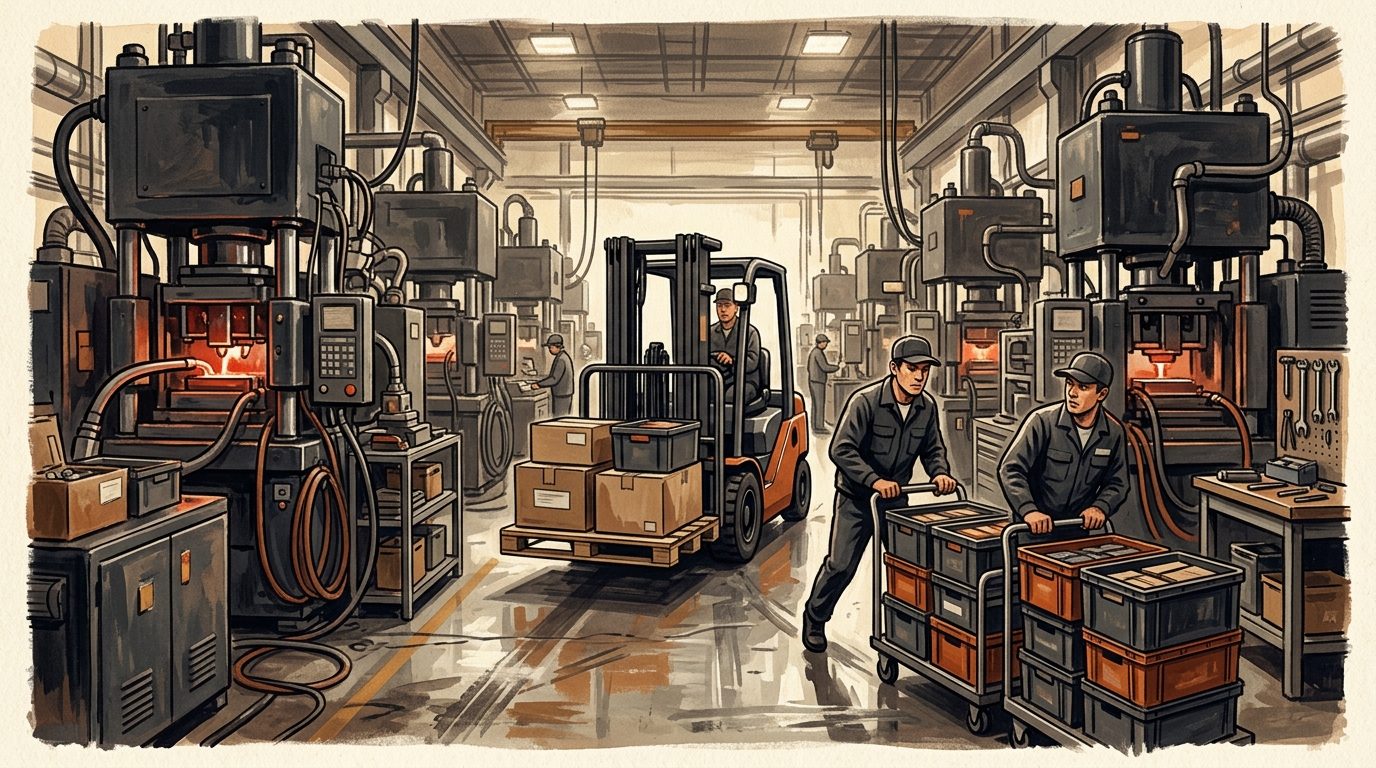
Picture an injection molder at ten in the morning. The scene is imagined; the numbers below are not. Twelve presses running, four of them dropping finished parts into boxes that fill every forty minutes, and three material handlers doing a circuit that was never designed, only accreted: box to the scale, scale to the cart, cart to the dock, back with empties, with a forklift coming the other way carrying a pallet of regrind through the same aisle because that is where the aisle is. A horn. An excuse me. Everyone is careful and everyone has had a near miss they did not report.
What two plants published
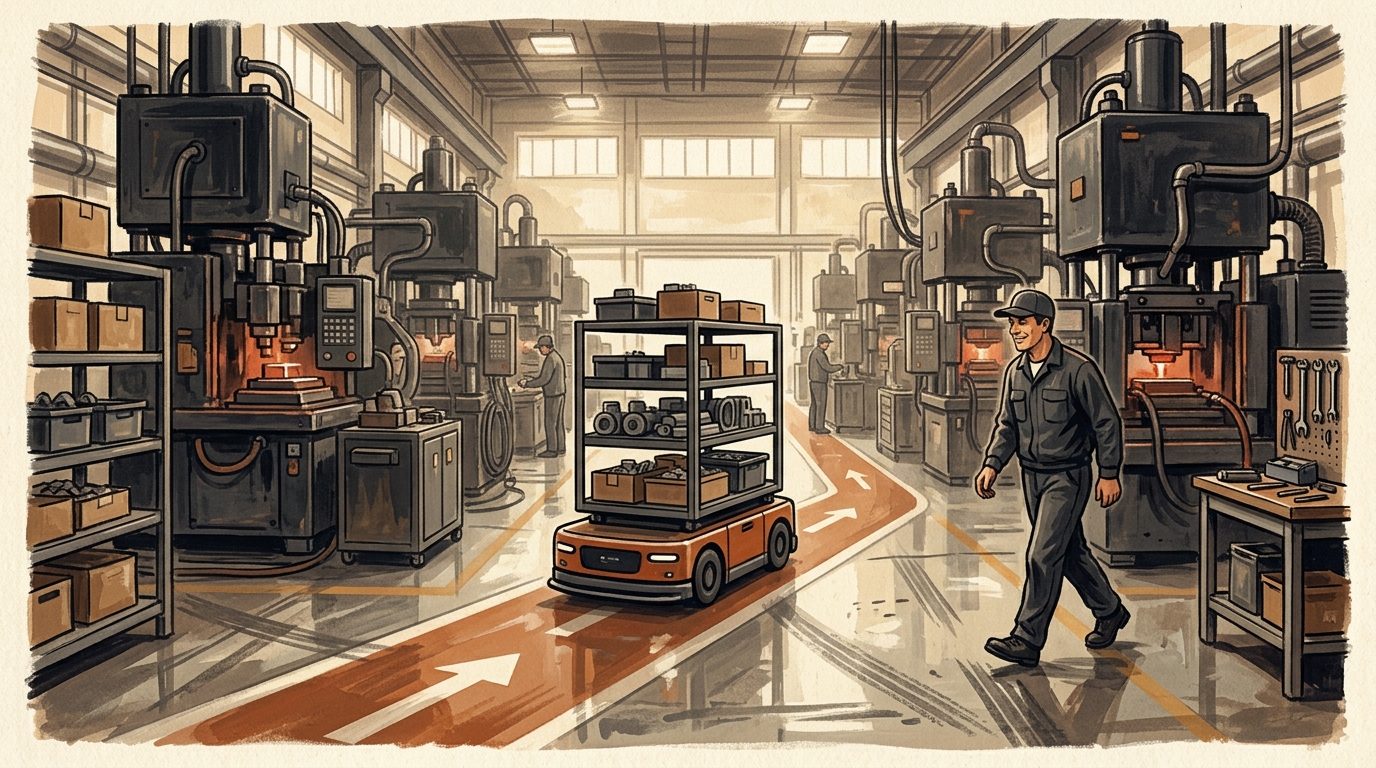
The casebook on this site carries a family owned New Jersey power electronics manufacturer where parts flowed between sheet metal, machining, board assembly and test by hand. Two MiR100 mobile robots now run scheduled bus routes between the stockroom and each department. Trade press reports an average of 4.6 miles traveled a day and a payback under one year; the vendor reports transportation work equal to about three full time employees freed for higher value tasks. The fixed loops on a schedule are the insight: simple to justify, easy for the crew to trust, no call buttons on day one.
An Indiana molder, family owned since 1974, wanted forklifts off its production floor and finished parts checked sooner. One MiR200 with a counter height top module loops the floor roughly every 30 minutes, pausing about 30 seconds at each press to collect parts for quality inspection, as the vendor published it. The defect that used to run for most of a 2.4 day job now surfaces inside the hour. The president is quoted that the robot cost about half of the wire guided vehicle the shop had considered, a claim without dollar figures, and this site says so.
The hours, honestly
The worked example on this site counts 7.5 person hours a day of walking across three handlers, about 48,750 dollars a year at a loaded rate, and pays back one robot with a hook in about two years at the midpoint of the planning range, if the hours convert to work the plant needs done. If only half convert, past four years. That caveat is the whole piece. Hours saved are only money if the people do something with them, and in a plant with packing, quality checks and press attention waiting, they usually do. The concierge asks what the people will do with the time before it names a robot, because a robot that saves hours nobody uses has saved nothing.
The aisle, which is not in the arithmetic
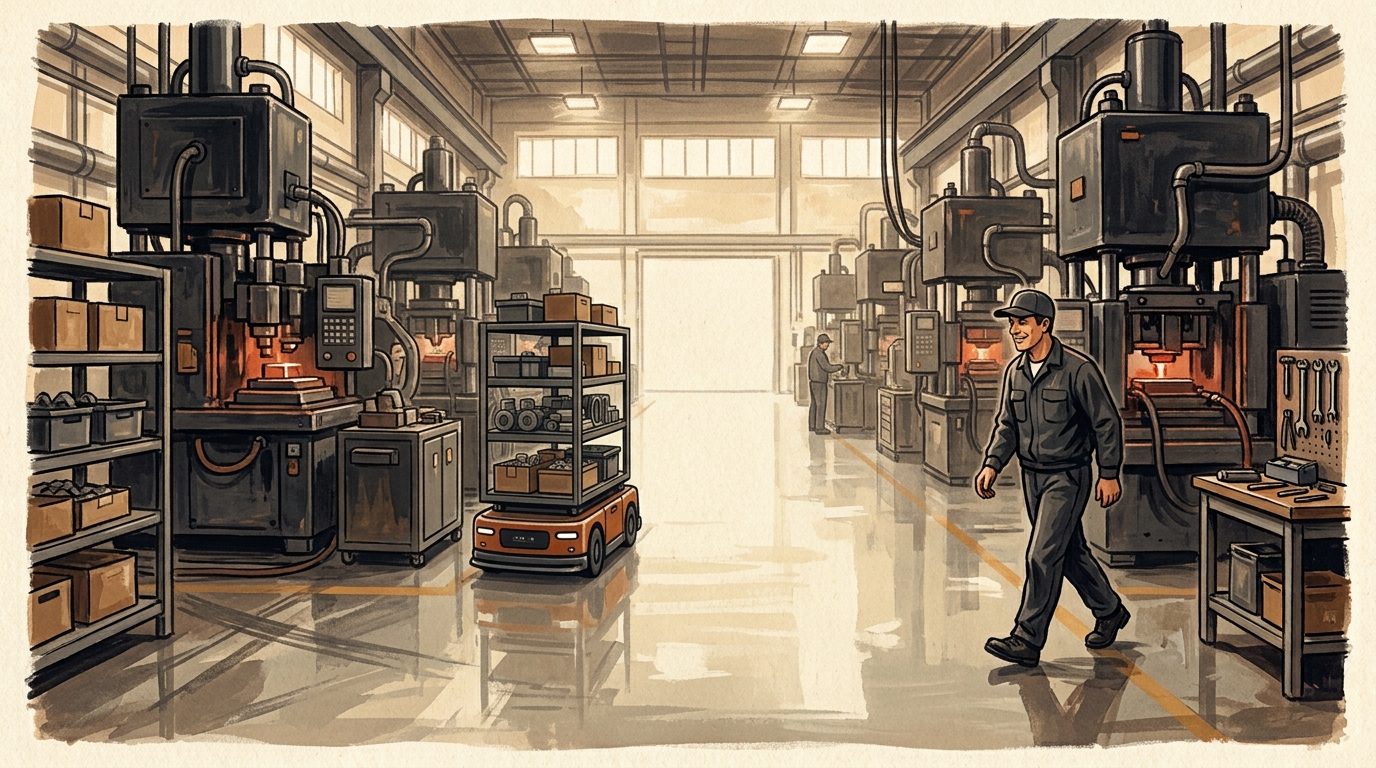
Here is what the number leaves out. When the totes and small pallets ride a robot that stops for anything in its path, the forklift and the pedestrian stop meeting in the aisle. Plants that have had the accident put a value on this instantly. Plants that have not usually do not, and the concierge on this site will not invent one for them. But walk the floor of the New Jersey plant in the published account, where robots named Scotty and Chekov run their routes, and you are walking a building that decided its people should not be the thing in front of a forklift. That decision has a sound, and the sound is a horn you stop hearing.
What it takes
Aisles wide enough to share. Floors without ramps or thresholds the robot cannot cross, or a plan for the ones it must. Wi-Fi where the robot needs it and a place to charge. Routes with a person at only one end, not both. A top module built for the actual job, because the module, not the robot, does the work. And the risk assessment, with forklift and robot traffic at the top of it, because the robots are safety rated and the forklifts are not.
The freedom, in the handler's terms
The person who used to walk the circuit now runs the circuit: loads the cart, checks the parts that arrive every half hour, notices the defect while the job is still on the press. In the Indiana account the robot became a quality tool because the interval between molding and inspection collapsed, which is a better business case than saved steps and a better job than walking. Nobody wrote a poem about a counter height top module. Somebody should.
Give three people a clipboard for two days and count the trips. Then describe the routes, the loads and the floor to Joe, the concierge on this site. He will size the robot against your cart weight, ask what the people will do with the hours, and name the doors and ramps that decide the integration.
Related on this site
- Material movement
- What changed when a New Jersey electronics plant put two mobile robots on bus routes
- What changed when an Indiana molder replaced forklift laps with a mobile robot loop
- I never thought we could afford mobile robots. Then we counted the walking
- Robots for warehousing and 3PL
Mobile robots pay back on walking hours that turn into productive hours, and they carry a safety argument that is real and hard to price. The quiet aisle is the part nobody quotes.
Put it to the test on your own job
Tell Joe what you are running and he will apply this to your numbers, including telling you when a robot is the wrong answer.
More notes