Three o'clock at the brake
A press brake operator holds a heavy sheet at an exact angle, hundreds of times a shift, and the errors arrive at three in the afternoon when the arms are tired. A bending cell holds the sheet instead. Here is what that returns to a fabricator, in the published words of two shops and the honest capital math that comes with heavier iron.
The short answer
Of all the jobs in a sheet metal shop, brake operation is the one where the human body is most obviously the wrong tool. A sheet that weighs sixty pounds and measures six feet across has to be held flat and still against a backgauge, then followed up as the ram comes down and the metal folds, then flipped and done again. Good operators do it beautifully for six hours. Then it is three o'clock. The published accounts on this site describe what shops did about three o'clock, and the arithmetic says plainly when the heavier capital of a bending cell is justified and when it is not.
The hour the errors arrive
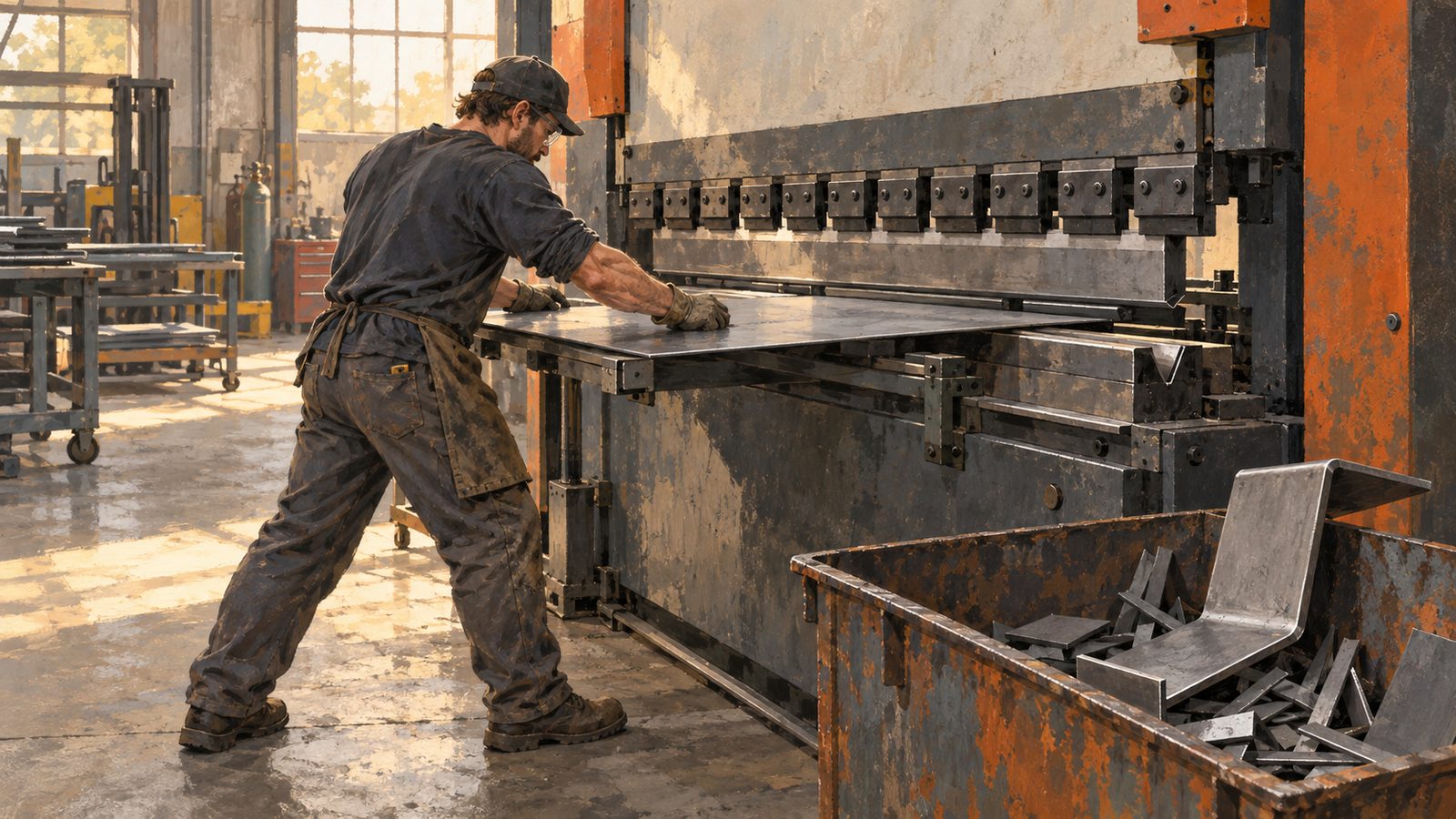
Picture a brake at mid afternoon. The scene is imagined; the quotations and numbers below are from the published accounts. The operator has been holding and following sheet since seven. The angles are still right, mostly. The hands are slower to let go, the flip is a half second late, and a part goes into the scrap bin that would have been perfect at nine. Nobody did anything wrong. The job asks for a kind of precision the body can supply for a while and then cannot, and the shop pays for the difference in scrap and in the operator's shoulders.
The Illinois gutter machine builder in this site's casebook described exactly that: operators fatiguing while holding large heavy workpieces at an exact orientation, with errors creeping in late in an eight hour shift and turning into scrap, as the vendor reported the fabrication manager's account. The shop bought a standard large part bending cell, a KUKA arm paired with an all electric 80 ton brake, rather than a bespoke integration. The fabrication manager now sets a job up at the end of the day and finds it finished the next morning. The vendor publishes jobs that took two or three days now taking one, production quadrupled on some components, installation in about ten days, and no headcount reduction.
Two other shapes of the same answer
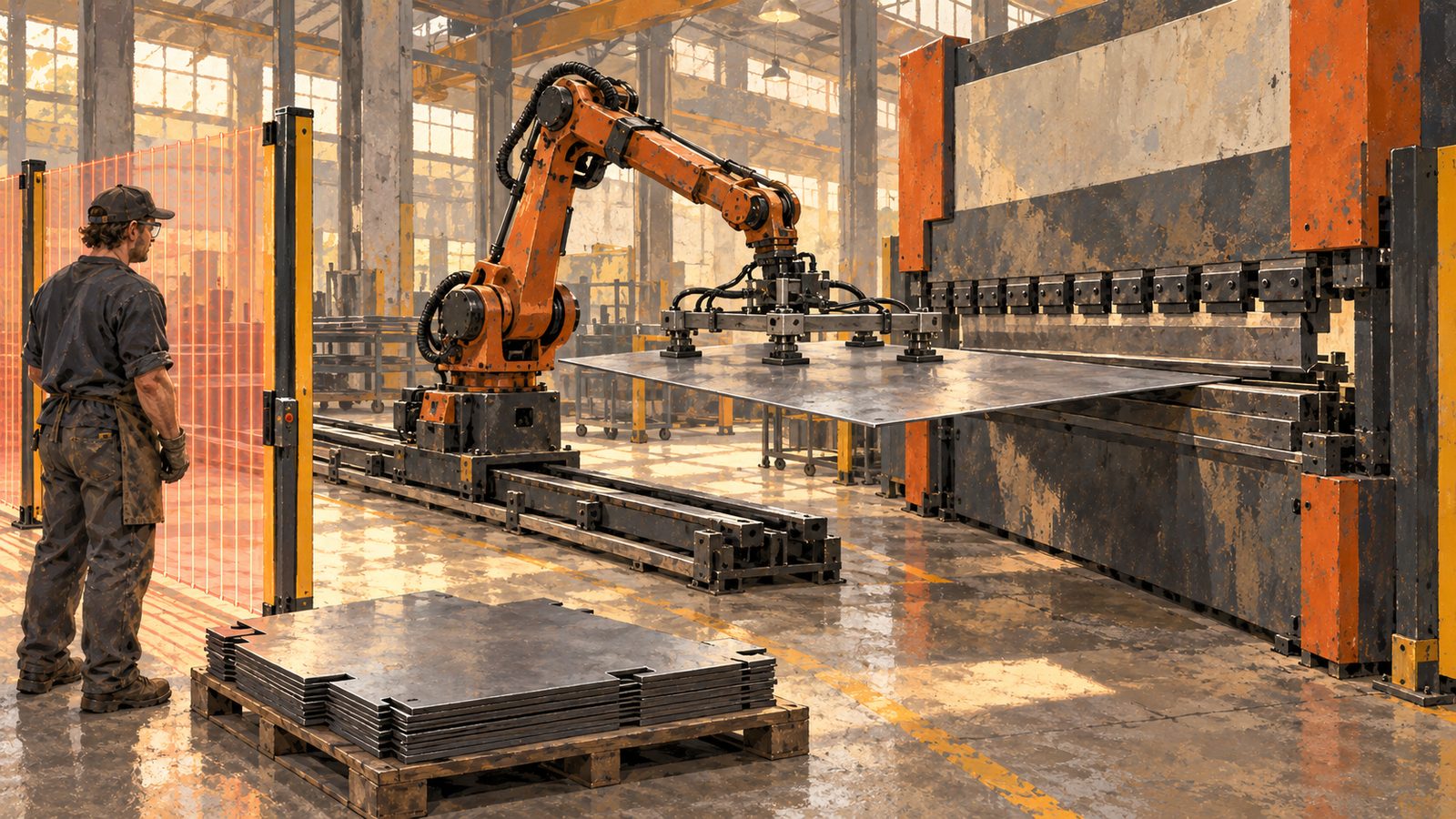
A Minnesota attachment maker with 85 people had automated its lasers and watched the cut parts pile up in front of three manual brakes, where operators were loading, maneuvering and unloading 80 to 100 parts a day, some up to 85 pounds and six by ten feet, as trade press reported it. A large FANUC arm on a linear track now picks blanks off a pallet, bends them on a 250 ton brake and stages them for welding. Throughput and payback were not published, and this site says so; the published fact is the shape of the problem, which was a brake that had become the bottleneck behind a fast laser.
A Quebec fixture maker had a different problem: one person unloading a brake press by hand for eight hours a day in a busy aisle with six feet of floor and no room for guarding. A collaborative arm with suction cups now unloads and stacks across ten production cycles, unguarded after a risk assessment the provincial safety authority approved, and manual labor on the task fell to about an hour a day, as the vendor published it, with an estimated 12 month ROI presented as an estimate.
The capital, honestly
Brake cells carry heavier iron than most first robots: a large arm, a gripper and regrip station, sheet feeding, a brake the cell can talk to, and the safety system around all of it. The planning ranges on this site's press brake guide are the widest of the ten applications for that reason. The worked example puts a brake adding 20 unattended hours a week at about three and a half years to pay back at the midpoint, under two years at 35 hours, and never on a brake that sits idle part of the week, because the cell idles with it. The concierge says the last part out loud, because a six figure cell on a brake without a queue is the most expensive way a fabricator can learn about bottlenecks.
What the operator does now
Sets up the job, which is where the skill was always concentrated anyway. Programs the bend sequence, or recalls it. Loads the pallet of blanks. Checks the first part and the first part after a tool change. Goes home while the long batch runs. The published accounts describe operators staying, and the job changing from holding to deciding, which is the pattern across every application on this site and the one buyers most often doubt until they see it.
The freedom, at three o'clock
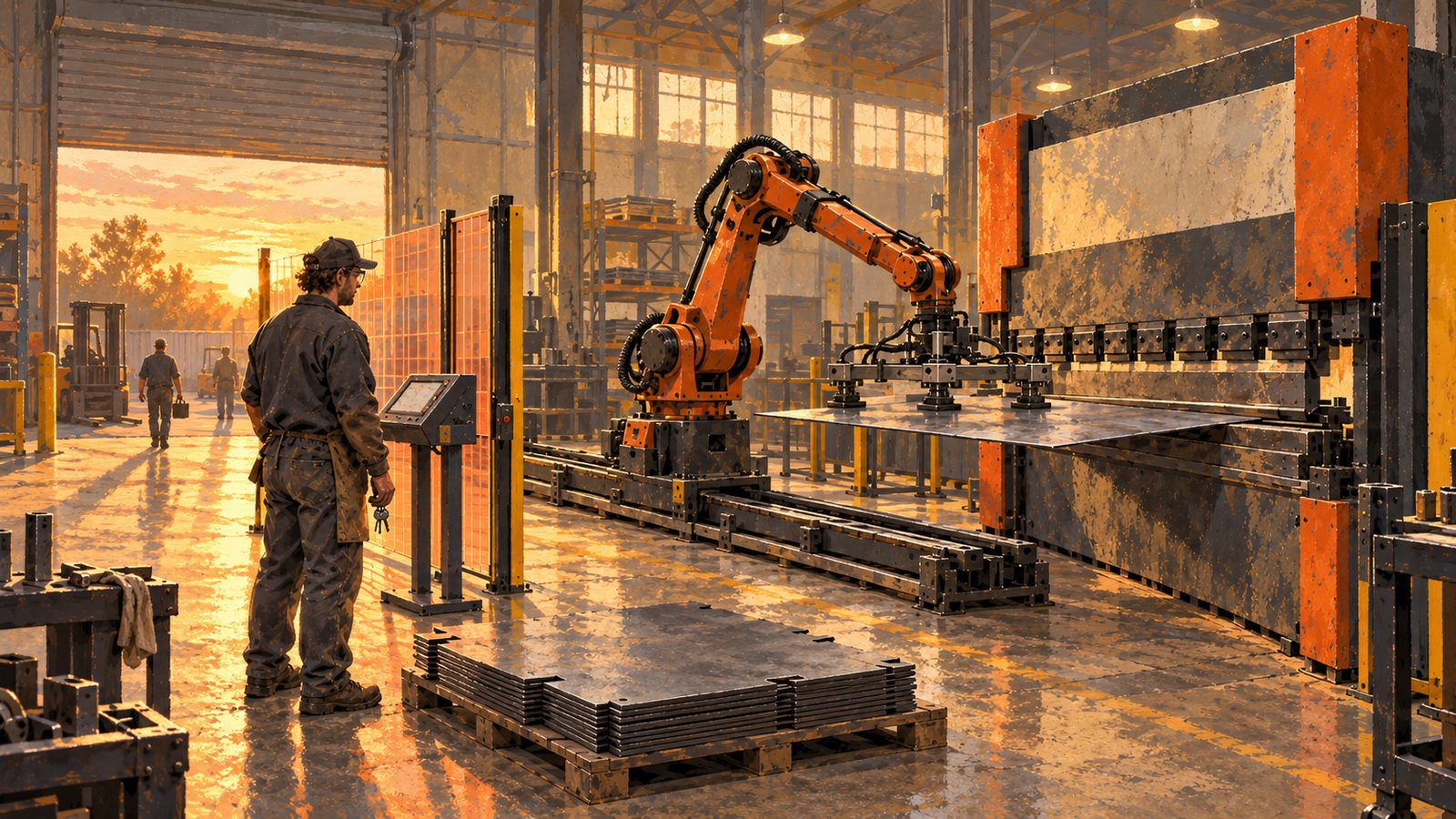
The specific freedom here is from a kind of fatigue that is invisible on the production report and visible in the scrap bin and the clinic. A machine holds the sheet at the exact angle at three o'clock the way it did at nine, and the operator's shoulders are not part of the tolerance stack. There is also the simpler freedom the Illinois shop described: setting up the job at the end of the day and finding it done in the morning, which turns the brake from the station everyone waits on into the one that works while they sleep.
Estimate the queue behind your busiest brake in weeks, the share of jobs with batches long enough to run unattended, and the hours you could add. Then describe it to Joe, the concierge on this site. He will put the figures in the frame, name the class of cell, and tell you honestly if the brake is the station to start with.
Related on this site
- Press brake tending
- I never thought we could afford press brake automation. The brake hours settled it
- What changed when a Quebec fixture maker unloaded a brake press in six feet of floor space
- Panel bending
- Robots for metal fabrication
Brake automation carries heavy capital and needs a brake that is truly the constraint. When it fits, it ends the three o'clock fatigue that turns good operators into scrap, and it runs the long batches overnight.
Put it to the test on your own job
Tell Joe what you are running and he will apply this to your numbers, including telling you when a robot is the wrong answer.
More notes