About Steel Collar Robotics
Steel Collar Robotics and Aeronautics is an independent dealer and a robotics research think tank. Our dealership arm sells robots and drones; our research arm ensures you have the best expertise to make your automation decisions. We serve manufacturers, commercial buildings, and the cities, counties and districts that serve the public. The whole idea fits in one sentence: tell people the truth about what a robot can and cannot do for them, and earn the business where the answer is yes.
What we do
A manufacturer brings us a job. We help them figure out whether it can be automated, what that would take, and what it would plausibly cost. If the answer is yes, we supply the equipment and introduce a certified integrator to design and build the cell. If the answer is no, we say no. That happens more often than our margin would prefer, and we have decided we can live with that.
We carry many brands on purpose. Our matrix tracks more than seven hundred machines from a hundred and twenty five manufacturers, cobots to industrial arms to SCARAs, deltas, gantries, mobile robots and tooling, every specification recorded from the manufacturer's own datasheet. A dealer who represents one manufacturer will always discover that his manufacturer's arm is the answer. We wanted to be able to give a different answer, including, when it is true, that none of them fit.
The research arm is the other half of the company, and it exists for the same reason the dealership does: a buyer deserves the best available expertise before spending real money. It starts with a research library of peer-reviewed work, organized by the application you are actually weighing, which Joe searches mid conversation and cites with links you can check. He is not allowed to cite anything that is not in it. When a decision is bigger than a conversation, the research arm brings in experts who know the application, and we will tell you plainly whether you are getting independent advice for a fixed fee or a pre-sale assessment from a dealer.
Who runs it
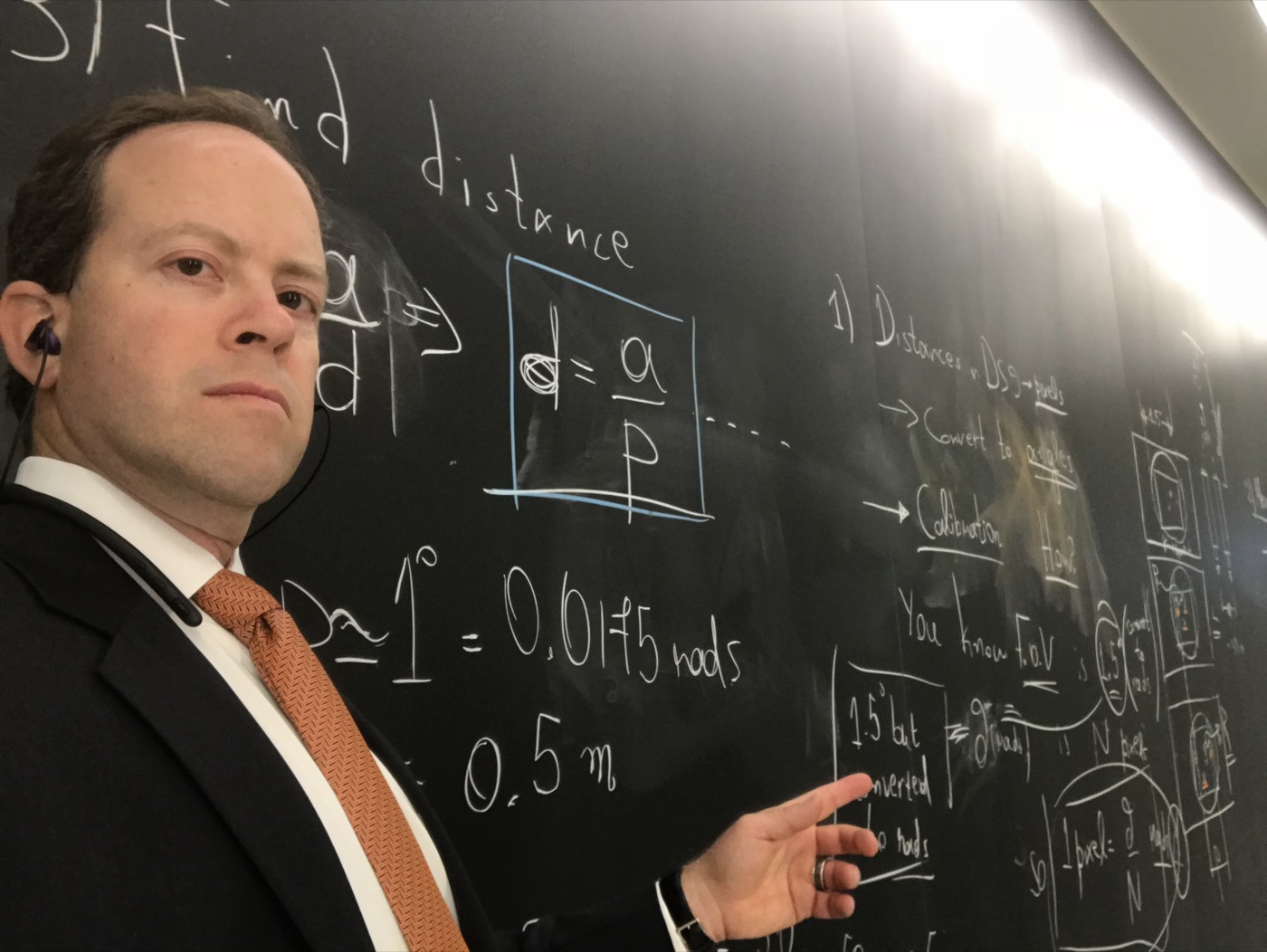
Steel Collar is my company. I am Russ Rosenzweig, the founder and CEO.
I have been reading about robots since I was a kid, and not just the engineering. The industrial history, the science fiction, the long arguments about what the machines would mean. Most people grow out of that. I built a company instead.
The education came at Northwestern: quantitative economics and Mathematical Methods in the Social Sciences. MMSS is where I picked up the math this company actually runs on. Break a process into its component tasks and judge each one on its own. Multiply the availabilities of chained machines and find out what the line will really deliver, not what each vendor promised. Treat flexibility as a variable with a value instead of a footnote. Those exact models, task decomposition, series availability, flexibility priced as an option, are built into Joe, our concierge. He runs them quietly every time somebody describes a production line.
Then Price Waterhouse, 1993 to 1996, right at the dawn of high tech warehouse automation, when warehouse management systems and barcode were the frontier and half the industry still ran on clipboards. I spent those years helping modernize the warehouses of Sony Music all over the world. This was the era of CDs and records: millions of small, valuable, nearly identical units moving at retail speed, through buildings that had to be rebuilt around new software without missing a day of shipping. That job taught me the lesson this company is built on. The constraint is almost never the machine. It is the process feeding the machine. After that, an MBA at Chicago Booth.
Then I spent years building expert networks. That business is simple to describe and hard to do. Somebody has a problem. Somewhere out there is the person who has already solved it. The entire game is the quality of the match. That muscle is Steel Collar's quiet advantage: when a project needs the professor who wrote the defining paper, the robotics expert who has already automated the exact task, or the implementor whose floor experience matches the job perfectly, we know how to find that person, because finding that person was my business for years. It is also why we will not hand you an integrator's name until we have confirmed the firm is actually interested and available. A name you have to chase is not a referral. It is a lead somebody passed off as one.
Read the full transcript
Lightly edited for readability.
My name is Russ Rosenzweig. I'm CEO of Steel Collar Robotics and Aeronautics. When I was growing up in the 80s in New Jersey, my parents, who were educators, taught me that there are two kinds of collars in American work: there is a blue collar and a white collar. I started this company because there's a third one now, and it's called the steel collar.
I've loved robotics since I was a kid growing up in New Jersey. It probably got started in 1984, when I attended Atari Computer Camp and learned rudimentary programming and automation when I was 14 years old. And by the way, I think my real education at Atari Computer Camp was that we watched pretty much every sci-fi robot movie in existence in the evenings, and read sci-fi all throughout the camp. It was the dorkiest camp of all time, but I remember it so fondly.
My next bit of training came when I was a management consultant at Price Waterhouse, right out of college, and I got this really cool client engagement. I worked hard, actually, to manifest this. I wouldn't normally have gotten it, but I worked really hard to get on the Sony Music project. The reason I wanted to work on the Sony project was that it was based at 550 Madison Avenue in Manhattan, and all the Price Waterhouse consultants were living at the Waldorf-Astoria. They said yes and invited me onto the project team. I did get to spend one night at the Waldorf, and I did get to spend one day at 550 Madison Avenue. During that one day, it was decided that I would be shipped out to Carrollton, Georgia, and then to Aylesbury in the United Kingdom, to help Sony Music automate its warehouses.
So my New York dream fell apart, and instead I became a warehouse management and automation guy. And it was so fascinating and interesting. I got to help Sony create the most modern and optimized warehouse of the 90s, and to do a lot of really cool automation, too. There was radio frequency, and warehouse management systems, and exquisitely sophisticated automation and robotics. This was back when there were CDs and records, if some of you viewers have even heard of those. I watched machines take over the jobs that were wearing people down, and I watched people move up in their careers because of that. That's why I've always been fascinated by this topic of robotics and, more frequently these days, drones and aeronautics. My training in college was mathematical methods: taking big problems apart and remaking them into small tasks. It turns out that's exactly how you think about robots.
Then I spent the next 30 years after Price Waterhouse at a company that I co-founded called Round Table Group, which was the original expert network. We helped clients of all kinds: lawyers, business owners and investors. They all came to us with very difficult challenges, and our task was to find them the best and most qualified experts to tackle those challenges. I did that thousands of times, and what I learned is that the right expert is everything, more so than the technology. It's that match. It's connecting the client with the best, most suitable, most qualified expert for the task.
And here's what always bothered me. The kind of matching that we did was a luxury. The Fortune 500 can afford it. The machine shop with 19 employees, the composites plant where three people sand by hand ten hours a day, they couldn't. So in the context of expert matching, when it came to automation and robotics, it was blue collar versus white collar all over again. Only the white-collar companies were able to get the steel-collar robotics solutions. But AI has now changed the game, and that's why I am so excited, even in my 50s now, to have started and co-founded this new company called Steel Collar Robotics and Aeronautics.
My favorite part of this company is our concierge, because we spent months building it. Please don't talk about your automation questions with a regular old chatbot. You're going to much prefer our concierge, because it knows everything there is to know about robotics and automation and drones. It knows every machine available in the marketplace. It knows every robot and all its specifications. Not only does it know robot arms, it knows the more technical robotics vendors that work within a robot arm. It knows every drone. It knows every specialized aircraft. It even knows everything there is to know about satellite maintenance, which is just robotics in outer space now.
Five or ten years ago, this company was impossible. But now our concierge can help you figure out whether your situation is automatable. It's really just one question: is it automatable, and if so, what robots do you need? That's what I think you would enjoy getting started with on our concierge.
We named it Joe, after Joseph Engelberger, who put the first industrial robot to work in 1961. Joe spent his whole life insisting that robots could do the jobs that break people, that torture people. So Joe is still at work, helping you figure out what's breaking and torturing your people on the plant floor and in manufacturing operations. He can search more than 700 machines to find the ones that are actually suited to the project. We have our other concierge, Amelia, who handles the air: typically projects that involve inspection and measurement by drone. The amazing concierge named Katherine handles our robotics in orbit. And I have one other, brand new concierge, called Abe, who handles our growing government buyers, mostly for drones and other really interesting robotics equipment.
So who are we? We're just a plain, old-fashioned independent dealer. We help you figure out if your task is automatable and what equipment you need, and then we get you the best possible price and customer service for that robotic or drone equipment. Normally when you buy a robot, there are a lot of technical specifications and programming that you need to do, like what I used to do at Price Waterhouse. But don't worry: we have built a bench of 400 integrators. These are the boutique, small and mid-sized technology firms who are passionate about programming robots. So once we find you the perfect robot to do the task, we're also able to recommend the best and most suitable implementer to help you with the programming and the customer service.
I'm so passionate about robotics and drones. I think you're going to love our company. Blue collar really built America. White collar ran the American companies. But steel collar is going to carry our country into the AI age. Let's find your match. I hope you love our new company, which could never have existed before the AI age. We're called Steel Collar Robotics and Aeronautics. Give the concierges a try. We can't wait to help you figure out if your task is automatable and to find you the best and most suitable robot and implementer for the task. Enjoy!
Why this is possible now
Industrial robots became capable long before they became accessible. The arm could do the work, but specifying it took a specialist, programming it took a specialist, and finding out whether the project made sense took a feasibility study that cost real money. Large plants could absorb that cost of finding out. A forty person shop could not, so mostly nobody told them anything at all.
That is the part AI changes, and the claim is narrower than the industry usually makes it. AI does not weld. It does not fixture a part, and it will not notice that your real bottleneck is two stations upstream of the one you asked about unless it asks. What it collapses is the cost of the first honest answer. A plant manager can describe a station in plain language at eleven at night and get a serious preliminary read: whether the physics work, what class of machine applies, what it plausibly costs, what it will not solve. Often the honest read is that a robot is the wrong answer and a fixture or a process change is the right one. That conversation used to take a sales engineer and three weeks. It now takes ten minutes and costs nothing.
So we run the business in that order. We tell you the truth first, for free, even when it costs us a sale. We make our money on the projects where the answer is yes.
Joe
Our concierge is named Joe, after Joseph Engelberger, the engineer who put the first industrial robot to work pulling hot parts out of a die casting machine at a General Motors plant in 1961. The first robot job in history was machine tending, which happens to be the job our customers ask about most. Engelberger spent the rest of his life insisting that robots belonged in work that was dull, dirty or dangerous, and that they should earn their place with arithmetic rather than theater. If this company has a patron saint, it is him. On our aerial pages the same concierge goes by Amelia, after Amelia Earhart; on the orbit side by Katherine, after Katherine Johnson, whose calculations carried crews to orbit and home; and on the government side by Abe, after Abraham Lincoln, the Illinois lawyer the country came to call Honest Abe, a name the story says he earned young, as a store clerk who walked miles to return a customer's overcharged change. We keep that story around as a standard for how public money deserves to be treated. One system, one set of rules, four names that tell you which hat it is wearing.
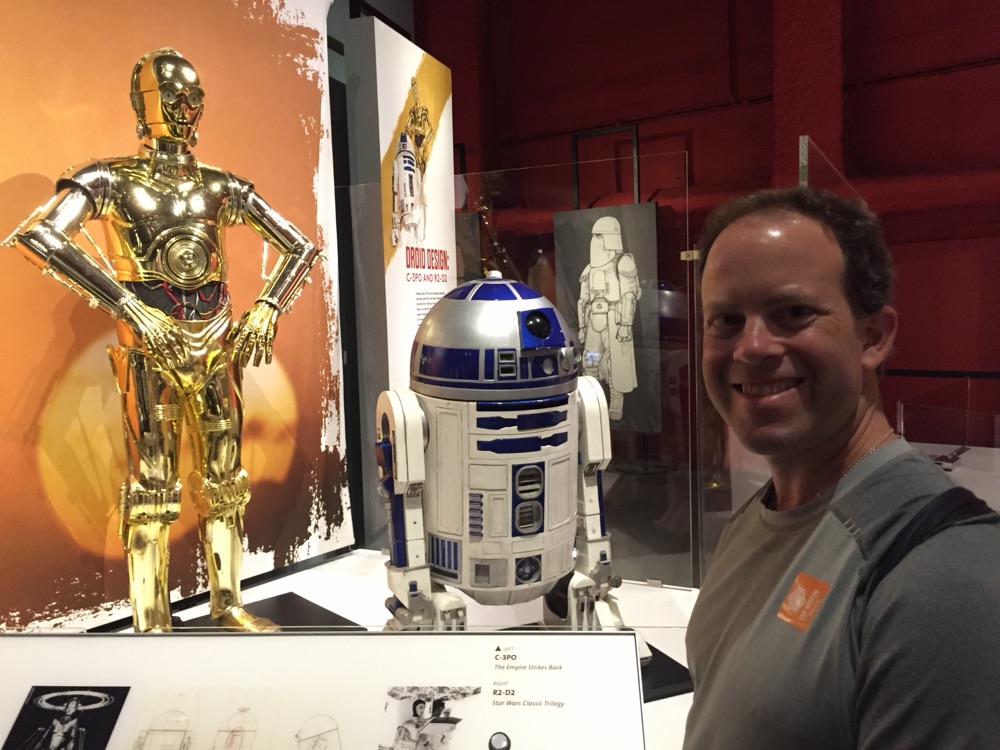
There is a second inspiration, from the fiction shelf: Susan Calvin, the robopsychologist in Asimov's I, Robot stories. She was the one they called when a robot started behaving strangely, and she could always work out why, because she understood how the machines actually behaved rather than how the brochure said they would. That is the job we want Joe doing for you, minus the rogue robots.
Joe is an AI. He says so plainly, and he is never presented as a person. He is built on Claude, from Anthropic, and he has something most sales tools are not given: permission to say no. He reads from our equipment matrix, our process library and a casebook of real installations with published sources, and he is instructed to tell you when a job should not be automated, when the volume is too low to justify a cell, and when the bottleneck is not where you think it is. He will not tell you a configuration is safe, he will not give you a fixed price, and if you mention an injury he stops selling entirely. Those are hard rules in his instructions, not aspirations in a brochure.
Ownership and how we make money
Steel Collar Robotics is owned by Arete and Associates, LLC.
In most cases we are simply a retailer: an independent dealer with authorized reseller arrangements, and we earn a dealer margin when equipment is bought through us, alongside referral relationships with the certified integrators we introduce. In other cases, with our government agency clients or when a commercial client requests it, we act instead as a buyer's representative: a rigorous product assessment, the full landscape of alternatives, and negotiation with the sellers on your side of the table, in exchange for a fixed fee agreed in writing before work begins. One engagement, one side of the table: on any represented purchase we take no manufacturer money, and we disclose every dealer arrangement we hold. That is the entire model. It is on this page and in the concierge's own answers, because a customer who has to guess how we get paid will reasonably wonder what else we did not mention.
We do not take investment from any robot manufacturer's venture arm, and we will not. Neutrality between brands is the product. It would not survive an owner with a preferred arm.
Who you call, and who does the work
Every manufacturer eventually asks who they call when something goes wrong, and every equipment maker asks the same question before they sign a dealer. The answer is me. First-level support on anything bought through us comes to Russ Rosenzweig personally: product questions, warranty intake and coordination, parts, and the triage work of figuring out what is actually wrong. You get a person who knows your project, not a queue and not a ticket number that ages.
What I will not do is pretend I am the best pair of hands for the work that happens on your floor. Cell design, guarding, risk assessment, commissioning and hands-on service of a built cell belong to a certified integrator. Part of that is a boundary we hold on purpose, because those are engineering responsibilities that carry somebody's signature. Most of it is simpler than that: there are people who do that work far better than I would, and putting myself in front of them would cost you time and money.
Which brings me to the thing we are genuinely best at, which is choosing who. Integrators are wildly uneven, and most manufacturers pick one by proximity or by whoever answered the phone. We keep a working bench of 232 certified integrators across 32 countries, sorted by application, by the brands they carry and by the certifications they actually hold, and I spent years before this company learning how to match a problem to the one person who has already solved it. When your cell needs work, the most valuable thing I can hand you is usually not my own labor. It is the name of the right firm, already confirmed as interested and available.
What we are not
We are not the integrator of record, on any project, ever. Cell design, guarding, risk assessment, commissioning and safety validation are performed by independent certified integrators in accordance with ANSI and A3 R15.06 and ISO 10218 for stationary robots, and ANSI and A3 R15.08 for mobile robots, which is a different standard and a different assessment. That is a contractual boundary, and it means we will never tell you a configuration is safe. Only an assessment on your actual floor can establish that.
We are not engineers, attorneys, accountants or financial advisors, and nothing on this site is engineering, legal, tax or investment advice. Every figure we publish is an illustrative planning range subject to engineering verification, not a quote.
The fuller statement of what we believe, including what we think automation should mean for the people doing the work today, is in the manifesto.
Put us to the test
Describe a job on your floor. Joe will give you an honest preliminary assessment, and if a robot is the wrong answer for it, he will say so.
Read the manifesto