The sewer nobody enters
A sewer inspection used to mean a confined space entry into the worst air in the city, or a tethered camera that needed the line cleaned first. A city in Oregon runs crawler cameras through 800 miles of pipe. A global water company flies drones through its collectors. The point of both is the same, and it is not the pipe.
The short answer
Every city owns hundreds of miles of pipe it cannot see, and the pipe is failing on a schedule nobody knows. The old choices for finding out were a person in a harness in a contaminated confined space, or a tethered camera that needed the line cleaned before it could look. A self propelled crawler camera handles the lines a person could never fit into, and a collision tolerant drone handles the large collectors a crawler cannot reach. Both answer the same question. Neither needs a person in the sewer.
The manhole
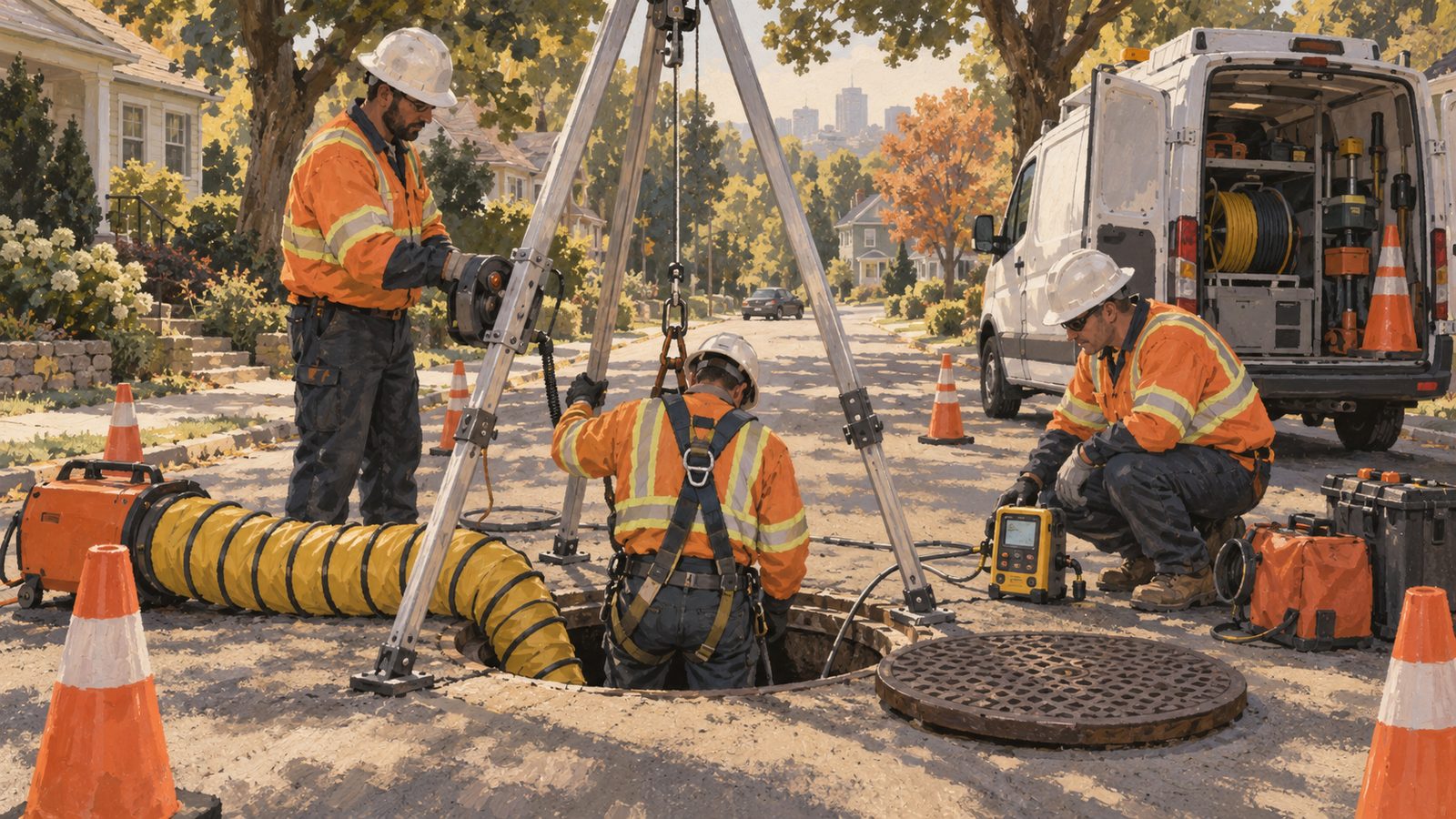
Picture a crew at a manhole on a residential street. The scene is imagined; the facts below are published. A truck, a tripod, an air monitor, an attendant, a rescue plan, and a person preparing to descend into a space the city would not let anyone enter without all of that for a reason. Down the street, a basement flooded last spring and the city would like to know whether the main or the lateral was the cause before it happens again.
What the city of Eugene runs
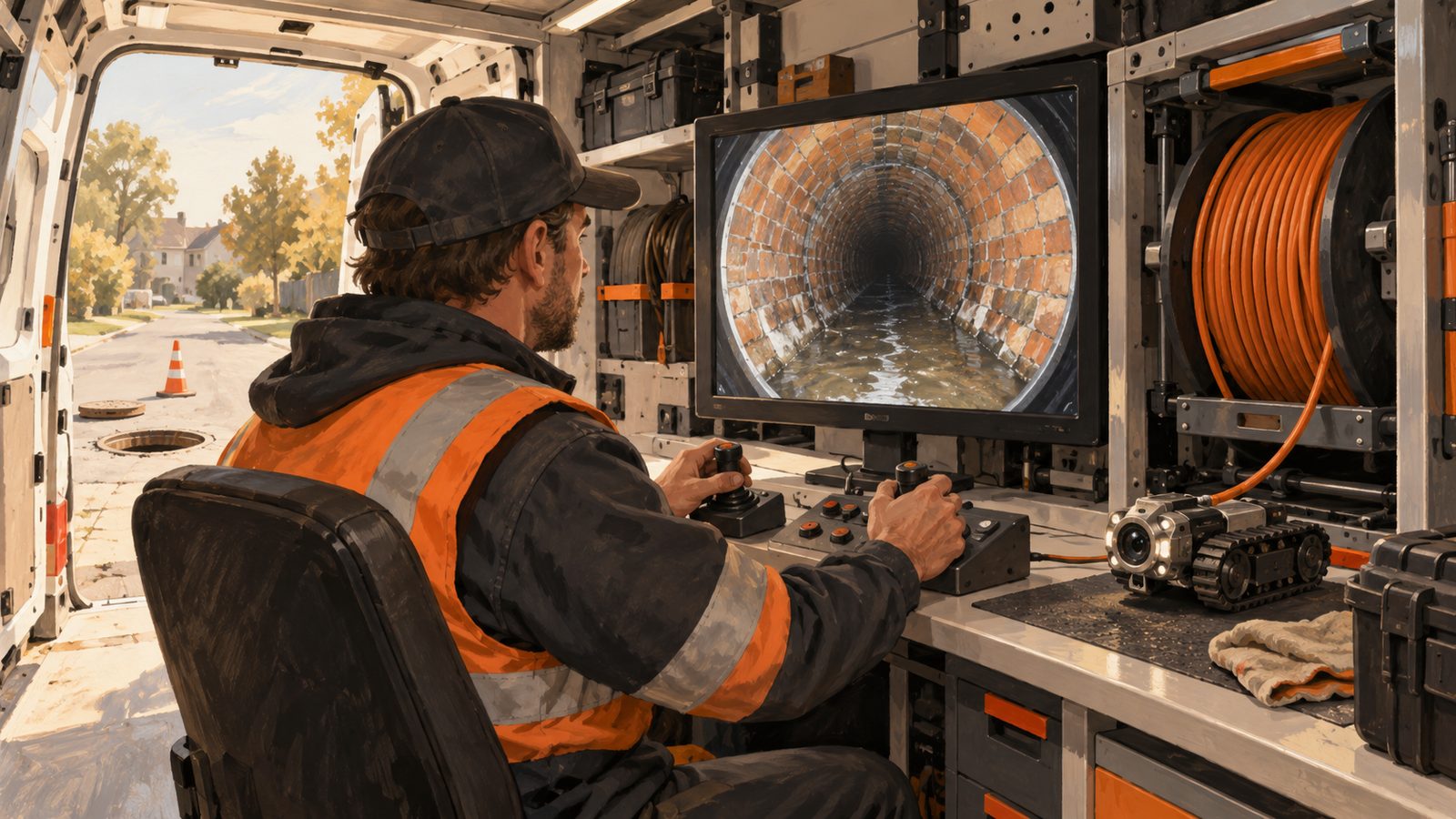
The City of Eugene, Oregon publishes a standing closed-circuit television inspection program: trained operators place small self-propelled crawler cameras into underground mains through manholes and cleanouts, with adjustable high power lights and rotating lenses to view pipe walls and service connections, from two fully equipped inspection vans. The program covers more than 800 miles of wastewater sewer lines and roughly 600 miles of stormwater pipe, and its findings feed the city's cleaning, root removal, line repair and capital improvement programs, as the agency publishes it. Annual miles inspected and program cost were not published. The structural fact is the one that matters: a standing program, two vans, and a camera where a person used to be.
What Veolia flies
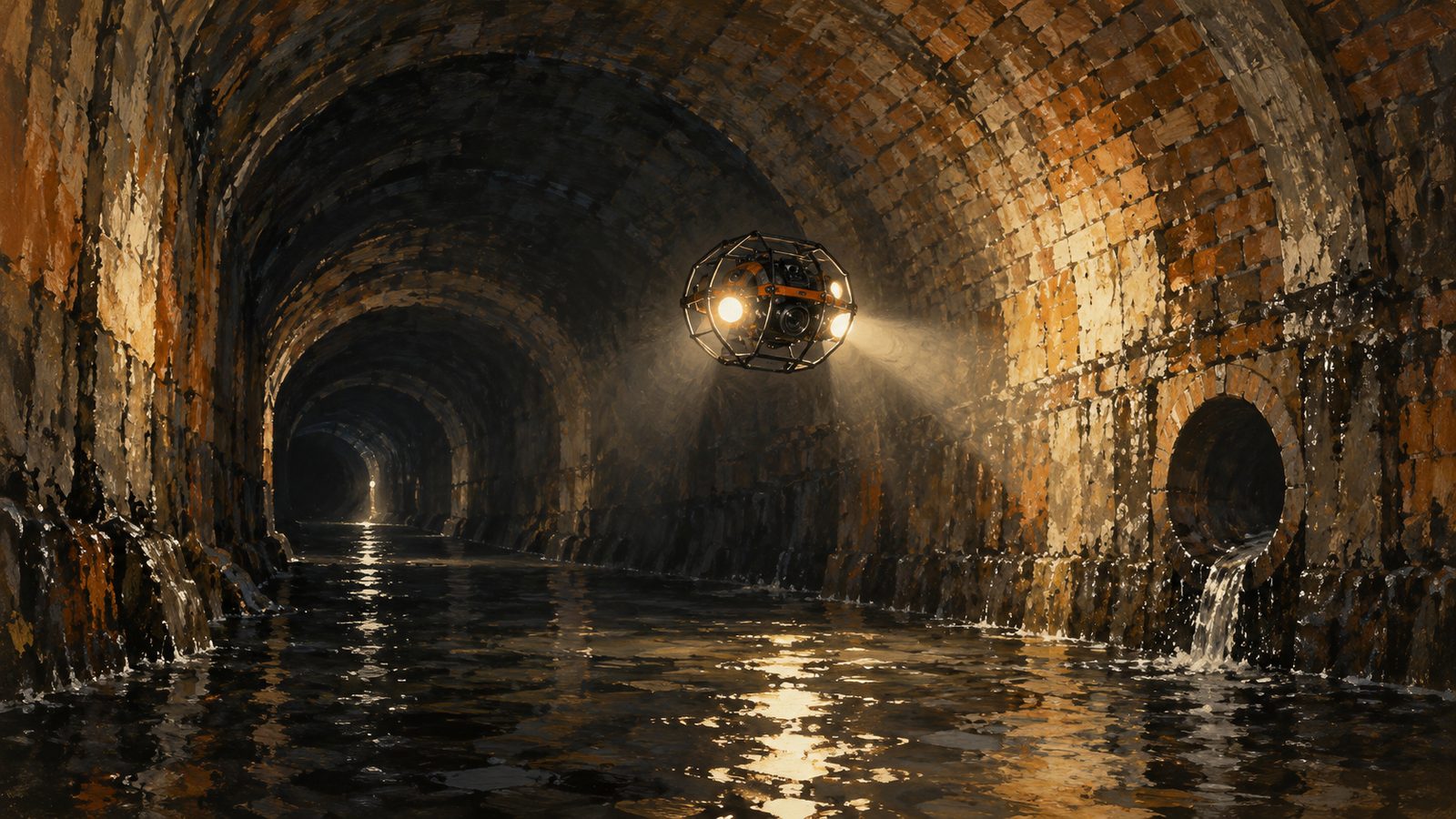
Veolia Water, as the drone maker published it, inspects underground collectors where the old choices were human entry or tethered cameras that required cleaning the line first. An early adopter of caged indoor drones in 2016, it added a LiDAR equipped aircraft in 2023 so that inspections produce 3D models that feed its pipe assessment and GIS systems, and its managers describe the drone as removing most confined space entry from this work. The maker states that most users of its drones in sewer networks see about a 40 percent reduction in inspection cost per linear meter and inspections twice as fast, in part because collectors do not need cleaning first. Those are general figures for the maker's sewer users, not audited Veolia numbers, and this site says so.
Why both tools exist
Pipe comes in sizes. A crawler fits the eight inch main under a street and drives for hours on a tether. A drone fits the collector a person could walk through, flies past the debris a crawler would have to be cleaned around, and comes back with a model rather than a video. A city with both has a way to see all of it. The honest shopping question is not which is better. It is which pipe you own.
The honest lines
Steel Collar sells and sources the equipment and is never the operator of record for aircraft. Crawler programs are mature public works, and the concierge on this site will say when a city should hire a contractor's van rather than buy one. Public money brings sourcing and compliance rules for aircraft, spoken aloud on every recommendation. And the data only matters if it reaches the capital plan, which Eugene's published program is built around and which is the part a city should design first.
The number
Entries avoided, and what each cost in crew, equipment, standby and risk. Miles inspected per year against the miles that should be. Emergency repairs that a scheduled inspection would have made planned ones. For a city the arithmetic is in the capital plan rather than the payback formula, and the four ways agencies buy are described elsewhere on this site.
The freedom, under the street
A confined space entry that becomes rare rather than routine. A basement that floods once instead of twice because the pipe was seen before it failed. An inspector whose working day is spent in a van looking at a screen rather than at the bottom of a manhole. None of the published accounts describe it this way, and none of them had to.
Describe your pipe, in sizes and miles, and how you inspect it today to Abe, the concierge on the government side of this site. He will tell you which tool fits which pipe, when to hire instead of buy, and what rules the funding brings.
Related on this site
- Sewer and stormwater inspection
- Nobody enters the tank
- The inspector eats lunch outside the tank
- Robots and drones for public agencies
- Government and municipal buyers
Sewer and stormwater assets are inspected by crawler and by drone so that a crew does not go in. The published figures are modest and general; the thing they describe is a confined space entry that stopped being routine.
Put it to the test on your own job
Tell Joe what you are running and he will apply this to your numbers, including telling you when a robot is the wrong answer.
More notes