The inspector eats lunch outside the tank
Confined space inspection used to mean a permit, a rescue team, a scaffold and a person in the dark next to the steel. A caged drone changed where the person stands. The published numbers from a nuclear plant and a Norwegian boiler are large. The thing they describe is smaller and better: an inspector who never went in.
The short answer
Every confined space entry is a small, well-managed act of courage that industry has spent a century making safer and never made safe. The permit, the attendant, the rescue team and the air monitor exist because the space is dangerous, and they work. A collision tolerant drone with a light and a camera, and increasingly a thickness probe, offers something the permit system never could: the inspection without the entry. The published savings are in scaffold and outage days. The published fact that matters is that the people who used to go in now fly from the manway.
Inside the boiler
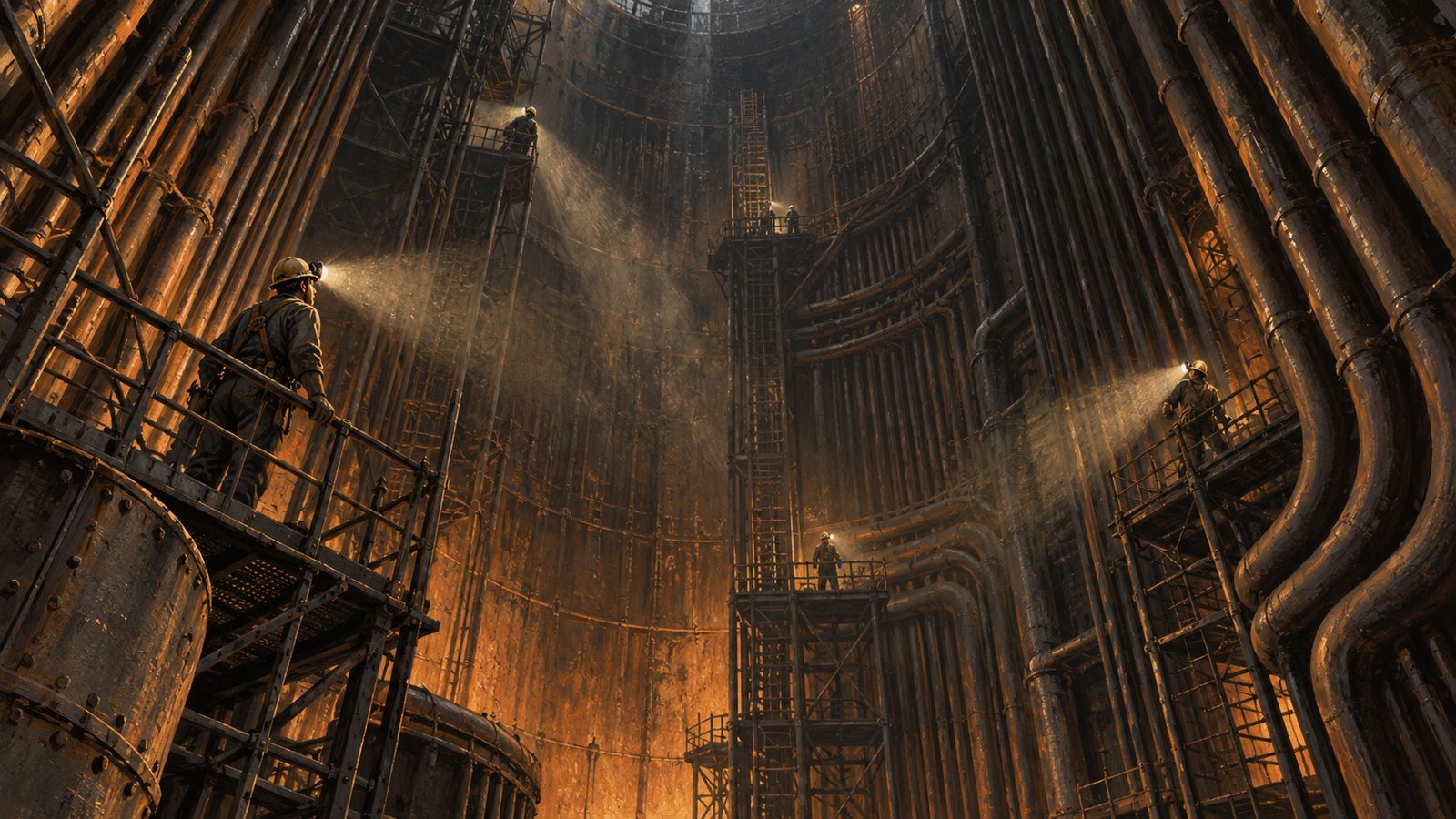
Picture a boiler during an outage. The scene is imagined; the numbers below are not. Dark, with a smell of ash, tubes rising twenty meters into black. For the visual inspection, scaffolders build a structure inside it over days so that an inspector can climb to each seam with a flashlight and a probe. The Norwegian plant in this site's casebook published what that took: 10 to 15 scaffolders spending a collective 1,700 hours inside the boiler, then 300 hours of thickness measurement by inspectors standing on what they built. Fourteen hundred working hours of people inside a steel box, so that someone could look at a weld.
What the drone did
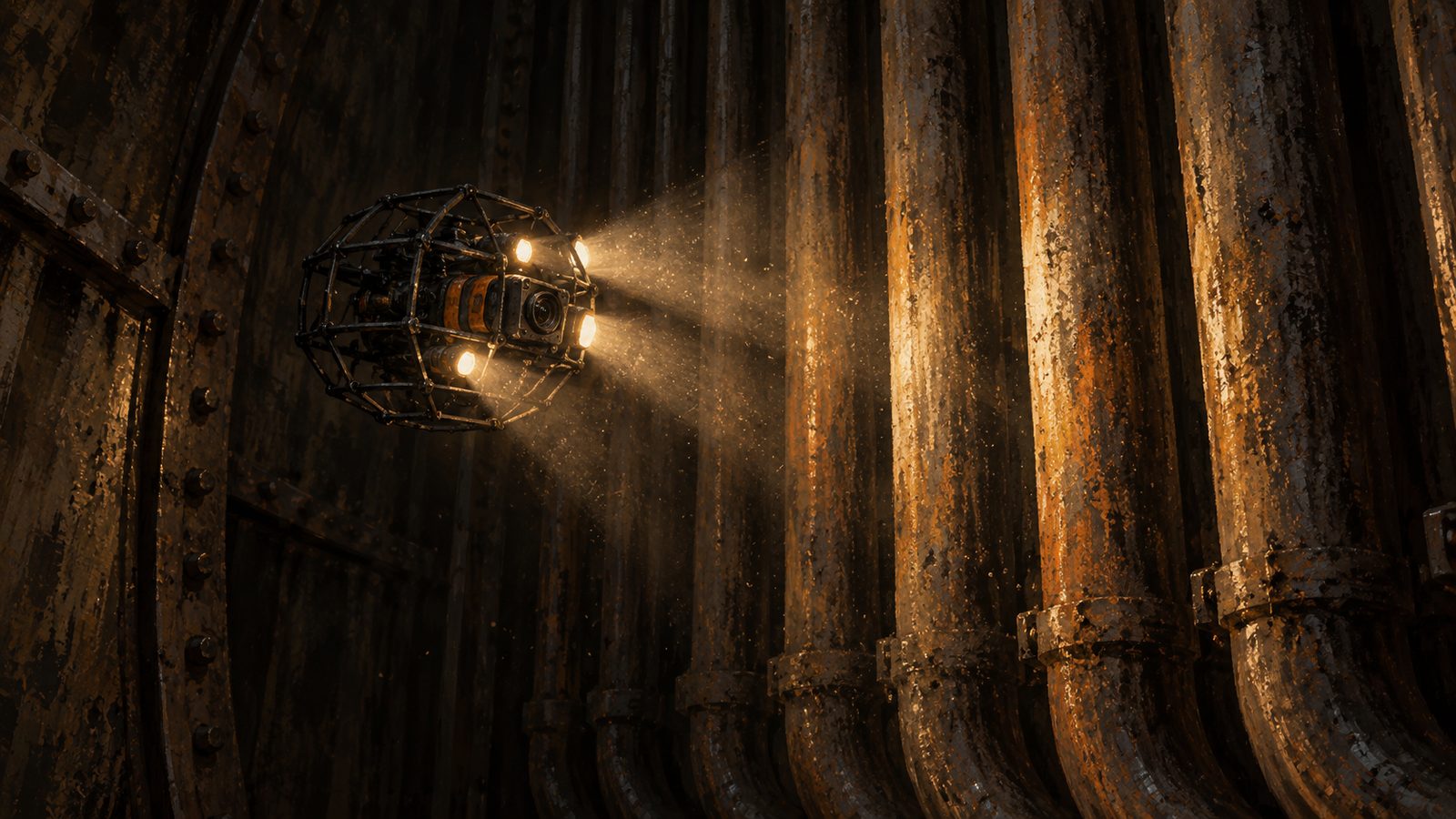
At that plant, one to two pilots now fly an Elios 3 with an ultrasonic thickness payload and capture the visual and thickness data from the ground. The vendor publishes over 150 thickness measurements in 2.5 hours of flight, 8 hours for the entire drone process against 300 hours of manual measurement, 48 hours less outage and 7 days of scaffolding saved, with scaffolding and inspection under the traditional method costed at 450,000 euros. Scaffold is now built afterward, only where repairs are actually needed. Read every figure as the maker published it. The structure of the change is the thing to take away: the scaffold moved from a precondition of looking to a consequence of finding.
At a Virginia nuclear plant the same class of aircraft flies inside the main condensers during shutdowns. The vendor publishes inspections cut from 8 days to 8 hours, completed in two twelve hour shifts rather than seven days of them, and more than 200,000 dollars saved per shutdown on condenser inspections alone, in a plant where scaffolding cost over 1,000 dollars an hour and a shutdown day can cost over 3 million dollars in revenue. Work heights of 20 meters, in the dark, that nobody now climbs.
The payback, which is almost beside the point
The worked example on this site takes a plant that scaffolds a boiler once a year for about 60,000 dollars and pays back an aircraft in one to two inspection cycles, and then takes a plant with one vessel every three years and says plainly that hiring an operator for the week beats buying. The honest arithmetic is easy here because the scaffold invoice is so large. What the arithmetic does not hold is the inspector.
The inspector, specifically

The inspector still interprets what the camera sees, still decides when a closer look by a person is required, still signs. What changes is where they stand while they do it: at the manway, or at a screen outside, eating lunch in daylight on a day that used to be spent in a harness in the dark. That is not a small thing to the inspector, and it is not a small thing to the plant manager who signed the entry permits and knew what they were signing. Aviation has a phrase for the goal of every safety program, which is that everyone goes home. The caged drone is one of the few technologies in industry that delivers it by removing the hazard rather than managing it.
The limits, kept
Steel Collar sells and sources aircraft and is never the operator of record and never pilot in command. Who flies, where, and under what approvals belongs with a qualified specialist. Some atmospheres allow no aircraft at all. Some inspections need contact or repair that still requires an entry, in fewer places. And a buyer spending public or federal money hears the aircraft's sourcing and compliance status before any shortlist, every time, because the concierge is built to say it first.
The joy, named
Freedom here is literal. A person who was going to spend the outage inside a boiler spends it outside one. The quality of the inspection goes up, because a drone can hover at a seam a scaffold could not reach and record every frame. The outage gets shorter, which the finance department will love for its own reasons. And a maintenance manager gets to stop asking people to go into the dark, which they never liked asking.
List your confined spaces and what each inspection costs in scaffold, permits and downtime. Then describe the vessels to Amelia, the aerial concierge on this site. She will sort seeing from measuring, name the class of aircraft or the operator path, and speak the compliance line aloud before anything else.
Related on this site
- Confined space inspection by drone
- What changed when a nuclear plant inspected its condensers in 8 hours instead of 8 days
- What changed when a Norwegian power plant replaced 450,000 euros of boiler scaffolding with a drone
- Nobody enters the tank
- I never thought we could afford an inspection drone. The scaffold invoice settled it
Indoor inspection drones pay back on scaffold, permits and downtime, and they do it in one or two inspection cycles at the plants that published their numbers. The person who stays outside the tank is not in the payback. It is the point.
Put it to the test on your own job
Tell Joe what you are running and he will apply this to your numbers, including telling you when a robot is the wrong answer.
More notes