The solar field that stopped losing money quietly
A utility-scale solar site can underperform for a year without anyone being able to say where. One operator in Texas put a docked drone on the site and found out. The published result is a 75 percent drop in underperformance and 2 million dollars a year recovered, and the quieter story is an operations team that stopped guessing.
The short answer
A solar field fails politely. No smoke, no alarm, just a number on a dashboard that is a little lower than the model said it should be, and ten thousand possible reasons spread across a square mile of glass. An aircraft with a thermal camera sees the reasons: the hot cell, the cold string, the combiner that is not combining. The published account on this site is from an independent power producer in the ERCOT region that put a docked drone on a 150 megawatt site and recovered, by the maker's figure, 2 million dollars a year it had been losing without being able to name where.
The dashboard that was always a little low
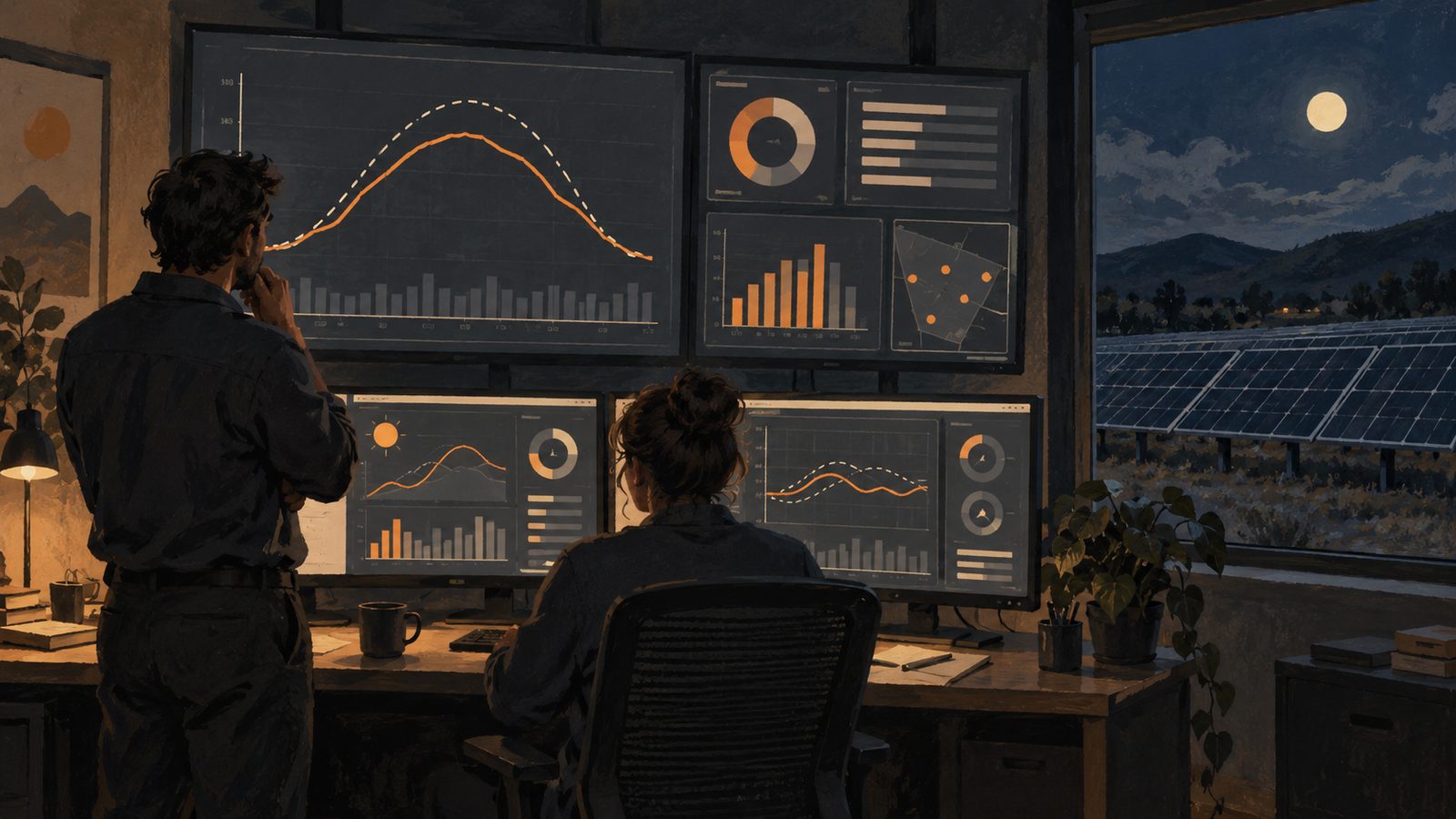
Picture the operations room. The scene is imagined; the numbers are the maker's. A 150 megawatt site, ground faults recurring multiple times a week, underperformance flagged as combiner, inverter and tracker anomalies, and a field crew that could drive to a row only once someone had decided which row. The site got one substation inspection a year. Everything else was inference. The gap between modeled and actual output was a line item nobody could attach to a thing.
What they put in
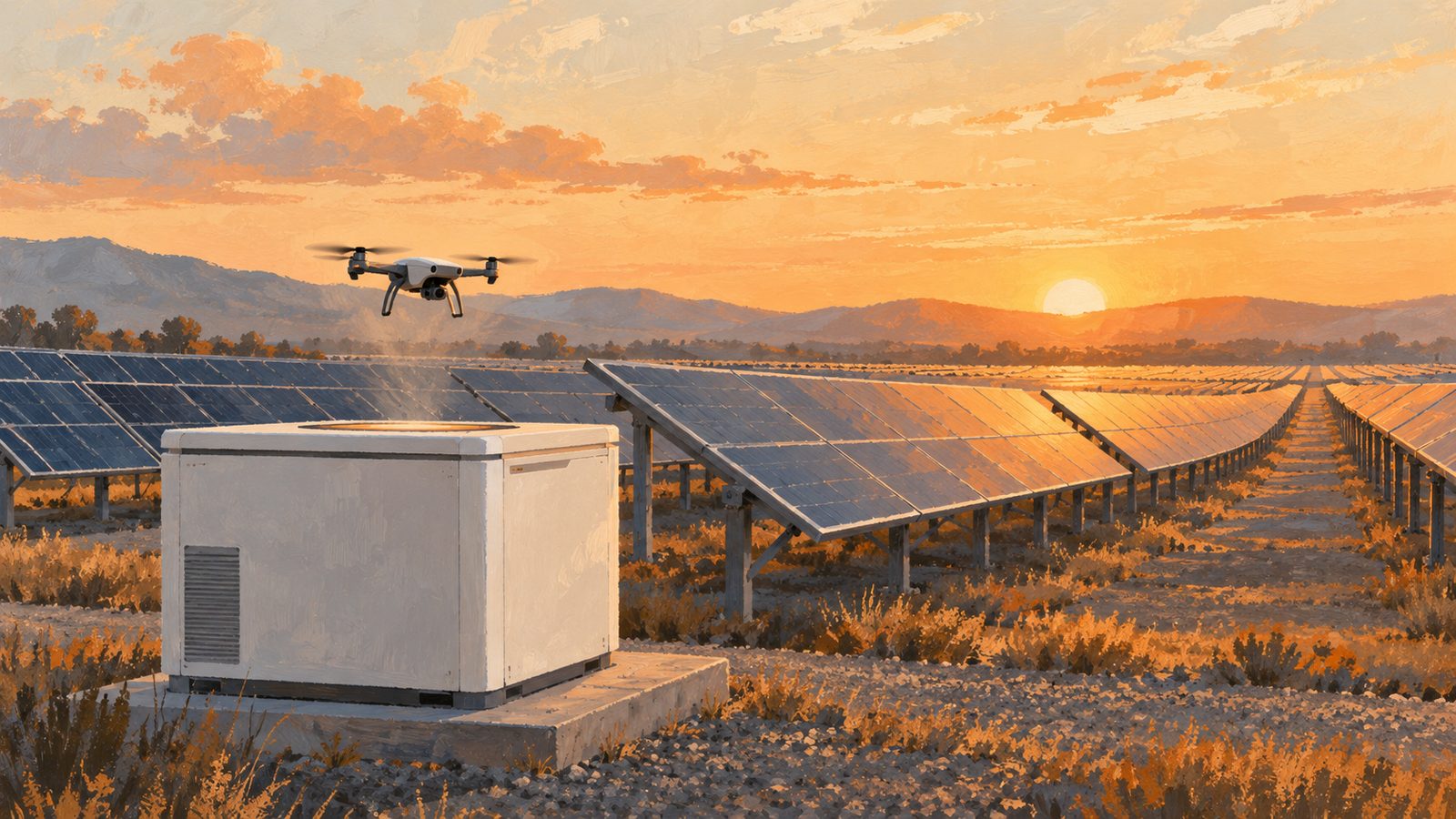
A docked, autonomous drone system that lives on site, flies itself on a schedule and returns to its box, carrying thermal and visual cameras, with analytics that turn the imagery into a list of specific anomalies at specific locations. The operator moved from one inspection a year to monthly missions plus quarterly DC health inspections, as the maker published it, and used the results to send field crews to the exact row.
What changed, in the maker's numbers
The ground faults were traced to cracked modules, and more than 600 of them were replaced. Underperformance fell 75 percent within 12 months. The maker publishes 2 million dollars in recovered annualized revenue. Later flights caught string outages as they emerged, which is the part that matters going forward: the site is now inspected often enough that a failure is found in weeks rather than discovered at the annual visit. Deployment cost and payback were not published, and this site says so. The operator is not named.
Why the dock matters
A drone that a person has to carry to the field and fly is an inspection. A drone that lives at the site and flies itself on Tuesday is a monitoring system, and the difference is the whole business case. Monthly flights of a square mile are not a job anyone would staff by hand. In a box, they are a schedule. The same idea runs through the drone dock perimeter patrol process page on this site, for security buyers, and the honest caveat is the same: the aircraft is the easy part, and the approvals to fly it unattended are the specialist's part.
The honest lines
Steel Collar sells and sources aircraft and docks; it is never the operator of record or pilot in command, and routine autonomous flight over a site involves approvals a qualified specialist must address. Thermal imagery finds anomalies; a technician with a meter confirms them. And an operator with a single small array should hire a flight twice a year rather than buy a dock, which the concierge will say without being asked.
The number
The gap between modeled and actual output, in dollars, is already on the owner's books under a name like underperformance. That is the first slot. Inspection cost today, outage hours, and the cost of a field crew driving to the wrong row fill the rest. For a utility-scale site the arithmetic is fast and the maker's published figure suggests why. For a rooftop array it is a service, not a purchase.
The freedom, in the operations room
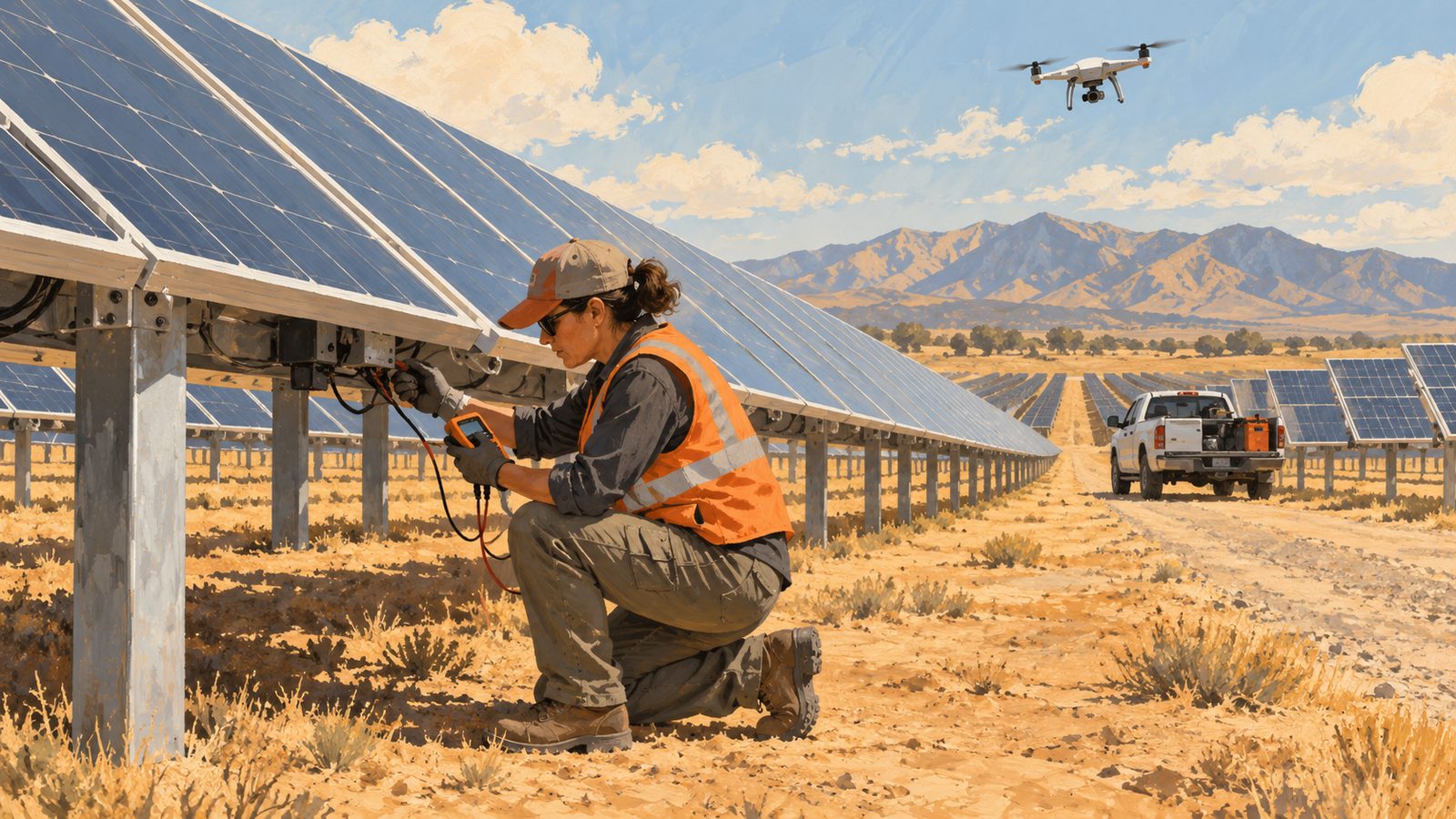
Knowing which panel. That is the entire relief, and anyone who has stared at a dashboard that was always a little low understands it. The field crew drives to a row with a reason. The owner stops carrying a loss it could not locate. And the quiet failure that solar is so good at becomes, for the first time, a loud specific list.
Describe your site and how you inspect it today to Amelia, the aerial concierge on this site. She will sort seeing from measuring, say whether a dock or a hired flight fits, and raise the approvals question before the shortlist.
Related on this site
- Solar and thermal inspection
- Drone dock perimeter patrol
- The quarry that knows what it has
- Buy the data before you buy the satellite
- The casebook of published deployments
Aerial thermography turns a field of silent underperformance into a map of specific broken things. The money recovered is the maker's figure. The relief of knowing which panel is the operator's.
Put it to the test on your own job
Tell Joe what you are running and he will apply this to your numbers, including telling you when a robot is the wrong answer.
More notes