The tower nobody climbs
A cell tower climb is a day's work for two people in harnesses, and a bridge inspection used to mean a snooper truck hanging an engineer over live traffic. The published accounts from a national carrier and an engineering firm describe what changed when a camera went up instead. This is about the climb that did not happen.
The short answer
Some jobs are dangerous in a way that no amount of training fully fixes, because the danger is the height itself. Tower climbing is one. Hanging an engineer under a bridge deck from a truck parked in a live lane is another. A drone with a good camera does not remove the structure or the need to look at it closely. It removes the person from the place where looking was dangerous, and the published accounts say the inspections got faster and cheaper on the way.
The climb
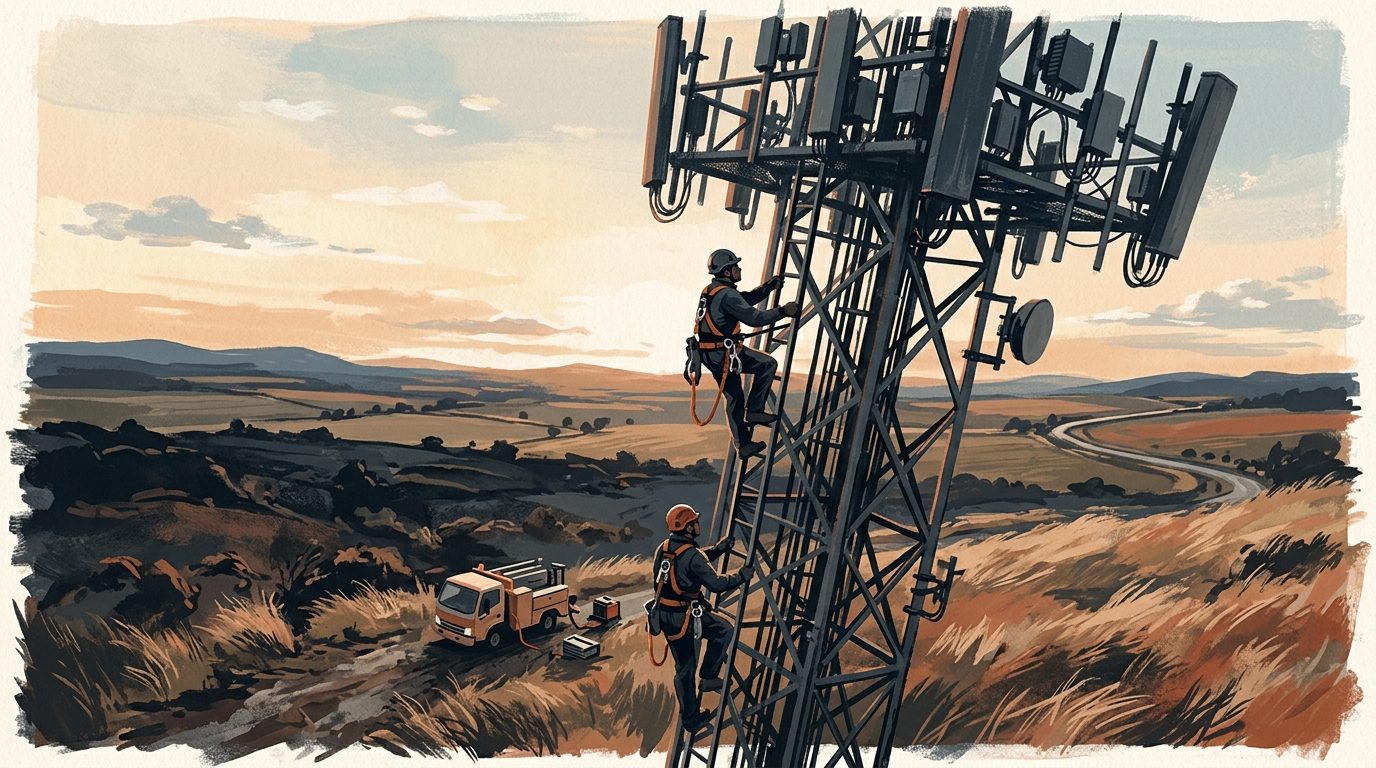
Picture a routine tower inspection. The scene is imagined; the facts below are published. Two technicians, a truck, a morning of rigging, and a climb of two hundred feet to photograph antennas, mounts and the rust that starts where water sits. Weather decides the day. A gust decides the hour. The photographs come down with the climbers and get sorted that evening. Multiply by every tower a carrier owns.
AT&T, as trade press reported it, launched a national drone program and engaged contractor pilots to fly inspections of its cell towers, replacing a share of routine climbs with standardized aerial footage, across a network of 65,000 towers. Its research arm worked on deep learning models to scan that footage for rust, corrosion and other defects, with live drone feeds to technicians as an intermediate step, and its executives were explicit at the time that full automation was a goal rather than a reality. Climbs avoided, hours saved and cost were not published, and this site says so. The published fact is the decision: a carrier with 65,000 reasons to climb chose, where it could, not to.
The bridge
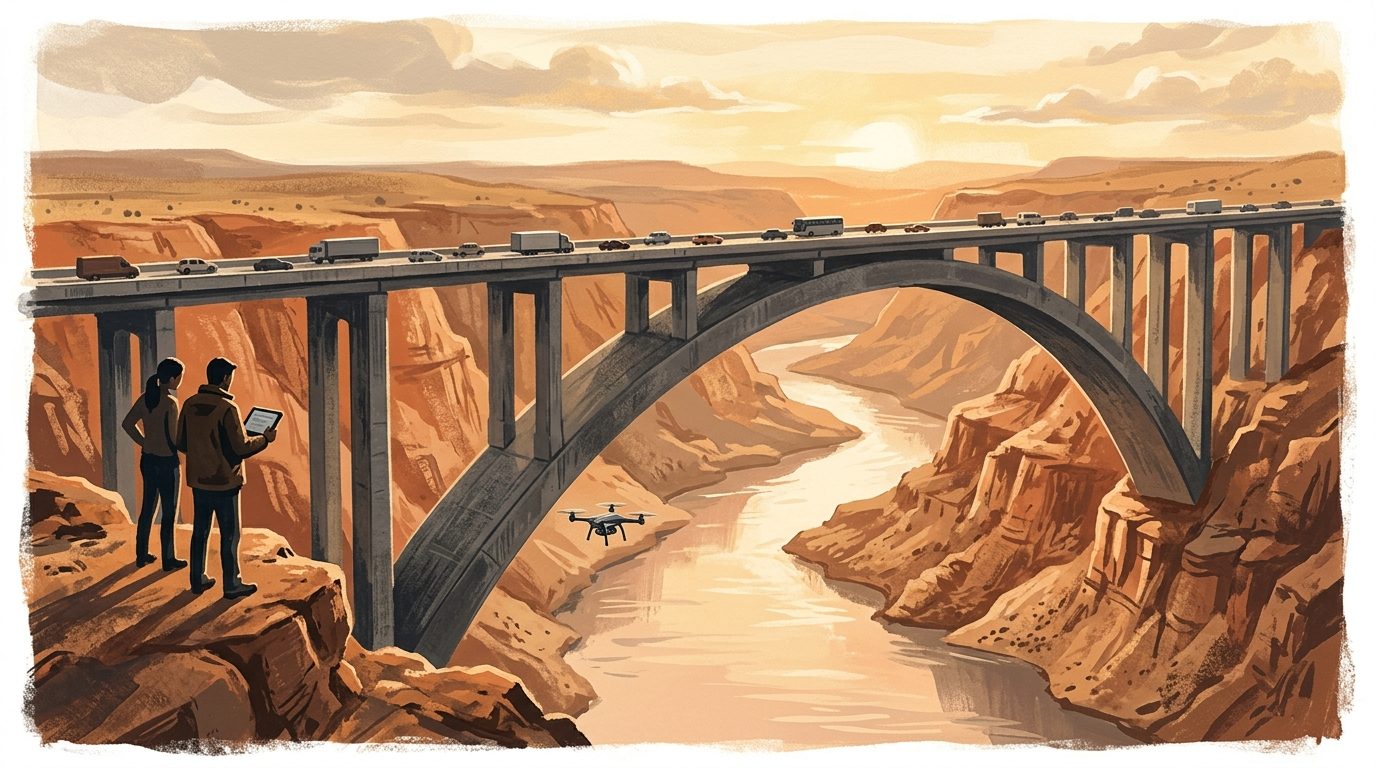
Stantec inspects bridges, tunnels and highway structures where the traditional access was snooper trucks, rope access and lane closures over live traffic, as the drone maker published it. The firm now pairs its own inspectors, subject matter experts rather than professional pilots, with autonomous aircraft and scanning software to capture columns, arch segments and tight girder spaces from the air. On the Mike O'Callaghan Tillman Bridge spanning the Colorado River between Nevada and Arizona, the vendor publishes the inspection schedule cut from ten days to five and cost reduced by half. Dollar figures were not published. The firm reports about 170 drone pilots across its offices, which is to say it decided this was how the work would be done.
What the camera sees that the climber could not
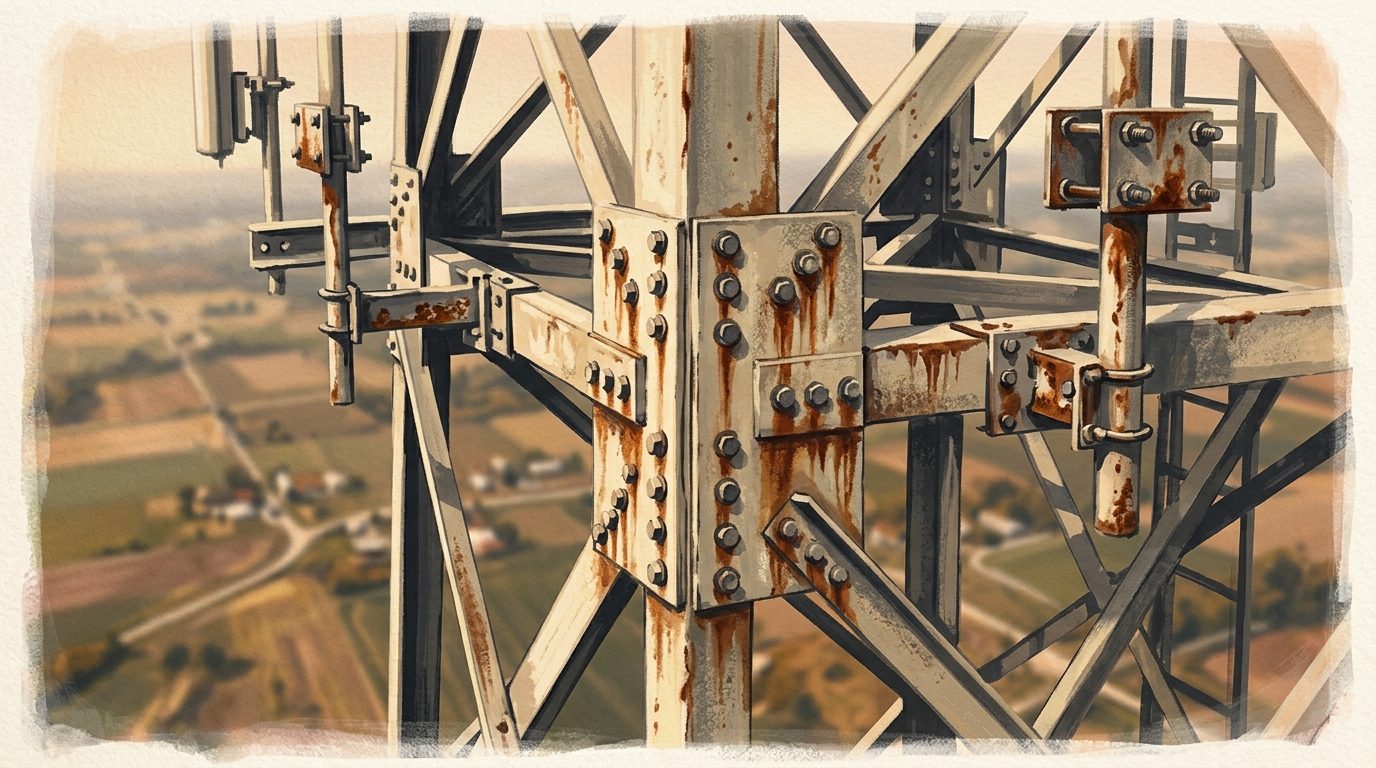
Everything, in order, with coordinates. A climber photographs what can be reached and remembered. An aircraft flying a planned pattern photographs every face of every member from the same distance, every time, so the inspection two years from now compares to this one frame for frame. The defect that matters is usually a change rather than a condition, and a change is only visible when the before exists. The climber's camera never produced a before that matched.
The honest lines
Steel Collar sells and sources aircraft and is never the operator of record or pilot in command. Flying near towers, over highways and above people involves rules that a qualified specialist, not a web page, must address. Some inspections still need hands on the structure, for a torque check or a bolt, and a drone finds the place rather than fixing it. And a public owner spending public money hears the aircraft's sourcing and compliance status before any shortlist, every time.
The number
Schedule, which on a bridge over a live highway is also lane closures, which is also the public's time. Cost, which the bridge account puts at half. Access equipment not rented and ropes not rigged. For a carrier or an engineering firm the arithmetic is quick; for an owner of a single structure it may be a service to buy rather than an aircraft to own, and the aerial services page on this site exists for that path.
The freedom, at height
It is the simplest kind. A person who used to climb does not. The inspector still inspects, still decides, still signs, from a position that does not involve a harness. The firms that published these accounts did not describe it in those terms, and did not need to. One hundred and seventy pilots and a decision about 65,000 towers describe it well enough.
Describe your structures and how you inspect them today to Amelia, the aerial concierge on this site. She will sort seeing from measuring, name the class of aircraft or the operator path, and raise the compliance question before anyone climbs anything.
Related on this site
- Tower and antenna inspection
- The aerial front door
- The ladder before the drone
- The inspector eats lunch outside the tank
- The casebook of published deployments
Towers and bridges are inspected from the air now because the alternative was a person on a rope over a highway. The payback is schedule and cost; the point is the climb that did not happen.
Put it to the test on your own job
Tell Joe what you are running and he will apply this to your numbers, including telling you when a robot is the wrong answer.
More notes