Give the welder back the weld
A good welder spends a surprising share of the day on beads a machine could lay: the long, straight, repeat ones that pay the bills and teach nothing. Collaborative welding cells take those, and what is left is the craft. Here is what that looks like, with the published numbers from an Ohio fabricator and the honest limits.
The short answer
Ask a welder what they are proud of and they will not say the four hundred identical brackets they ran on Tuesday. They will say the aluminum part with the impossible angle, the root pass on the heavy section, the repair nobody else would touch. Then ask what they spent Tuesday doing. A cobot welding cell is a machine that takes Tuesday. The fabricator keeps the welder, the welder keeps the craft, and the orders the shop used to decline start coming back in through the door.
The quote log nobody reads
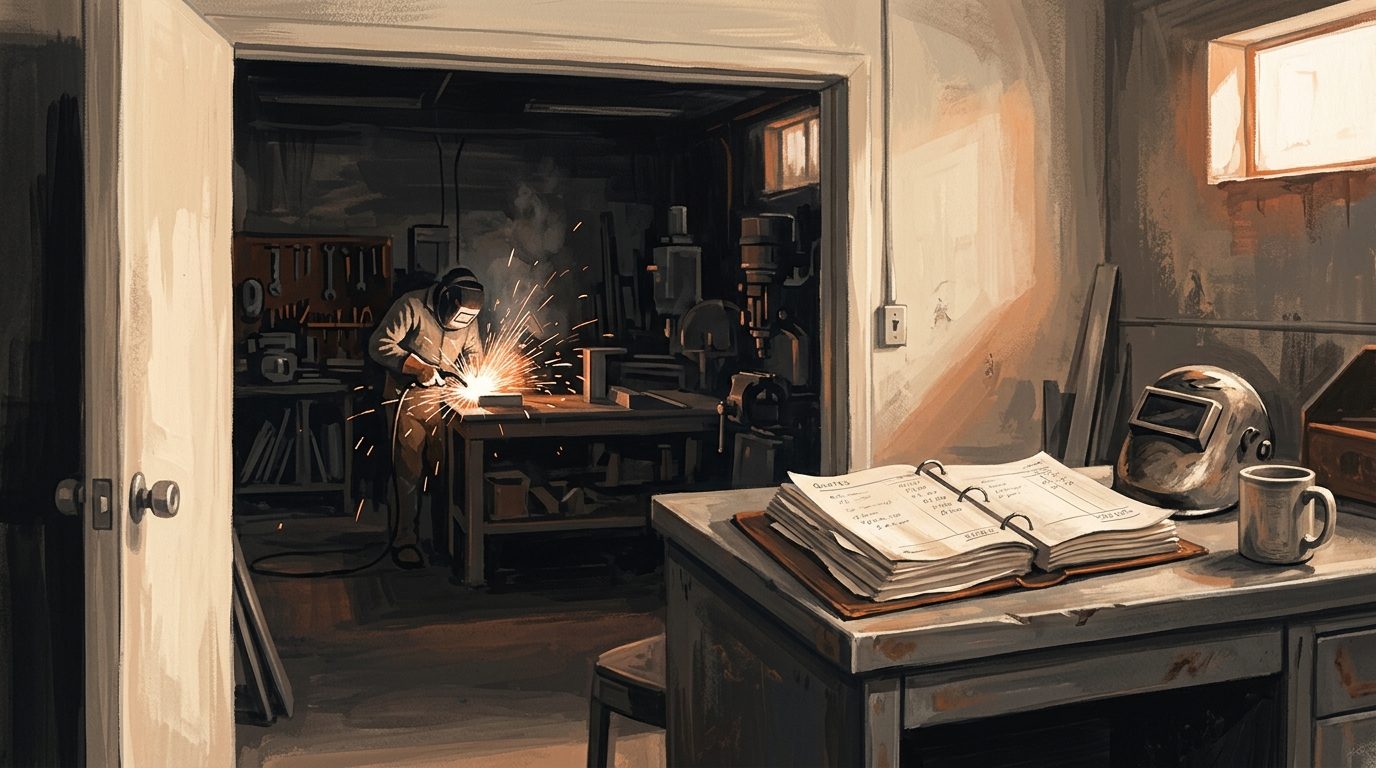
Every fabricator has one: the jobs quoted and declined, or quoted with a lead time that was a polite way of declining, because there were two welders and three welders' worth of work. The honest economics of welding automation live in that log, not in the payroll. You cannot save the wage of a welder you never hired. You can recover the margin on the work you turned away, and the worked example on this site does exactly that arithmetic, with a shop declining about 400,000 dollars a year of repeat weldments paying back a cell in roughly 16 months at the midpoint of the planning range.
What Raymath did
The casebook on this site carries an Ohio contract fabricator that could not hire enough welders to keep up with demand. It moved repetitive MIG work onto four collaborative welding cells and added a cobot TIG system for aluminum parts with difficult angles. Welders now set up and supervise cells instead of hand welding every part, and one operator can run more than one cell at a time. The vendor reports welding productivity up 200 percent, described as up to four times when one operator runs multiple cells, one aluminum part falling from 15 minutes to 5 or 6, another from 3 to 4 minutes to 30 or 40 seconds, and a payback under 12 months. Every one of those is the maker's claim, and this site says so. The structure of the story is the part you can take to the bank: the welders stayed, and their job changed shape.
What the welder does now
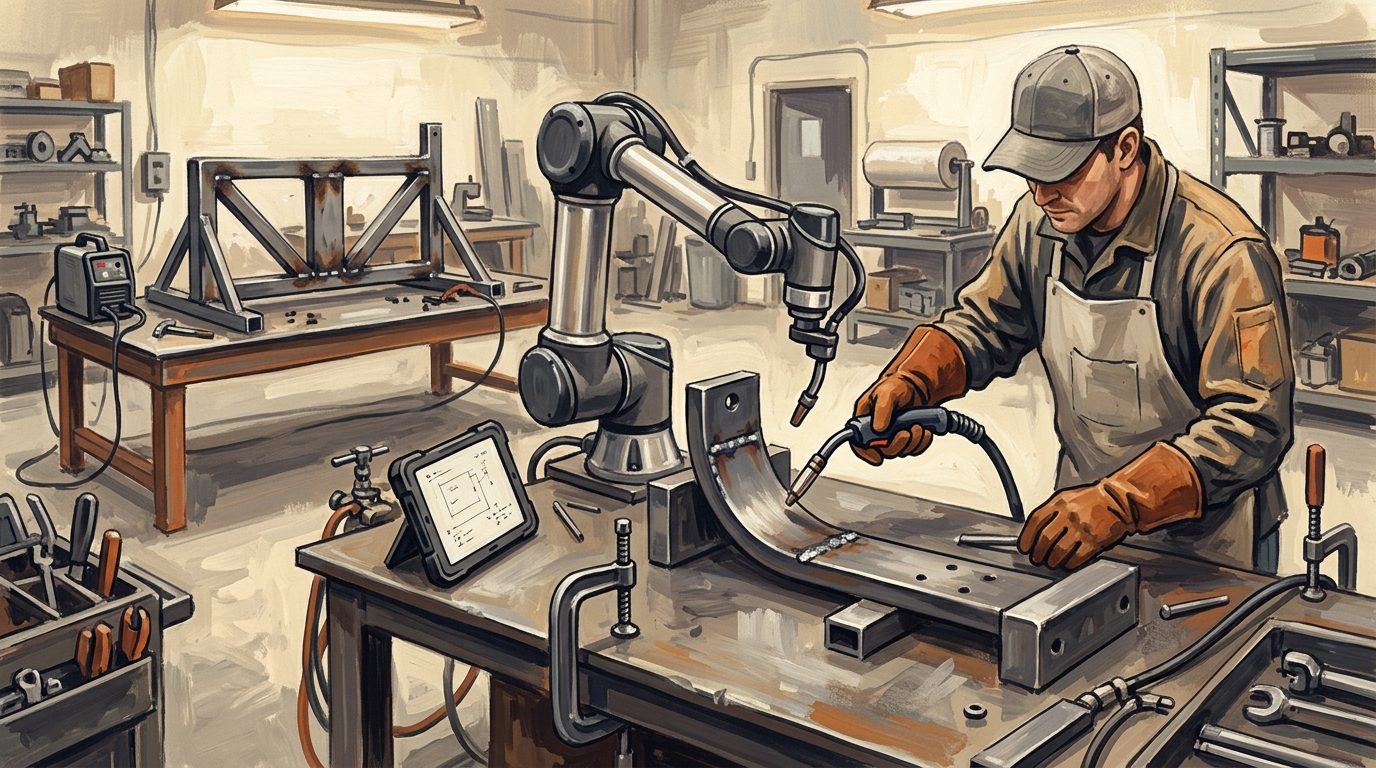
Fixtures the part. Teaches the path by moving the torch by hand and marking the start and end of each joint on a tablet, which is minutes rather than the hours a programmer used to take. Sets the parameters, because the welder knows what a good bead on this steel needs better than any software does. Starts the cell, and while it lays the long straight runs, does the fit-up on the next set, or the tricky joint on the bench, or the inspection that used to wait until Friday. The bracket shop in the casebook that had a packaged cobot welder producing parts within two days of delivery is the on-ramp version of this: no robot programmer on staff, and any welder in the building can run it, as the vendor describes it.
The honest limits
Joints that need judgment on every pass because the fit-up changes piece to piece. Root passes on heavy sections. Positions the arm cannot reach. Weldments that never repeat, so every setup is paid for once. A backlog that is actually in fit-up or finishing, where more welding capacity waits behind another station. And the assessment: an open cobot welding cell still has an arc, a hot part and a moving arm, and the integrator's risk assessment decides the screens, the scanners and the speed. The welding guide on this site lists these before it lists anything else.
The joy, specifically
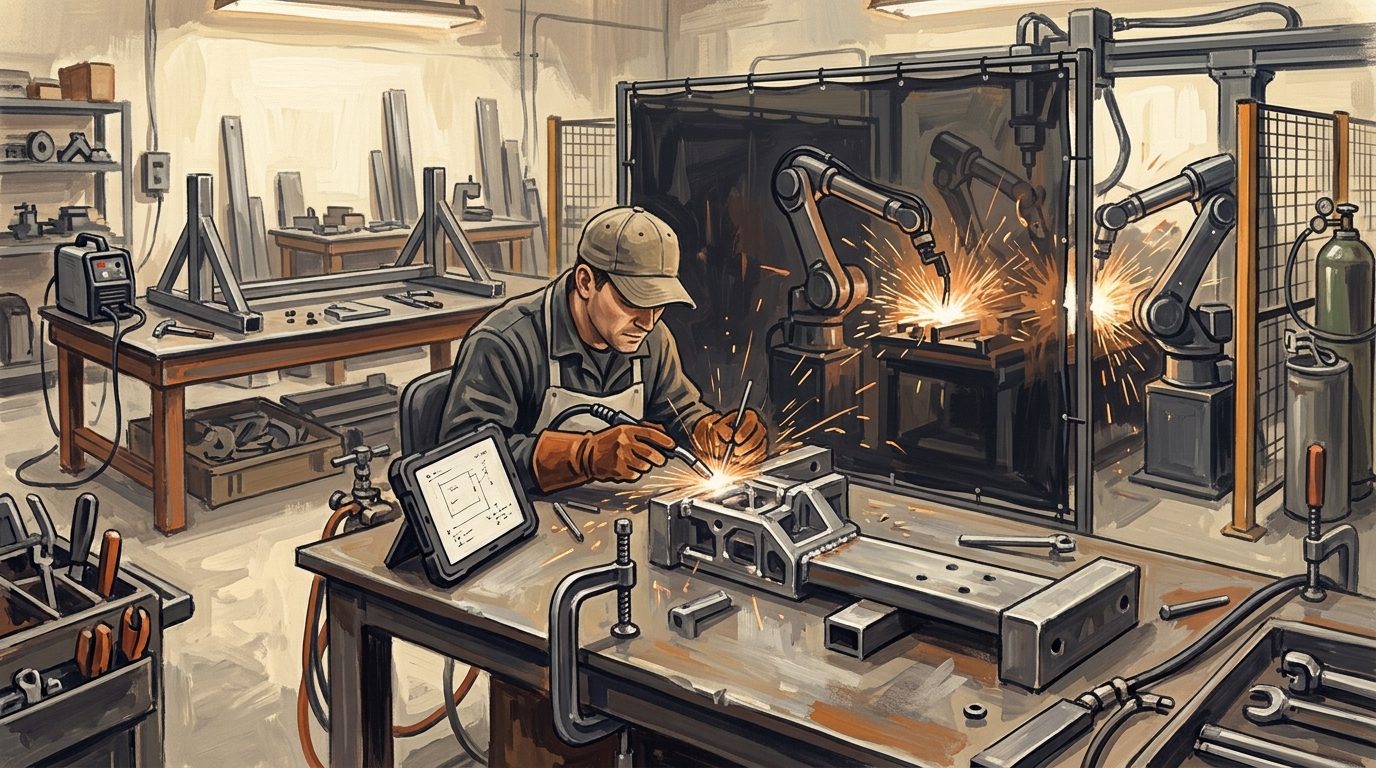
There is a particular pleasure in watching a machine do the boring part of your own trade well. Welders feel it more than most, because the boring part of welding is physically demanding and the interesting part is genuinely hard, and a cell that takes the first without touching the second is not a threat to the craft. It is a promotion. The welder becomes the person who decides how the work gets done, and the shop becomes a place that says yes to the order it used to decline.
The freedom here belongs to the business as much as the person: freedom from the ceiling that two welders put on a shop's growth, which no amount of overtime ever lifted. The published numbers describe output. The quote log describes the ceiling. The cell addresses both.
Pull a year of declined quotes and tell Joe, the concierge on this site, what you weld and how often it repeats. He will tell you whether a cell fits, what the integrator will want to see, and whether the ceiling you are hitting is welding at all.
Related on this site
- Welding
- What changed when an Ohio fabricator put its welders in charge of four cobot cells
- High-mix welding wasn't automatable until a welder could teach the robot by hand
- I never thought we could afford a welding robot. Then we priced the work we were turning down
- Robots for metal fabrication
Welding automation rarely pays back on wages, because the welder you would replace was never hired. It pays back on orders you stopped turning down, and it gives the welders you have the work they trained for.
Put it to the test on your own job
Tell Joe what you are running and he will apply this to your numbers, including telling you when a robot is the wrong answer.
More notes