An hour returned to the night crew
At three in the morning a floor scrubber is driving itself through a terminal, and the person who used to drive it is doing the part of the job that needed a person. The published numbers from an airport and a warehouse say what changed. This piece is about what the hour feels like, and about the one condition that makes the arithmetic work.
The short answer
Nobody dreams of driving a floor scrubber for three hours a night. People do it because floors have to be clean by morning and someone has to steer. An autonomous scrubber maps the building once, runs its routes without a driver, stops for the pallet left in the aisle, and reports what it cleaned. The driving is gone. The cleaning remains, done by the same crew, who now spend the hour the robot gave back on the things a machine cannot do. Disclosure before the rest: Steel Collar is an independent dealer for Avidbots, one maker in this category, and the matrix ranks every scrubber on fit.
Three in the morning
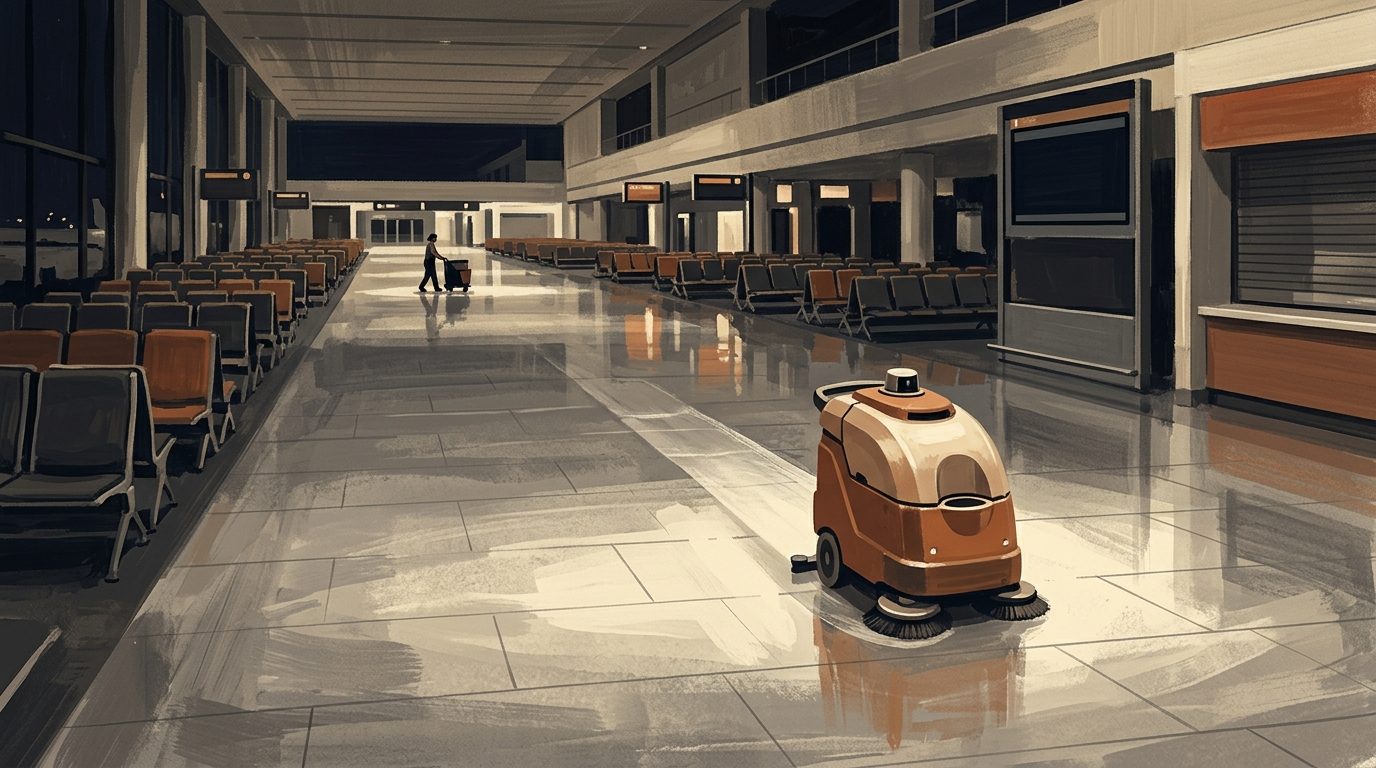
Picture a terminal after the last flight. The scene is imagined; the numbers below are not. The floor is a quarter mile of polished stone with a day's worth of coffee and wheel marks on it. The machine moves through it on a route it learned in November, slows for a cleaner's cart, goes around, and keeps going. Somewhere behind it a person is working the edges, the restrooms, the spill by gate twelve that the robot flagged and could not handle. At six the facilities director opens a dashboard and sees a map of what was cleaned, when, and the three spots the machine skipped and why.
What the airport published
The casebook on this site carries Cincinnati/Northern Kentucky International Airport, which doubled its passengers from 4.5 million to 9.1 million a year with 120 in-house and contract housekeepers scrubbing by hand driven machine. In November 2019 it put one Avidbots Neo to work, the first at a US airport. The maker publishes about 200,000 square feet cleaned a week during the pilot, more than 5 million square feet in the first year, and the airport's own estimate of about 30,000 dollars a year in value at eight hours a day, a 12 to 18 month payback and a five year life. Nobody was let go; staff moved to supervising and maintaining the robot and to work it cannot do.
A Las Vegas lighting rental warehouse that doubled its floor from 80,000 to 160,000 square feet put one Neo on it and reports that its cleaning team's productivity doubled and the robot was running within a week of delivery, as the maker published it. Its lead operator now runs the robot. Management ties floor condition to winning the production clients who tour the building, which is a sentence about pride as much as about dirt.
The hour, specifically
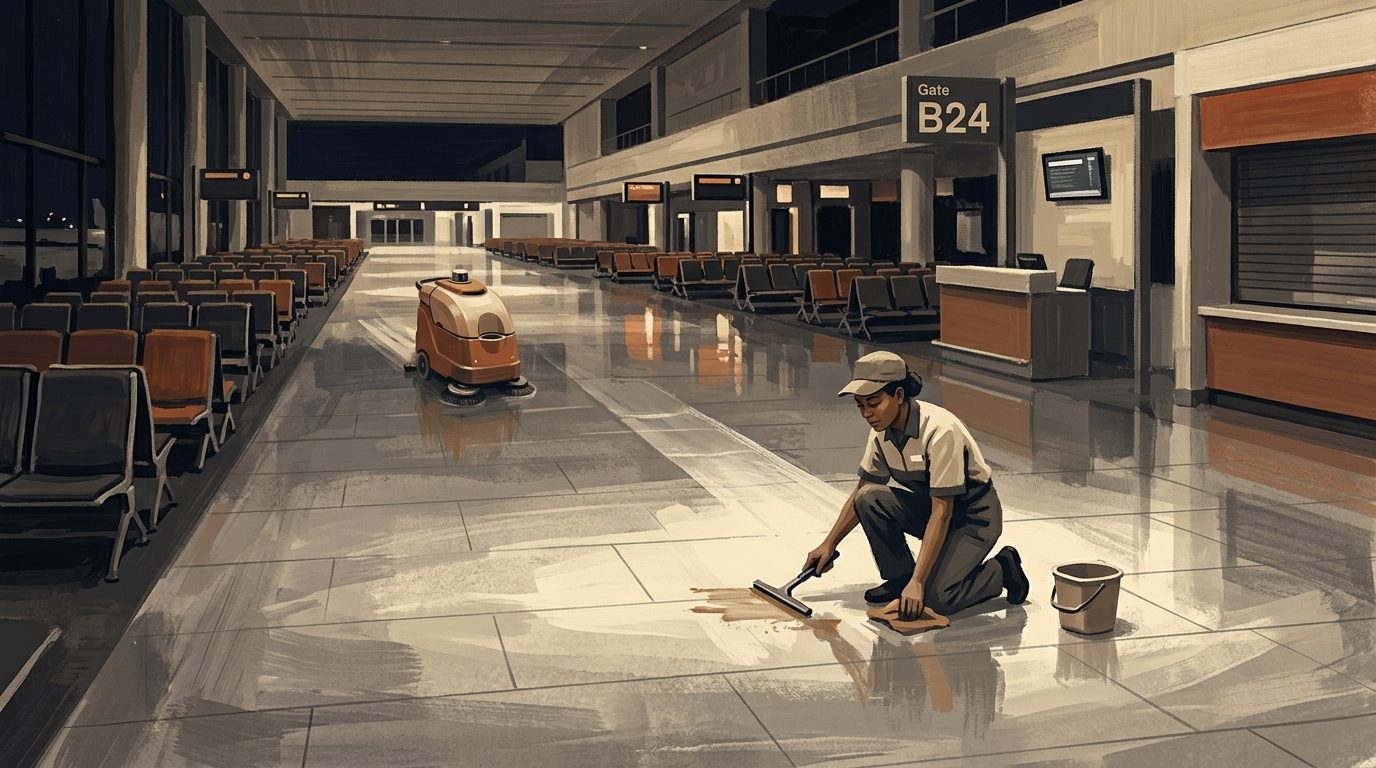
What the crew gets back is not time off. It is time on the parts of the job that are the job: the corners, the restrooms, the spill, the thing the robot flagged, the standard that a tour-ready floor is held to. Driving a scrubber is attention with nothing to attend to. The hour returned is attention with something to do, and crews describe the change in those terms when they describe it at all. There is also the fact that the floor gets cleaned more often, because the machine's second pass costs no one's evening.
The condition
Here is where honesty earns its keep. The airport's own payback estimate assumed eight hours of running a day, a fleet-style duty cycle. The worked example on this site takes a 150,000 square foot warehouse that scrubs once a night with three driver hours, and shows that on labor alone the robot takes six to nine years to pay back, which is to say it does not. Then it shows the same robot cleaning twice a night, or a second building, dropping to about two years. The robot pays back on hours run. A building that only needs three driver hours a night needs a second reason: more frequent cleaning, more buildings, or a floor that has to be ready for a client who tours.
Every machine in this category runs on a software plan, and the honest total is the machine plus the plan plus service. The concierge on this site says so every time, because it is the line the brochure buries and the line that decides the math.
The joy, allowed
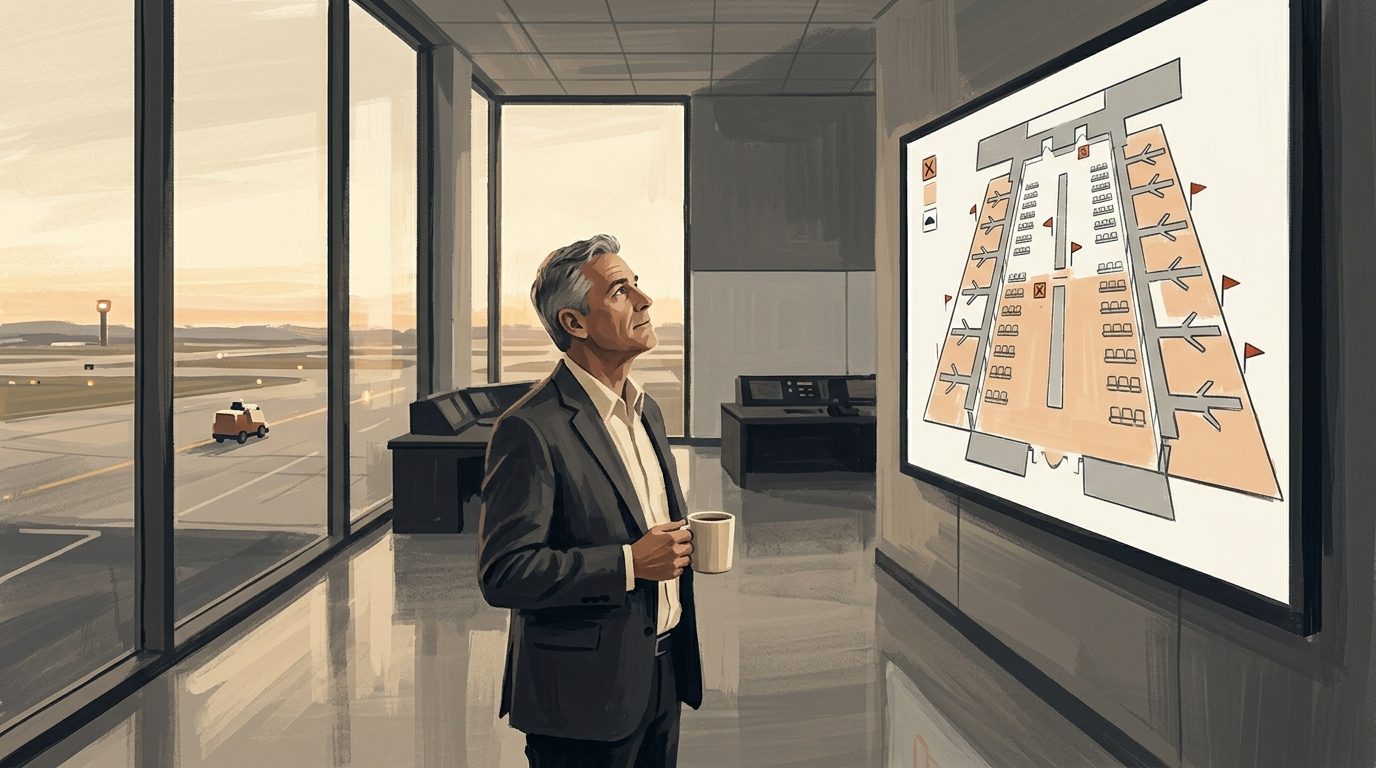
There is a quiet satisfaction in a map that shows every square foot done, and a louder one in a crew that stopped doing the mindless part of a hard job. The facilities director who used to inherit complaints about the floor now inherits a dashboard. The operator who used to steer now runs a machine, trains the new hire on it, and tells the night supervisor which routes to add. It is a modest kind of freedom and a real one, and it was bought with a duty cycle and a software plan, not with a slogan.
Measure the open hard floor you clean, count the driver hours, and decide honestly how often the floor should be cleaned versus how often it is. Then describe the building to Joe, the concierge on this site. He will size the machine against your square footage, put the plan in the frame, and tell you plainly when the walk-behind still wins.
Related on this site
- Autonomous floor scrubbing at retail scale
- What changed when a Cincinnati airport put one robot scrubber on 200,000 square feet a week
- I never thought we could afford a floor scrubbing robot. The honest math said: only if it runs more
- Avidbots, a Steel Collar dealer line
- Robots for airports and transit
An autonomous scrubber returns driving hours to a night crew and cleans more floor more often. It pays back when it runs enough hours. The dignity is in the hours; the economics are in the duty cycle.
Put it to the test on your own job
Tell Joe what you are running and he will apply this to your numbers, including telling you when a robot is the wrong answer.
More notes