The quarry that knows what it has
Twice a year a quarry group learned, months late, how much rock it had, and wrote down the difference. Then its site teams started flying their own surveys and knew within a day. Here is what measurement from the air returns to an operation, with the published numbers and the modest, specific freedom of a manager who no longer has to guess.
The short answer
A stockpile is a pile of money that changes shape every day, and until recently the only way to know how much money was to fly a crewed aircraft over it twice a year, wait months for the result, and compute the volume against a floor that was assumed flat when it was not. Boral's six quarries in Victoria did that, and the book stock drifted until the statutory count corrected it with a write-down. Then site teams started flying drone surveys themselves. The maker of the processing software publishes data turned around within 24 hours instead of two or three months, about 25,000 dollars of variance across all six sites on the most recent statutory survey, and inventory write-downs ended in under six months. Read the figures as the vendor published them. The structure of the change is the point.
The month of not knowing
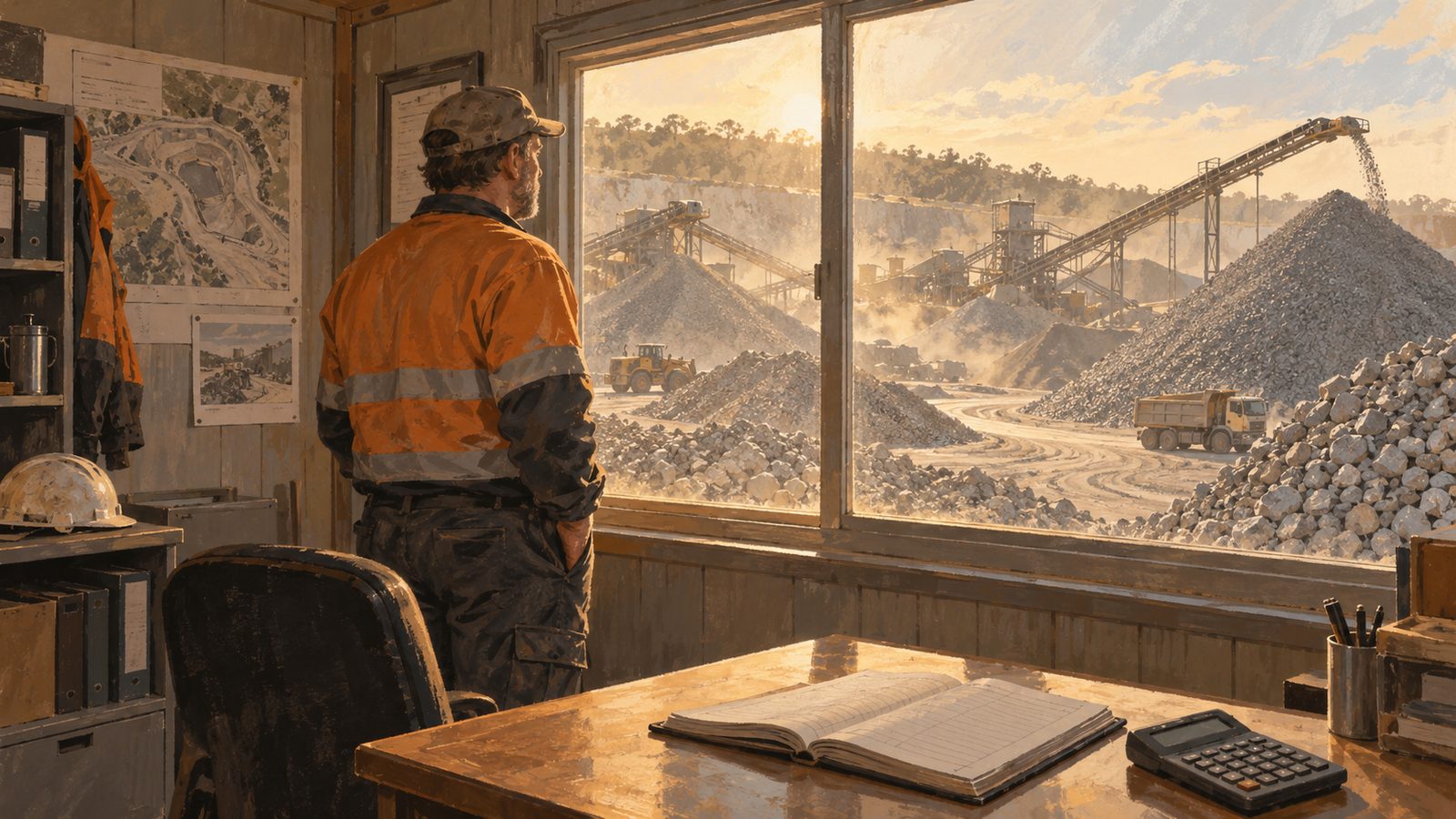
Picture the quarry support manager in the weeks before a statutory survey. The scene is imagined; the quotations and numbers come from the published account. Six sites, a million tons produced across the six month interval between surveys, a book figure that everybody knows is wrong by some amount in some direction, and an auditor on the calendar. When the survey finally arrives, it was flown against an assumed flat base, so a pile stacked against a hillside at the Montrose site is wrong by construction. The write-down is not a surprise. It is a ritual.
What changed
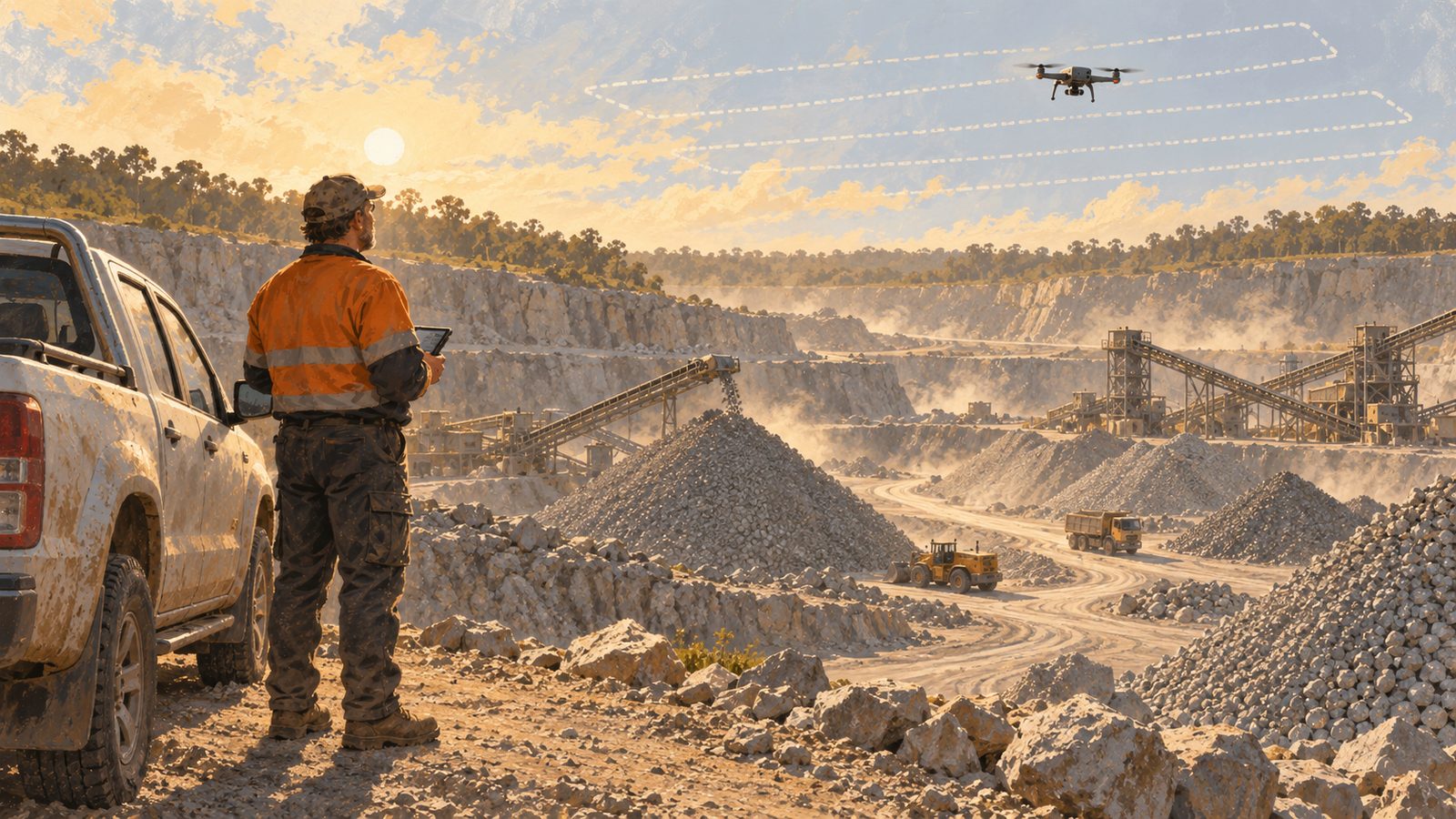
Site teams fly drone photogrammetry and process it in a platform that produces volume, tonnage and material reports, with the base surface corrected for real ground conditions. The survey that used to arrive in months arrives the next day. Stock is validated regularly instead of twice a year. The quarry support manager is quoted on about 25,000 dollars of variance across the whole region on the most recent statutory survey. The write-downs stopped. Cost and payback were not published, and this site says so.
Why this is not really about drones
The aircraft is the least interesting part. What changed is who measures and how often. A measurement that is slow, outsourced and assumed becomes one that is fast, owned and corrected for the real ground. Finance stops reconciling a guess. Operations stops arguing with finance. The site manager who knows what the pile holds on Tuesday plans Wednesday differently from the one who finds out in April. This is the same shape as every good automation story on this site: the machine moved a job from guessing to knowing, and the people kept the job.
The honest lines
Steel Collar sells and sources aircraft and is never the operator of record or pilot in command. Who flies, under what approvals, belongs with a qualified specialist. Some operations should buy an aircraft and train a site team; many should buy the survey as a service through an operator, which the aerial services page on this site exists to arrange, and the concierge says which without being asked. Accountants have to accept drone derived volumes for statutory reporting, which is a conversation to have before the first flight, not after.
The number
What stockpile variance has cost you in write-downs and in disputes with customers and auditors over the last two years, divided by two, is the first slot. Hours per survey, surveys per year and the cost of the current method fill the rest. For a multi-site aggregates operation the arithmetic is fast. For a single yard with two piles it may not be, and hiring a flight twice a year is the honest answer.
The freedom, precisely

Knowing. That is the whole of it, and it is not small. A manager who knows what the sites hold can sell what is there, order what is not, and stop treating the half-year survey as a reckoning. Measurement from the air gave an industry that moves mountains a way to count them, and the published result was not a dramatic number. It was the end of a ritual nobody enjoyed.
Describe your sites and how you measure stock today to Amelia, the aerial concierge on this site. She will sort seeing from measuring and tell you whether to own the aircraft or buy the survey, and she will raise the accountant question before you have to.
Related on this site
- Stockpiles and volumetrics
- Stockpile volumetrics
- What changed when a quarry group measured its stockpiles by drone and ended inventory write-downs
- Buy the data before you buy the satellite
- Aerial services and operator introductions
Drone survey turns a slow, outsourced, assumed measurement into a routine one the site controls. The published result is write-downs that ended. The freedom is knowing.
Put it to the test on your own job
Tell Joe what you are running and he will apply this to your numbers, including telling you when a robot is the wrong answer.
More notes