Gentle machines
Eggs and fresh herbs are the last things most people expect a robot to handle, which is why the two published accounts about them are the most instructive in the casebook. One plant case packs 1.5 million eggs a day with a cobot. One greenhouse boxes cut herbs with a soft gripper. The lesson is about where you grab a fragile thing.
The short answer
The reputation of industrial robots is strength: the arm that lifts the engine block, the welder that never tires. The quieter achievement is gentleness. An egg company in Italy runs a collaborative arm that handles, by the maker's figure, about 1.5 million eggs a day, and a greenhouse in Denmark boxes cut herbs with a gripper that closes like a hand. Neither robot is gentle because it is clever. Both are gentle because someone decided where to grab.
The eggs
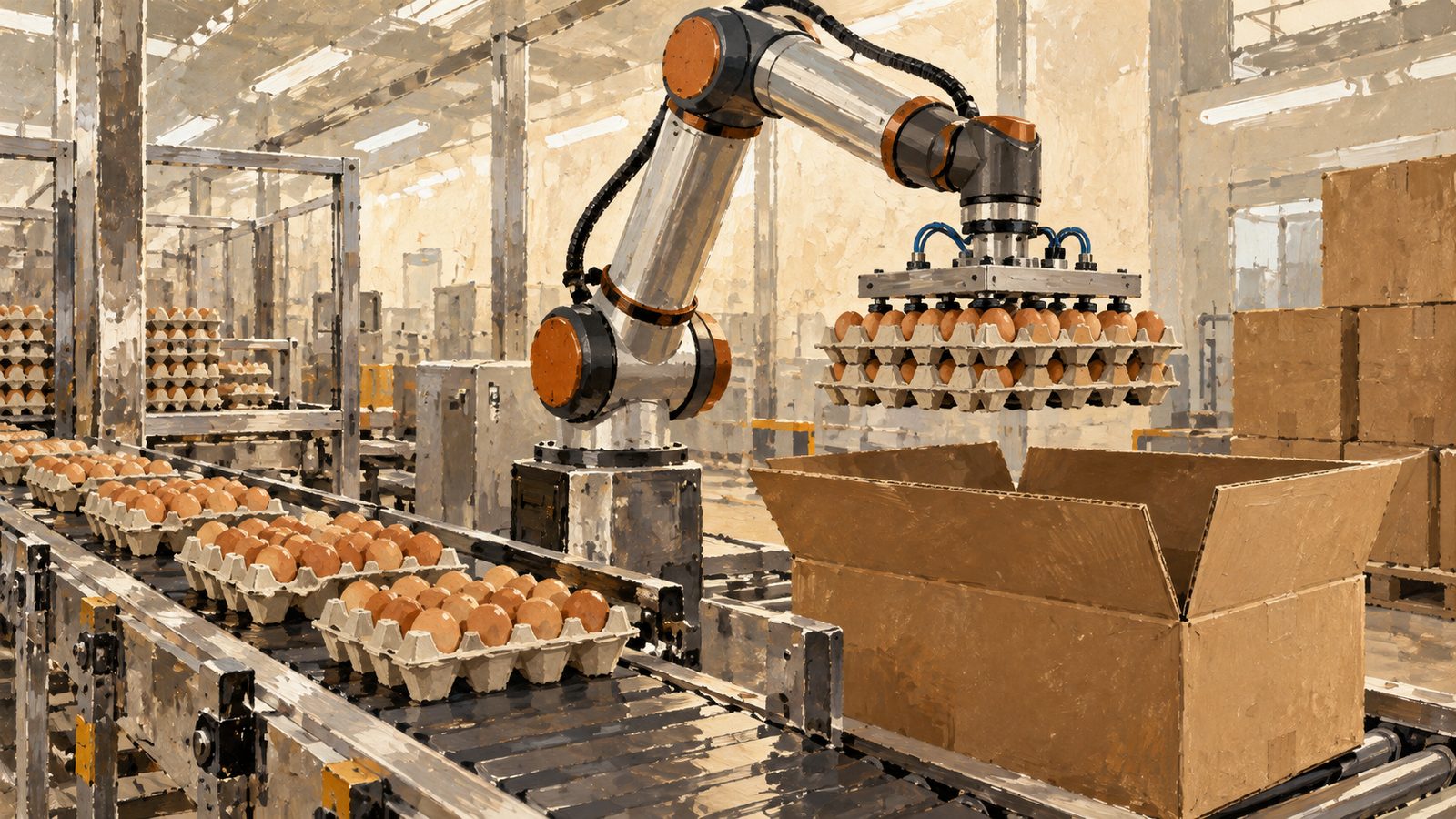
Cascina Italia packs cartons of eggs into large corrugated cases for supermarkets, and workers used to build those bulky cases by hand at the line output stations, in a plant with 24 of them. A UR5 with a pneumatic gripper now lifts whole trays of egg cartons and loads cases layer by layer, up to nine layers, installed on the line without guarding, as the maker published it. Trade press reports 15,000 eggs an hour through the cell; each case holds 144 cartons of 10 eggs; the maker claims a payback of 365 days. Cost and breakage were not published, and this site says so.
Look at what the robot never touches. Not an egg. Not a carton. A tray of cartons, which is the unit the product is already stable in. The engineering insight is almost embarrassingly simple and almost universally skipped: automate at the level where the fragile thing has already been protected by the packaging you bought for that purpose. The egg is safe inside the carton, the carton is safe on the tray, and the robot picks the tray.
The herbs
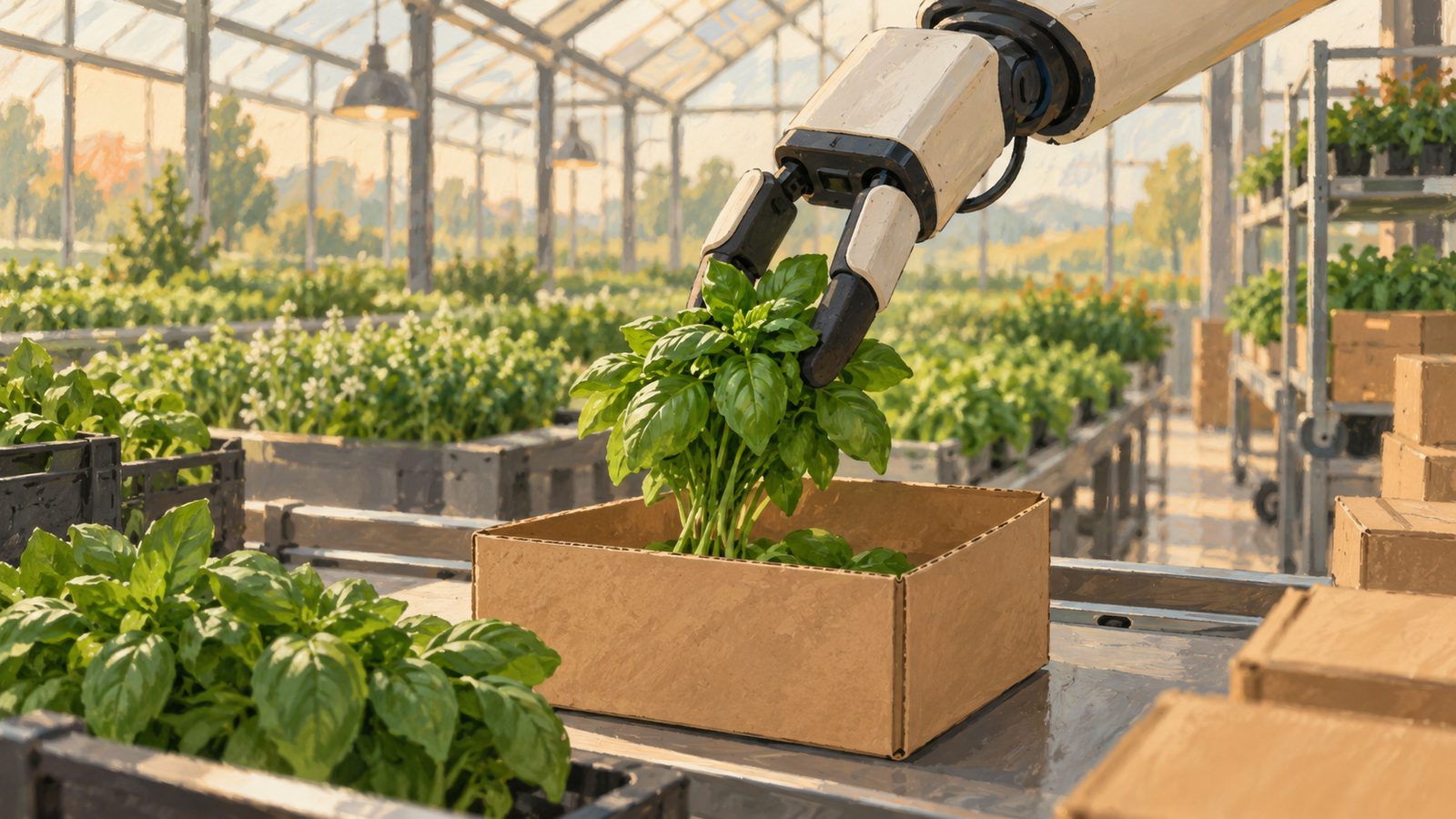
Rosborg Food Holding of Odense, the largest herb and mini plant producer in Denmark with about 130 employees and 120,000 square meters of greenhouse, grows 28 million herb plants and 12 million mini flowers a year, as the gripper maker published it. Packing cut herbs for grocery drove overtime and temporary hiring every peak season. A collaborative arm with a wide, force limited electric gripper rated to 6 kilograms now folds boxes and places cut herbs into them, and staff switch products from a touchscreen rather than calling an integrator. Rates and payback were not published. The published story is proof of feasibility rather than economics, and this site says so.
Here the robot does touch the product, and the gentleness comes from a different decision: a gripper that limits its own force and conforms to the bunch rather than one machined to a shape. It is the jar opener from the kitchen drawer rather than the tongs. Stem length, bunching and moisture change how a bunch of herbs behaves in a hand, and a shop that wants this should run its real product range through the gripper before buying, because a demo with the best bunch hides what the worst one does.
What gentleness costs
Rate, usually. A tray gripper picks whole trays quickly but tolerates less tray variation than the marketing suggests, and eggs punish drops in public. A soft gripper handles the irregular product and gives up precision and speed to do it. Both accounts chose gentleness over throughput at the point of contact and got the throughput back by running without breaks. That trade is available to any plant handling something that bruises, cracks or wilts.
The honest limits
A fenceless install on a crowded packing line depends on a risk assessment that accounts for people leaning into the pick zone all shift. Produce and bakery lines have wash down and humidity requirements that the robot and gripper ratings must meet. Seasonal peaks mean modeling the cell against peak demand and asking what it does in the off season. And a rate claim like 15,000 eggs an hour is a headline for that cell; your carton formats, case sizes and layer counts will move it.
The joy, which is literal here
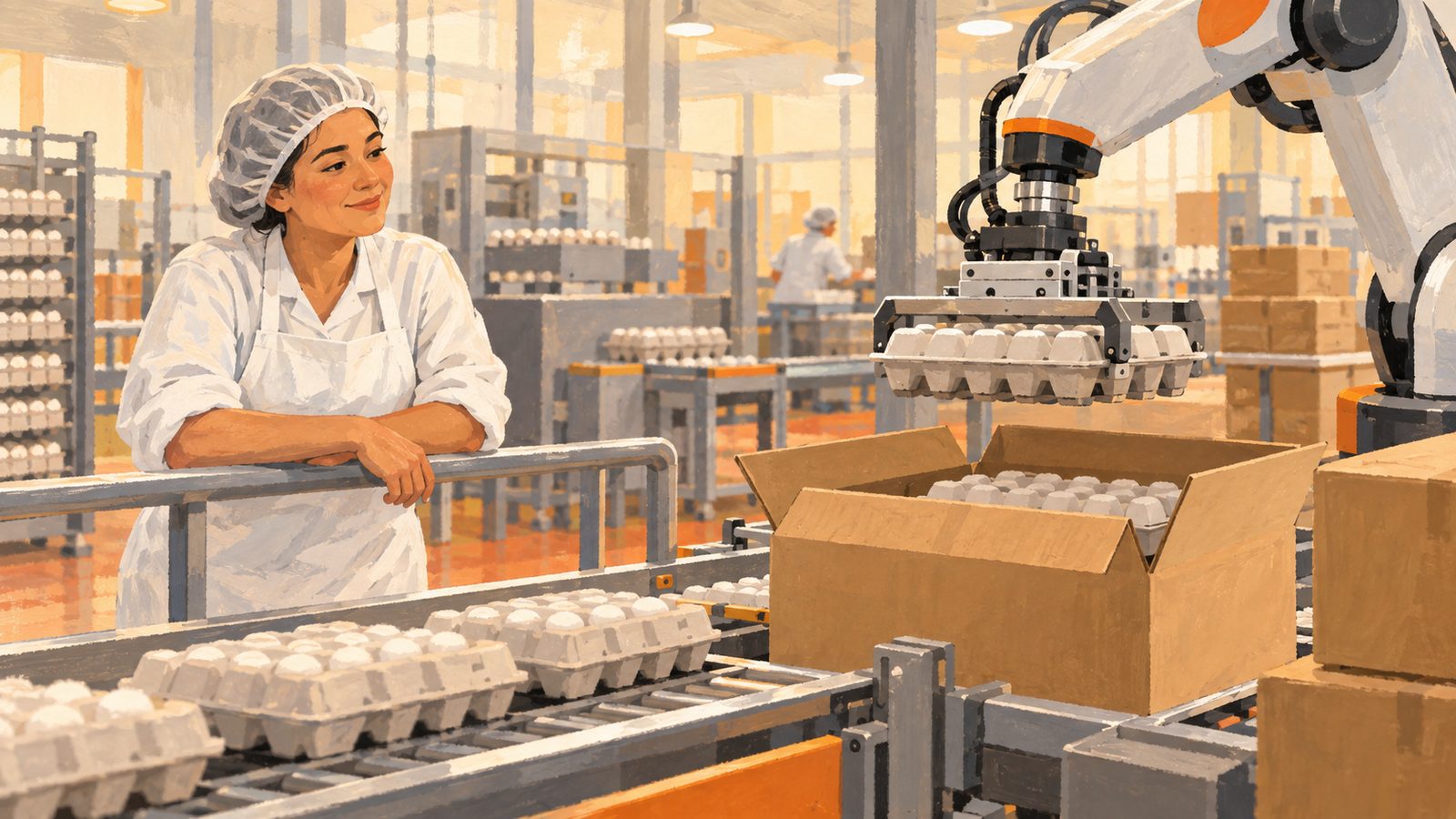
There is something genuinely delightful about watching a machine built for engine blocks carry a tray of eggs without breaking one, or close on a bunch of basil without bruising it, hour after hour, on a line where people used to do the same thing with aching hands at the end of a peak season. The packers in both accounts kept their jobs and lost the part of them that hurt. The crushed carton bin, which every egg plant keeps and nobody photographs, gets smaller.
If you handle something fragile, describe how it arrives and what the packaging already protects to Joe, the concierge on this site. The first question will be where to grab it, and the second will be how many you drop today.
Related on this site
- Packaging and case packing
- What changed when an egg plant case packed 1.5 million eggs a day with one cobot per line
- Grippers, explained with a kitchen drawer
- Robots for food and beverage plants
- Case erecting and packing
Robots handle fragile product by picking the unit the product is already stable in, and by gripping softly with force limits. The published numbers are the makers'. The dropped-carton bin is yours to measure.
Put it to the test on your own job
Tell Joe what you are running and he will apply this to your numbers, including telling you when a robot is the wrong answer.
More notes